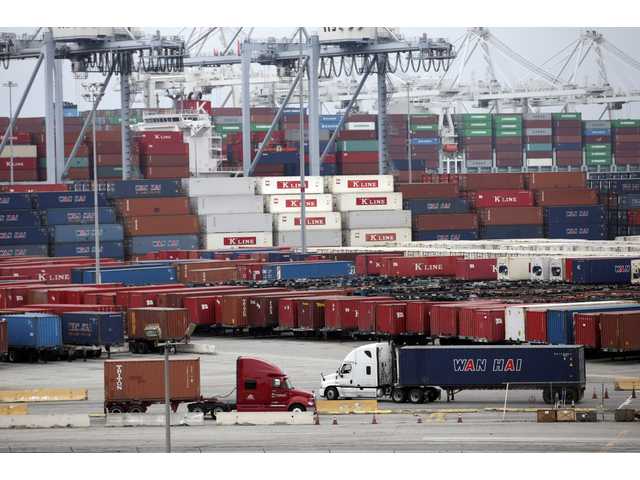
Negotiators agreed late Friday to a tentative contract covering West Coast dockworkers, likely ending a protracted labor dispute that has snarled international trade at seaports handling about $1 trillion worth of cargo annually.
But recovery from the prolonged dispute could take weeks.
Santa Clarita businesses were intently watching the labor contract disputes at Los Angeles ports, stalled by nine months of unresolved negotiations.
With a Friday deadline looming, negotiators labored to reach the a deal in the contract dispute that snarled international trade at seaports from Southern California to Seattle.
U.S. Secretary of Labor Thomas Perez had told dockworkers and their employers that if they could not find common ground in San Francisco, he would take the parties to Washington.
In response to an inquiry on Friday, a spokesperson with Sunkist told The Signal it was not “commenting on the standstill at the port.” The growers’ cooperative is headquartered in Santa Clarita.
“The company has been approached by national TV outlets as well but no outlet is being granted interviews on this topic,” the spokesperson said.
Also local, third party fulfillment company AMS Fulfillment, had one client with more than 60 containers sitting in cargo ships off shore, said Ken Wiseman, CEO/Managing Partner for AMS.
Even with the dispute resolved by Friday night, the recovery period could be four to six weeks, he said. The delays impacts retail sales and AMS clients’ customers by not having products delivered in a timely manner.
“The call that most concerned me was from a client in Australia,” Wiseman said. “He talked to me about whether their next season could even be launched here on the West Coast, or whether they should look for a place on the East Coast.”
A top footwear account managed by AMS, Wiseman said the loss of that business would have affected 10 to 12 jobs directly; and possibly more indirectly.
The retailer was concerned about being able to deliver their products for the spring and summer season via any West Coast ports from Seattle to Long Beach.
“We talked to them at length and we decided we want to wait out the Secretary of Labor’s impact on being able to get the negotiations settled,” Wiseman said.
Other AMS clients had called to discuss alternative strategies. One client brought their product in through the ports in Vancouver, Canada but then experienced delays of moving them through the ports on the Western U.S.
Billions of dollars of cargo were sitting on dozens of massive ships anchored outside West Coast ports. They couldn’t dock because of historically bad cargo bottlenecks at 29 ports that handle about $1 trillion of trade annually, much of it with Asia.
Even with the labor disputes resolved, there are other challenges.
As the containers come off the ships, they’re loaded onto chassis which the big rigs hook up to and haul the containers out of the port. In many cases the chassis have not been maintained or repaired, Wiseman said.
Another concern is whether there are enough drivers to haul the cargo, he said.
Drivers couldn’t make a living and sought other jobs. They’ll need to have the confidence that there will be a steady ongoing release of containers that will allow them to make a living again.