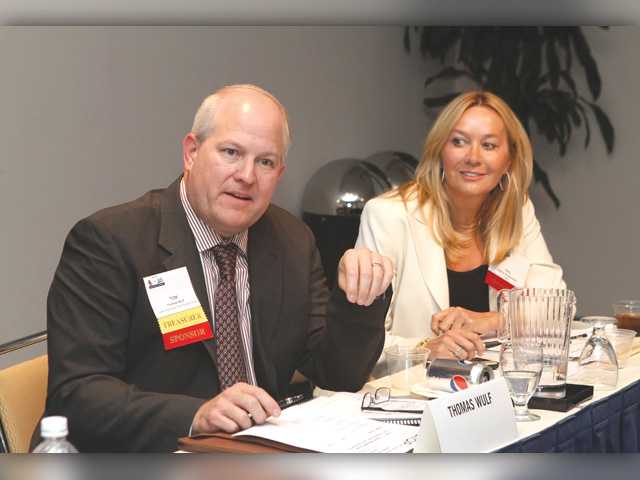
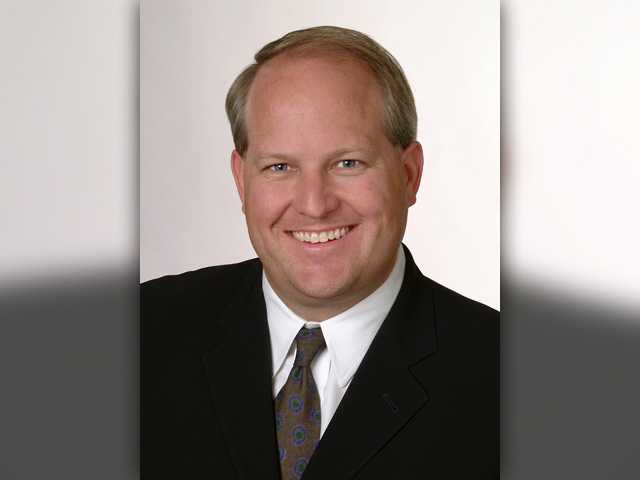
Tom Wulf, Board President
NAIOP Southern California Chapter, and also
Sr. Vice President of acquisitions with Lowe Enterprises
SCVBJ: Briefly describe NAIOP’s role and its membership.
Tom Wulf: We’re a commercial real estate development organization and our members are developers and owners, as well as investors and others in the real estate industry.
NAIOP is a national organization with 52 chapters and about 16,000 members. The Southern California chapter is the second largest that predominantly covers that Los Angeles and Orange County areas.
SCVBJ: What are the current commercial building trends?
Wulf: While the recession took a big toll on our industry, the recovery has brought along quite a bit of innovative growth and a mix of different product types. The majority of growth has been mixed-use and multi-family developments in which construction starts were up 40 percent in 2014 over 2013; and 38 percent in 2013 over 2012.
We’re not yet at a point like the one we reached in 2004. We don’t expect that we’ll see the recent growth taper but instead remain roughly at the same levels; however, the growth taking place in urban areas is pretty sustainable. Even in Santa Clarita there’s infilling in some of the spaces around the entertainment, retail and office areas where people want to be.
Walkable developments close to transit and entertainment are trending. Tenants are seeking spaces which are comfortable, creative, interactive and stimulate casual interactions which enhance growth and innovation. Urban areas are seeing a renewed vitality and interest – downtown L.A., as an example, is the recipient of over 7,500 new residential units which will come online by 2016.
On the office side, we see some growth, focused in smaller sub-markets like media, tech and entertainment. Job growth hasn’t been tremendous so there hasn’t been need for new office developments other than where we see key (industry) expansions. For instance, much of the growth is focused in smaller pockets of sub-markets like Santa Monica, Culver City, downtown L.A., and Playa del Rey which has attracted quite a few big names - Yahoo, Google, You Tube, and more. So when you look at certain industry sectors, big players are looking for larger creative space and that’s driving development.
There’s been very little speculative building going on and that’s been quite challenging for businesses. People haven’t been able to get financing to take on the economic risk of putting up a vacant building and then waiting for people to show up. Construction of new space is driven by capital primarily, and capital is a little more careful where they want to put their money and not put all their eggs into one basket before understanding the risks they’re taking.
Market-wide, office vacancy rates have ranged between 18 percent in 2010 to about 16 percent by the end of 2014.
SCVBJ: What type of demand is the highest in Southern California?
Wulf: Mixed-use kicked off the last cycle of development which has been robust throughout the region everywhere from the Westside to Inland areas, down South and up North, across the board.
In terms of industrial space we’ve seen growing demand in the Inland Empire; and very little growth in urban areas. But there is a need for efficient buildings with the growth of ecommerce. Growth in this arena is based on being able to provide quick delivery times within efficient buildings and has led the demand to re-start the speculative development for the Inland counties. The growth is specific to users and unfortunately, more times often than not they don’t plan far enough ahead in terms of their future needs.
Developers think about future needs but it’s a tough, competitive landscape and building often doesn’t occur until an owner-operator links up with a developer to plan for the future and start a build-to-suit project.
One other product type we’re seeing is the re-use of older buildings, not in Santa Clarita so much as in Los Angeles which is maturing as a city and beginning to make use of older, historic buildings. We’re seeing a lot of desire for authenticity and experience in a place that’s tied to an urban area.
SCVBJ: What industries are influencing space design and how?
Wulf: We’re seeing trends on the office side with a new focus on collaboration; co-working spaces; break rooms designed like a coffee shop with everyone’s on their laptop and the break room in the office is a becoming a creative environment of casual interaction of team workers. It spurs thoughts, solutions and creative ideas whereas people rarely interacted in the old office models.
There’s also a new shift toward more efficient office space that takes up less square feet but has substantial amenities. Much of this growth comes from the collaborative nature of work today as well as the demographic – in 2015 the Gen-Yers will become the majority of the U.S. workforce at 78 million – surpassing the baby boomers. They bring a new shift or new dynamic in how we work.
The space design comes from technology company models like Facebook, Google, Apple and even now Amazon who provide work environments that begin to feel more like a hotel or residential environment – it’s more casual, calming, interactive and keeps people at the company longer. While not a lot of new building has taken place, however, we see a lot of these space designs being worked out within existing interior tenant spaces.
The next cycle and new construction of office buildings now being taking into account by developers is starting to be addressed with new ground-up built spaces including how to create indoor/outdoor space, outdoor conference rooms, rooftop outdoor space, and windows that open to make it feel more exciting to be at work.
SCVBJ: Is any one sector driving commercial development financing?
Wulf: Traditional lenders are still engaged and international capital is flocking to real estate. Underwriting standards are still high – but capital is competitive and working hard to be placed.
But there’s not any one sector driving financing. There’s a significant amount of capital available focused on real estate sector due to the growth of the stock market in the last few years. For instance, the overall portfolio of REITs grew so that while they might still only have 5 to 10 percent of their fund allocated for real estate, now there’s more money in the fund. There’s also more competition in the finance space. REITs have raised quite a bit of money but they’re having to compete across equity funds, pension funds, and more.
On the debt side, there are still plenty of traditional lenders providing permanent financing and construction loans but its highly competitive as the margins have gotten thinner.
SCVBJ: What are the biggest obstacles for builders/developers in California?
Wulf: We (NAIOP) focus on three things: Education, Business Opportunity and Advocacy. Among the challenges we see is the time and process required in California to obtain approvals and delivery of product. It’s one of the most highly regulated states and it can take three to five years from conception to delivered project.
New regulations are put in place each year and create a more costly, time consuming process to deliver new buildings. Staying up to speed on these and navigating the process is a challenge. That amount of regulation is lost on the lay person who doesn’t understand why it takes so long to get through the process or complete a project.
SCVBJ: So what kind of affect does that have on speculative building?
Wulf: The risk for the developer is time and that becomes a market risk because the economic situation today might be quite different three to five years from now. It’s this lengthy process that impacts speculative development. Many of the new projects delivering now were planned before or during the last recession. But we all know that history repeats itself and so we have to proceed with caution and make sure there’s some protection in there if we’re going to build.
Our organization focuses a lot on CEQA reform; whether there would be any official reform or adjustments to CEQA to streamline the process of development. We all fully realize it’s something we need to do. Legislation has been introduced to try and streamline CEQA and we would be a proponent of it, if it would clarify the process for us.
We’d like to make sure that a process has a clear path ahead and we know what we’re up against up before we begin a project – that would save time and money. As of now you can do your best to understand or expect a result, but you never know for certain what’s required. We need a level playing field; we need to know where the goal line is and not have it keep moving.
SCVBJ: What is the outlook for 2015 and beyond?
Wulf: The outlook for the next couple of years is strong for the real estate industry as a whole. It’s the same result in terms of what we’re seeing for the country and region. We’re seeing strong economic growth. But there are still some risks with lackluster job growth and legislative additions. There is always the fear of rising interest rates. We watch the slow job growth with a little trepidation although we suspect some of it is companies just still being careful.
Overall, we feel good about 2015 and going forward we don’t see a lot of over-building. Things have been fairly well tempered in terms of meeting demand and not going overboard.