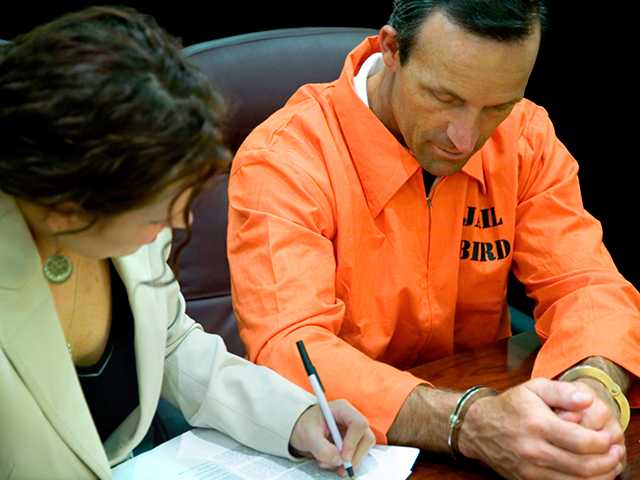
The right to bail is granted to US citizens by the 8th Amendment, provided that the charges are not sufficiently serious, and that the defendant does not pose a danger to the community if released.
The terms of their bail can vary, but one point all cases have in common is that the defendant must return to court at the appointed date and time; and the majority of people do. When they return to court, no matter the outcome of the case, the bail bond will be exonerated and everyone can go their merry way (unless that way is to jail - a destination that is somewhat less than merry).
So, what happens when someone doesn't show up for court? When a defendant fails to appear before a judge, they are termed a fugitive from the law, and the bail bondsman of the bail bond is held liable for the entire bail amount set at the time of the defendant's original arrest.
The bail bondsman has the legal right to track the individual down and return the person to police custody to absolve themselves of the liability for paying the defendant's bail. The thing is, most bail bondsmen don't have the time to track down fugitives (sometimes referred to as "skips"), so they may contract that part out to a "professional."
Enter the bail enforcement agent, sometimes referred to as a "bounty hunter" or "fugitive recovery agent." These professional problem solvers are licensed and tactically trained to track down people who don't want to be found, and return them to police custody. Finding someone who doesn't want to be found can be a pretty tall order, but they have a wide variety of tools and methods at their disposal to help them do just that.
When a bail enforcement agent is hired to locate someone who skipped bail, they will usually start by checking arrest records to make sure the individual isn't already in custody somewhere else.
They will conduct thorough research on the individual and attempt to obtain any missing information. They will also interview friends, family members and past employers in an effort to gain information on where the fugitive may be located.
Depending on the information that they receive, bail enforcement agents may simply have to drive across town to apprehend the fugitive. Sometimes, though, their chase will lead them out of the state, and even the country. Once a fugitive has been returned to police custody, they will more than likely not be able to be bailed out again. If they are arrested again in the future, their bail will likely be higher (if they are eligible at all) for skipping bail in the past.
Robin Sandoval is a California licensed Bail Bondsman and owner of SCV Bail bonds, a Santa Clarita Bail Bonds Agency. Robin writes content to help increase community awareness of the bail industry and related topics. If you have questions or comments, reach her at [email protected] , visit www.scvbailbonds.com , or dial 661-299-2245.