Question #1
Dear Robert, I’m glad you are in The Signal again. I have enjoyed your columns over the years very much.
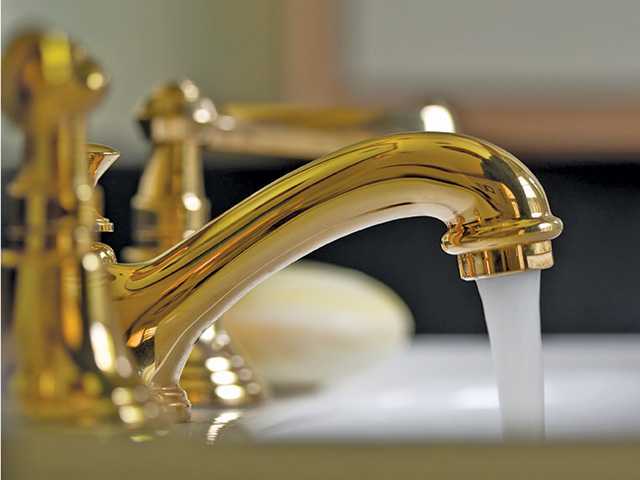
I’m not sure my question is a common one so you needn’t publish ... but I sure would like your opinion. We built our custom home in Sand Canyon 35 years ago. We used all high-end solid brass faucets and fixtures for sinks, tubs and showers.
As you can imagine, the years have worn away the fine finish. I don’t even mind the tarnish on the solid brass or polishing when I have to, but not all the finish is worn away so at this point they look awful with or without elbow grease.
Does it make sense to send them out to a plating company for refinishing …or is that so expensive that it makes more sense to purchase completely new faucets? Usually the new products are not as good as the old ones, hence my question.
I would love to know your take on this. Sincerely, Ruthann L.
Answer #1
Ruthann, good morning and thank you for your question. This is where deliberating on the financial value of your choices comes in.
If these were entry-level fixtures, I would advise you to replace them with new ones because it would not be worth sending out a low-end, inexpensive item for a high-end finish.
You tell me, though, that these are high-end fixtures. This is where your homework begins so that you will make an educated decision on which way to best spend your money.
I recommend that you photograph these items and send the pictures to different local finishers (chrome shops) who do this type of work and ask for their opinion and cost to refinish the fixtures. Most companies these days can give you a quote based on a photo for this type of work, thus making the shopping a little more convenient for you.
Based on what you are told, you’ll then be armed with proper information and be able to make a good financial decision for the repair or replacement of these fixtures.
Good luck with this project, Ruthann.
Question #2
I live here in town with a pool and it is pool season. I’ve seen articles where you’ve written about pools, so I thought I’d check in with you on this. Just need to pick your brain.
My pool light recently went out. I’m pretty handy and understand quite a bit about electrical. I went to pull my pool light out because it was all black where it is normally a golden color, and it is literally frozen in place. I cannot get this thing out.
The cord that goes inside the conduit from the metal casing is just frozen tight. I’ve tried pulling from both directions to get it out and have been unsuccessful.
I’ve got concrete and this would be very expensive if I had to tear all of it out to get this light and cord out. Do you have any tricks that I could use to try getting this out?
Johnathan E.
Answer #2
Johnathan, yes, you can try this: They have flexible drill bits that are on six-foot leaders; you’ll want to get one of these. Make sure the power is disconnected to your light, that there is no voltage: This is critical.
I understand that you know a little bit about electrical, but you have to be very, very careful on this step. By the way, make sure that this light is on a GFI. It should be already, but if not, definitely take the steps to change that.
I would turn the breaker off, being overly cautious. Cut the cord and try pulling again. If no luck, you’ll obviously have to drain your pool down to below this area; use some sort of floating device to allow you to work in this area.
Make certain that you use a cordless drill; do not use a standard electrically powered drill for this.
Take that long drill bit and basically drill the center of the wires out. The drill bit will go into the rose tube — this is what is holding the wires, and it sits in the light niche.
The light niche goes into the plaster, and then the rose tube goes out to the bell box above the pool deck where the connections are made. By drilling that center out, what you are doing is taking the pressure off the walls.
What happens is that anywhere where there is water, the water can get up inside of that rose tube and over the years. It causes the rubber to swell and almost fuse itself to the wall.
If you come in and drill the center of that wiring out, it allows that rubber to have more space for collapse, in essence, and then permits you to pull that wire out. I’ve done this over the years a few times and we’ve been successful with it.
Good luck, and once you get it out then get that rose tube as clean as you possibly can and then use a wire pulling gel and pull your new light through that niche.
Hook it up, make sure that you are set up on a GFI, be very careful with each step, and good luck!
Robert Lamoureux has 38 years of experience as a general contractor, with separate licenses in electrical and plumbing contracting. He owns IMS Construction Inc. in Valencia. His opinions are his own, not necessarily those of The Signal. Opinions expressed in this column are not meant to replace the recommendations of a qualified contractor after that contractor has made a thorough visual inspection. Email questions to Robert at [email protected].