As we prepare to celebrate our nation’s most important holiday, it is appropriate to reflect on our precious right of independence.
As a nation and as individuals, we have at our core the right to think, speak and worship as we please. But in the day-to-day experience of life, filled as it is with the “busyness” of jobs, school, children and trips to the store, how are these rights experienced? What are the little things we take for granted every day, objects we talk about, or deal with and enjoy that are results of, or reasons for, our independence?
As strange as it may seem at first blush, the personal automobile plays a major role in our everyday experience of independence.
The history book of transportation is filled with famous names. Brands such as Cadillac, Dodge, Chrysler and Chevrolet are family names of the founders of today’s well known mass-produced vehicles. However, there is one name that stands out above all — Henry Ford.
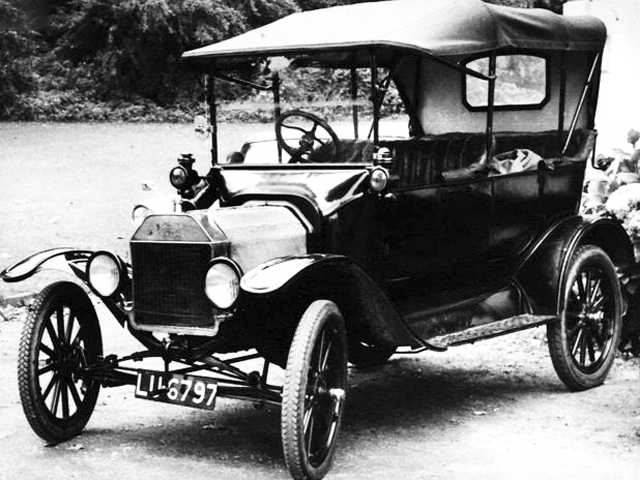
Without taking away any of the credit from others in this elite group, Ford put car ownership within reach of the common man. His Model T opened a door that remains wide open to all of us to this day.
Suddenly there were thousands of privately owned, personal conveyances out and about. People were able to travel freely at their own time and pace to go wherever they pleased. The masses were no longer slaves to the schedule and reach of the local streetcar or train to get to grandma’s house. The Sunday afternoon ride in the country became a new and exciting activity of family fun. Shopping was no longer confined to the corner store.
Of course, it wasn’t that simple. Motorized vehicles were not horses and buggies that traveled over fallen logs, through mud or across open fields with ease. These newfangled horseless carriages needed roads with good surfaces that didn’t wash out every time there was a heavy rain. Black top, originally invented by John Loudon McAdam in 1820 enabled fast, became a durable and inexpensive highway construction.
Bridges that could carry the weight of these iron beasts had to be built and maintained. Service stations sprang up at intersections providing an unending supply of fuel as well as employment for thousands. New coats (dusters) were needed to keep the dirt and dust from ruining people’s Sunday best.
Roads got longer until they reached all the way to the next city and beyond. Bridges that staggered the imagination crossed major rivers. Imagine the thrill of being among the first to drive across the Mississippi!
More people acquired cars. Additional car companies sprang up, and ultimately, personal transportation expanded to the highway infrastructure we enjoy today.
In 1912, when Henry Ford began selling his Tin Lizzies for $575 (any color you wanted as long as it was black) he did more than create a new industry; he offered us independence as individual people and families to come and go as we pleased, at a time of our choosing, to wherever we wanted to travel.
How much of this sense of independence and freedom has trickled down to the rest of our lives and to American society as a whole? What do we dream of as teenagers approaching our 16th birthday? What is the most coveted acquisition we can all purchase?
This country has always had at its core the values of freedom and independence. However, there can be a big difference between theory and practice. Driving a car is real and tangible. It is not an abstraction, or words on paper. Independence is the feel of a steering wheel in your hands, and a gas pedal under your feet.
Just as independence is our right, it carries with it responsibilities. We should not abuse our independence by being reckless with, or by a lack of caring for, that four wheeled beast that moves us.
The automobile is truly one of our symbols of independence.