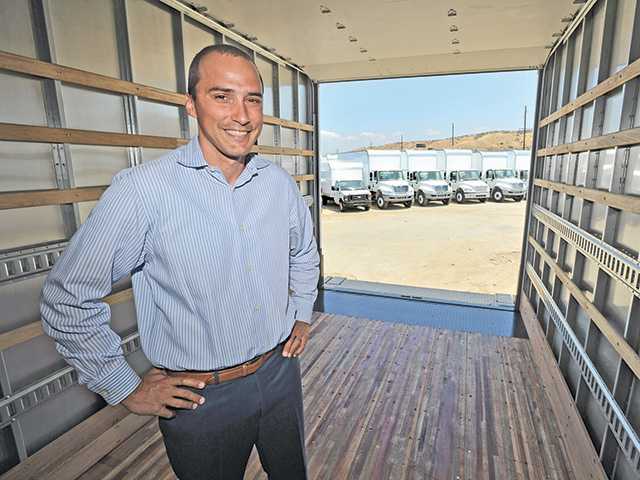
When you hear the word marathon, graphic images come to mind involving a race, endurance or competition. And while these adjectives all describe the company in question, this story isn’t about a race, it the story of survival and growth of one of the largest regional truck body companies in the country – Marathon Industries Inc., headquartered in Santa Clarita.
Originally founded under the name Satellite Truck Body in 1970, the assets were purchased by its vice president, Roger Hess, along with a couple partners and Marathon Industries Inc. was born in 1993.
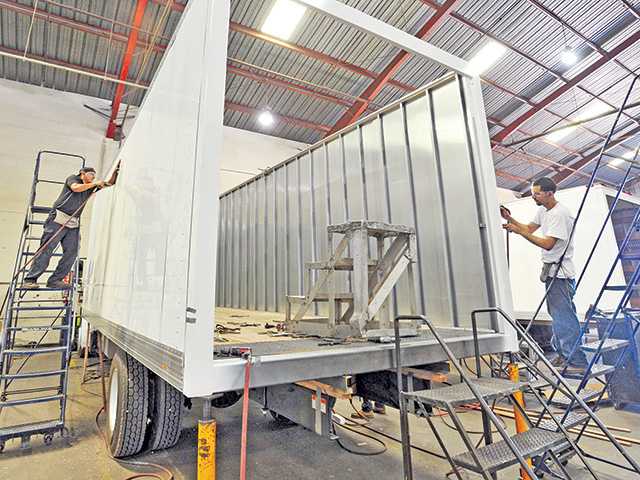
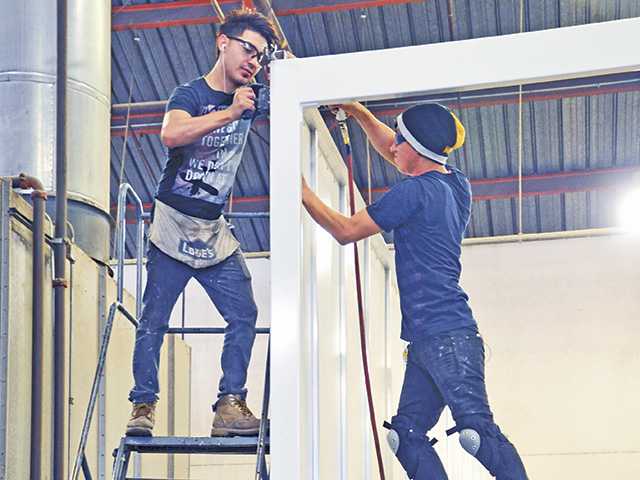
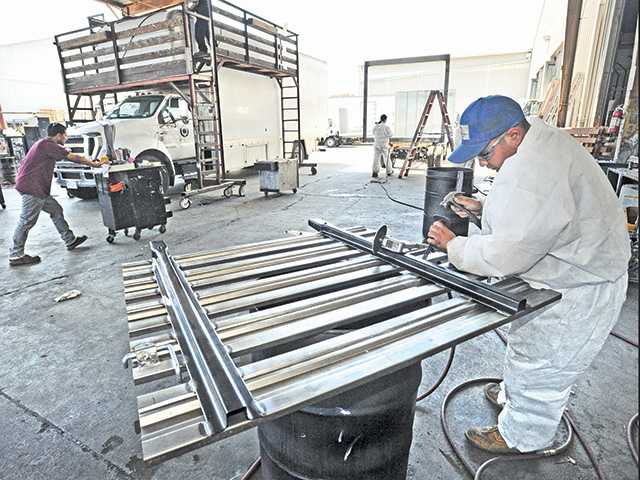
Whether you have a van, truck or a big rig or other specialty vehicle, Marathon manufactures, assembles and installs the cargo boxes or containers that complete the bodies of those trucks.
Today, son Chad Hess serves as President and CEO of the family owned and operated, 165-employee firm located in some 60,000 square feet of warehouse space along Springfield Avenue.
As many as 600 brand truck chassis reside at the company at any given time, while Marathon custom manufactures the cargo containers that are then welded onto the truck frames. Ninety-five percent of the firm’s projects are all build-to-order, said Chad Hess.
With multi-million credit lines from the Ford Motor Company and Freightliner Corporation, formerly of Mercedes Benz, Marathon takes on the truck chassis to build specialized trucks for the likes of rental truck companies, studios and dealerships.
But Marathon also often throws the dice, buying the equipment purely on speculation that customers will order – and when they do, Marathon is ready to deliver finished products giving them a competitive edge, Hess said.
Using an auto dealership as an example, Hess said the manufacturer will often only allow them to have so many models of a particular truck on their lot. Marathon, however, buys the chassis, customizes them for work trucks, and has them ready to go for any dealer to pick and choose from to meet a customer’s need providing the dealerships with a ready pool of inventory.
A local resident since 1999, Hess said the company is now ready to expand and he’s searching for the right property to do so. But, before this point came in the company’s history, it first had to outlive the economic downturn.
Surviving
The recession was grueling, business was down 70 percent, forcing Hess to make decisions and take actions he would have preferred not to do, but coming out strong taught him a number of lessons in the art of survival.
“We were able to make cuts and transitions quick enough so as not to kill us but keep us going,” he said. “A business can get a bad rap at a time like this, but it was pretty transparent with employees as to what we could and couldn’t do.”
Because the company is partitioned into teams handling various manufacturing processes, each team with a lead man, or a senior and a junior along with an apprentice working on it, continuing to train and develop people became nearly impossible. Keeping everyone wasn’t feasible either.
Gradually coming out of the recession, however, some employees that had left returned. Hess re-hired others. Some forty employees who had been with the company over 20 years remain today – giving the company a treasure trove of expertise to rebuild the company.
“I learned to make deeper cuts sooner and to protect your core employees even if it means taking something away from yourself,” Hess said. “Those core people will help rebuild the company so we held onto the employees that we could.”
The key factor, Hess believes, is that an owner has to be conservative with managing the business, but not too conservative; not paralyzed with fear.
“Identify your goals and stay focused on what you do,” he said. “Do not become scattered.”
As a result of staying focused, Marathon Industries was able to re-tool itself, so-to-speak, and today has 165 people on the payroll. But coming out of the recession was just as frightening as being in the recession. If a company takes too long to recover it can become very challenging from a customer standpoint, and that period “hasn’t been all that fun” either, he said.
“We came out of it short of employees. It was rough,” he said. “We had to have some rough, rough meetings with Enterprise (rental). We managed to salvage the business, set and manage expectations and then live up to them.”
Last year was a huge improvement, and this year Marathon has reported gains every single month. Better yet, Hess says the recovery this year “feels sustainable.” He predicts this year should shake out to be their best year yet in terms of revenue.
“It feels really good to take that kind of hit and basically come out above where we were before. It feels good that we managed it well, survived, and were fiscally conservative.”
Looking forward
Marathon can point to three key segments of their business today, most involving large fleet enterprises. Auto dealerships make up 45 percent of Marathon’s business, Hess said. Rental companies Enterprise, Budget, Penske and a couple others comprise 35 percent. Various end-users make up another 10 percent, and the studios comprise 10 percent of the company’s orders. Marathon also has a service and parts division as well.
“We’re strong in the studio industry and it’s nice to be close to all that (activity) in Santa Clarita. We have a close relationship with Fox and Sony; and Avon Rent A Car and Truck, and Galpin Studio Rentals. They have maybe 400 trucks in their fleet used in commercials and TV shows,” he said.
But Hess is looking forward to building a brand new component to Marathon’s reach now. Primarily a B2B business, he’s now looking at also building a business-to-consumer component.
“We’re trying to evolve and have some dialogue with the end-user; let them know we can make their truck more efficient or what pieces we can add to their commercial truck,” he said. “We’re trying to attract anyone that uses their vehicle for work. A lot of the products they want are hard find to online or from a wholesaler or retailer and we can fabricate those.”
To do that, Hess needs more space to house his brand new trucks and create a small retail showroom to showcase what they can offer. He estimates he needs up to 10 acres and hopefully a 100,000 square foot facility to grow and is working with the SCV Economic Development Corporation to find the space.
While he can’t name the parties he’s working with yet, Business Attraction Manager with the SCVEDC, Jim Brown, said he’s working on some possibilities that might keep Marathon in the SCV, an area Hess says he prefers not to leave. The EDC will often search for options first by contacting the brokers and shielding the company’s identity until the firm is ready to reveal itself, or is ready to buy or lease.
Hess is also working with Christopher Girdwood, Business Outreach Manager with the SCVEDC, he said. Marathon had already taken advantage of the Enterprise Zone hiring tax credits.
Girdwood said the SCVED is working with Marathon on some possible R&D tax credits because when they bring a new truck container online, they have some pretty large federal tax liabilities.
“It’s a very interesting company with a $6.5 million payroll,” Girdwood said. “They’re able to work with Ford and other European and foreign truck manufacturers. But their need for space is growing and the company was looking at moving to Nevada, Texas or Arizona.”
Hess, on the other hand, wants to repay the help he’s received and is working with Girdwood to meet with College of the Canyon’s Economic Development division.
Because Marathon employs about 40 welders - some GREAT talent - he thinks they might be able to help COC’s welding program. Doing so would help the college, help a student and help itself making the assist a win-win for everyone, he said.
“This is a good location for our business. We’re competing in our industry and get help trying to control costs,” Hess said. “We want to take advantage of any programs out that that can help us grow.”