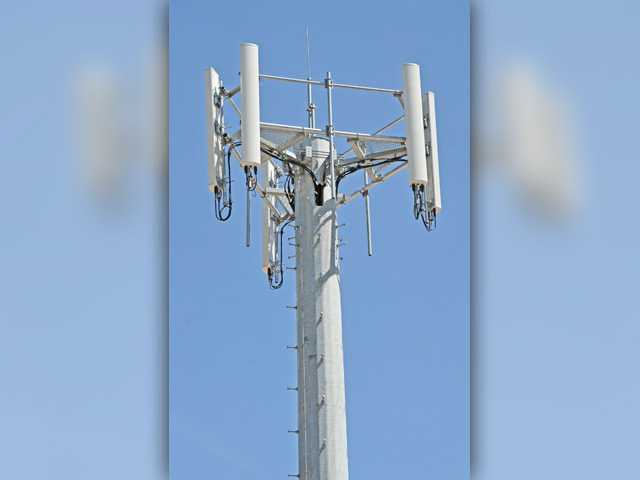
When officials floated the idea of a cell tower at Golden Oak Community School in Canyon Country last spring, the proposal was met with outcries.
Parents said they were not properly informed of the proposal and were concerned for their youngsters’ safety.
The tower was delayed; its future is uncertain.
In March, a proposed communication tower that was set to be built at Fire Station 108 on Rock Canyon Drive in Saugus was met with opposition by residents and firefighters.
That tower and a handful of others in the Santa Clarita Valley were planned as part of the Los Angeles Regional Interoperable Communications System, or LA-RICS, a program to create a public safety communications system connecting firefighters and police officers.
Saugus residents said the tower would be too close to their homes and that they were not properly notified of the proposal. Firefighters argued it would be unsafe for them. Santa Clarita City Council members came out strongly against it.
The scope of the LA-RICS plan was eventually pared down substantially. No towers are set to go up at county fire stations, and work on other proposed towers in the Santa Clarita Valley was delayed pending public outreach.
In spring 2014, residents of the Northbridge area of Valencia prickled over a plan for a cell tower next to an existing water tower off Fairview Drive. They complained about noise, aesthetics and health concerns.
That tower was also delayed during the review process. The plan was ultimately withdrawn, and no proposal has been brought back for additional review.
While some Santa Clarita Valley neighborhoods band together to defeat cell tower proposals, other resident complain about poor service in the valley.
“I’d prefer to have (a cell tower) than to have spotty service,” said reader Jon Melander in a post on The Signal’s Facebook page. “There are various ways to disguise them, such as combining them with church steeples or making them look like trees.”
“I would not have a problem with a cell tower near my home,” said reader Dara Pettinato. “It seems the Saugus area, near Mountain View Elementary, has terrible cell reception.”
Residents who responded to a Signal Facebook page query named numerous areas valleywide where cell service can be spotty, including relatively remote places like San Francisquito Canyon and more urban areas like Stevenson Ranch.
Castaic, Plum Canyon, areas around Golden Valley Road and a few places on McBean Parkway were all cited by readers as locations they sometimes struggle to get a signal.
Growing use
Nearly two-thirds of all Americans now own and use some kind of smartphone, according to an April Pew Research Center report.
That’s up from 35 percent who said they owned such a device in spring 2011.
Constant change in the ways Americans use their phones or access mobile networks means carriers must keep a watchful eye on and, if necessary, upgrade their service.
“We’re constantly monitoring our network — and it’s a living, breathing thing for lack of a better term,” said Alex Krasov, spokeswoman for AT&T California.
“It’s not going to be static at any one time.”
But every service upgrade that involves an additional tower means a potential public outcry.
Objections range from challenges to need to health concerns to aesthetics and noise.
Coverage vs. capacity
Northbridge residents who turned out to protest a tower in their neighborhood last year gave a presentation that argued there was already sufficient coverage in the area.
Santa Clarita city officials, however, say coverage need is considered before a new cell tower comes up for consideration.
“As part of the submittal, (carriers) need to show the gap in coverage,” Planning Manager Jeff Hogan said.
Some opponents of new towers point to coverage maps that carriers provide online showing available service throughout much of the Santa Clarita Valley.
Those maps, though, show where coverage is available, carriers say, not necessarily where phones and other mobile devices will work perfectly.
Krasov used the metaphor of a freeway to describe the difference between network coverage and network capacity.
“Coverage is: ‘Do we actually have a road there and is there a road leading to the freeway?’” she said. “Capacity is how fast traffic is actually moving on the freeway.”
The metaphor can also be applied to how networks are used, Krasov said.
“Something like sending a text message or an email, that can be like a Mini Cooper or a regular-sized car,” she said. “Someone trying to stream an HD video — now you’re talking a semi-truck, and things slow down very quickly.”
Just as traffic patterns and road use can change, so to can network demands as more people move into an area, replace their landline phones will cellphones, or upgrade from older cell phones to ones that can more easily access the Internet.
Health concerns
Many of those who turn out to protest new cell towers or other wireless facilities — particularly near homes or schools — have raised concerns about health risks associated with the towers, such as the radio frequency energy they emit.
Lew Currier, health and safety director for Los Angeles County Fire Fighters Local 1014, joined with Saugus residents in March to oppose the LA-RICS tower at Fire Station 108 “due to the health issues from radio frequencies.”
“Firefighters are already exposed to a higher rate of cancer that is sometimes 10 times as high as the general public,” Currier said at the time. “We don’t want more exposure than we are already exposed to.”
However, Santa Clarita city officials say they aren’t allowed to turn thumbs down to a proposed tower so long as it meets the guidelines set by the Federal Communications Commission.
“Jurisdictions cannot approve or deny based on health risks,” Hogan said.
The FCC “sets a standard that they deem to be safe for public use, and it’s our job to make sure that we meet those standards,” said Krasov of AT&T.
“Overwhelmingly, the vast, vast majority of our sites in California and across the country are well below the standard,” she said.
Rod De La Rosa, senior development manager with T-Mobile, provided a fact sheet from the carrier that said radio frequencies are emitted by a variety of common household devices, including cordless phones, wireless routers and baby monitors.
“At a cell site, signals are directed from the antenna toward the horizon, and RF (radio frequency) energy dissipates exponentially with distance,” the fact sheet reads. “So the height of cell site antennas, the fenced-off areas around them, and their low power levels combine to assure that the actual RF exposure is a fraction of the FCC’s limits for safe exposure.”
An American Cancer Society statement about cell towers reads, “Most scientists agree that cell phone antennas or towers are unlikely to cause cancer.”
Aesthetics, noise
Another consideration when it comes to cell towers is aesthetics.
Towers and antennae are often considered blight; residents often complain about towers destroying their views or spoiling the character of their communities.
Such concerns were raised in 2010 by residents of Baker Canyon in Canyon Country. They opposed a plan to build a tower on a ridge overlooking their rural community.
That tower was later moved to a ridge overlooking Sierra Highway.
Aesthetics is one of the major factors the city looks at when reviewing an application to build a new cell tower or other wireless facility, Hogan said.
“There’s a lot of work that goes on with the cell carriers before they actually submit (new tower plans) because we want to make sure they have a complete application,” Hogan said.
“Staff works with the carriers to try to have (towers) located in commercial areas and business parks and also in stealth locations,” he said.
Some of the more common ways to disguise cell phone towers include trussing them up to look like trees or painting them to match nearby infrastructure.
Others tactics are more elaborate. The cell tower proposed for Golden Oak Community School would have been encased inside a working clock tower.
Hogan said the city also encourages co-location, or multiple antennae sharing the same site.
Another major area of review by Santa Clarita officials is noise, Hogan said.
That’s another topic that’s been broached by those opposing new cell towers, though such concerns typically fall behind health and aesthetics.
“I think there’s a perception that when a carrier comes to talk to a municipality or any other landlord, the public thinks that (the tower) was just thought of within a week, when in fact a lot of time goes into the planning,” De La Rosa said. “There’s a lot of data that gets crunched.”
661-287-5525
On Twitter @LukeMMoney