It was the 1960s. Thanks largely to Newhall Land and Farming Company’s master-planned community of Valencia, the Santa Clarita Valley was rapidly evolving from two sleepy, agriculture-and-industry-driven burgs, far removed in mindset from its burgeoning neighbor to the south, into a suburban community increasingly led by a group of visionaries.
Among the visions in the works at that time was a movement for independence from Los Angeles County that would eventually morph into cityhood. Also in the works were plans for California Institute of the Arts, College of the Canyons and Henry Mayo Newhall Memorial Hospital.
Since about 1926, the Santa Clarita Valley had had at least one hospital: Newhall Community Hospital. In the early 1960s, two for-profit hospitals arrived in the SCV: Golden State Hospital and Santa Clarita Hospital, later to be named Inter-Valley Hospital. The latter, located on Soledad Canyon Road in the Golden Triangle area, was two stories tall and boasted the first-ever elevator in the SCV.
It was in the late 1960s that Tom Lowe, then-president of Newhall Land, spearheaded the drive for a first-rate community hospital he said was in keeping with the standards set by Newhall Land for Valencia.
“With 90,000 people expected to reside in the valley by 1980 and 130,000 projected by 1990, the construction of a comprehensive health care facility, accessible to all, was approved by the Southern California Comprehensive Health Planning Council,” reads an article published in a May 28, 1975, hospital dedication supplement to The Newhall Signal.
The planning council approval gave Lowe’s vision priority over the other valley hospitals.
The Newhall Land president formed an alliance with the Lutheran Hospital Society, which had successfully built and managed other nonprofit hospitals in Southern California.
The head of Lutheran Hospital Society was Samuel Tibbitts, who helped form the first local Board of Trustees for the Santa Clarita Valley’s nascent new community hospital. It was for Tibbitts that the Valencia Industrial Center’s Avenue Tibbitts was named.
Indeed, many names listed among the early hospital trustees will sound familiar to those who drive the streets of the Industrial Center.
Value of a name
As for the new hospital, it was named in honor of town founder Henry Mayo Newhall. Born in Saugus, Mass., and bitten by the California Gold Rush bug, Newhall made a fortune not in prospecting but in auctioneering and railroads. He turned to land ownership after 1870 and purchased for a reported $2 an acre some 46,460 acres in the Santa Clarita Valley.
Henry Mayo Newhall Memorial Hospital was a name selected at least in part with the hope that both the corporation Newhall Land and Farming and the Newhall family itself would become major benefactors of the hospital.
It worked.
Newhall Land donated prime property totaling 25 acres for the hospital campus on McBean Parkway at what is now Orchard Village Road. The land was valued at some $1 million at the time.
The firm donated additional cash to the hospital, and members of the Newhall family followed suit, donating cash and stock valued at $1.6 million.
That left the new board with the task of raising the remaining amount of the $8.8 million needed to build the hospital.
Nonprofit
In 1970 the hospital founding committee reorganized as its first Board of Trustees and appointed Newhall Municipal Court Judge Adrian Adams as chairman.
Also in the early ‘70s, the hospital was established as a nonprofit corporation and hired its first employee — Bobbie Trueblood, a British-born woman who married into the longtime Santa Clarita Valley Trueblood family just after World War II. The Truebloods owned The Newhall Signal.
Among the first hospital trustees was civil engineer Ed Bolden, who is still active among Santa Clarita Valley health care providers as vice chairman in charge of fundraising for the Samuel Dixon Family Health Centers Inc.
Bolden remembers being approached by Lowe to join the hospital’s Board of Trustees.
“It was the beginning of the ‘70s and I had just finished as president of the Boys Club (later Boys & Girls Club of Santa Clarita Valley) and president of the Rotary (Club),” Bolden said during a recent interview.
“I was just out of two jobs and I needed something to do,” quipped the owner of his own civil engineering firm.
Bolden said he disliked the “rules and regulations” involved in establishing a nonprofit community hospital. Among them was a requirement the pre-existing smaller hospitals had to go if Newhall Memorial was to open, he said.
“I supported the smaller hospitals,” Bolden said. “So when Tom (Lowe) asked me to be a part of the board, I thought that was my chance to do everything fairly and equally for everybody.”
As it turned out, both Golden State and Inter-Valley hospitals were locked in a struggle to expand, neither able to convince regulators it should prevail. Funding became problematic, and by about 1974, Golden State had quietly closed its doors.
In 1972, Newhall Memorial bought Inter-Valley Hospital and began operating there, renaming it Hillside Community Hospital. Ground was broken on the Valencia campus in 1973.
Construction
Bolden, whose Andel Engineering Company is celebrating its 55th year, headed up the Board of Trustees’ building committee.
“It was a board that had minds thinking and searching for ‘how,’” he recalled. “We had the backing of the Henry Mayo Newhall Foundation and its influence.”
The San Francisco-based privately owned family foundation has a stated mission “to improve the quality of life within the geographical areas associated with the career and legacy of California pioneer Henry Mayo Newhall.” Those areas include the Santa Clarita Valley.
“That foundation was the foundation of every single good thing we’ve got in this community,” Bolden said, citing CalArts, the Boys & Girls Club of Santa Clarita Valley, the hospital and the YMCA as institutions it helped launch. “They’ve been the foundation of all of them.”
The engineer stayed on the hospital Board of Trustees through the completion of the first campus, then moved on to other community service pursuits.
Sylmar earthquake
And on Feb. 9, 1971, the Santa Clarita Valley was rocked by the Sylmar earthquake, an event that sent hospital planners back to the drawing board to review the campus structures’ “earthquake-proof” characteristics.
“Designers held up on finalizing Memorial’s plans until the state of California reviewed the building code and requirements for seismic safety,” Signal staffers wrote in the 1975 hospital program. “The plans were then adjusted to comply with these standards, and construction began in 1972.”
Fundraising to build the hospital involved major corporations and civic leaders, but also everyday citizens on a grassroots level.
Residents of Friendly Valley sponsored a telethon, lasagna dinner, Bingo competition and art show to help build the hospital.
Other fundraisers ranged from the efforts of resident Dorothy Crescenti, who sold straw purses and gave all proceeds to the building fund, to a Canyon High School track team 400-mile relay between San Francisco and Valencia.
A Castaic 4-H group sponsored a bake sale; the Rotary Club donated proceeds from its Christmas dance; Jaycees put on a bike-and-walk-a-thon and the Canyon Theater Guild donated a night’s worth of ticket sales.
Dedication
The hospital was dedicated in May 1975 with much fanfare and the smoking of a peace pipe, though it had officially opened its doors at the Valencia site in August with about 100 beds, including an ICU and coronary unit. The first patients were transported from Hillside Community Hospital, and that facility ceased to be the valley’s community hospital.
The shift from the mid-valley to Valencia locations angered many Canyon Country residents, who said the new Newhall Memorial was too far from their community, notes an article published in the May 30, 1975, issue of The Signal.
Also objecting “for a time,” the article said, were residents near the Valencia campus, “who saw a hospital only as a source of sirens.”
“Despite the headaches, large and small, the hospital has taken shape, in great part, because of the initial persistence of former Newhall Land President Thomas L. Lowe, who grimly put aside obstacles and persuasively presented the community’s needs on dozens of strategic occasions.”
Opening the new Henry Mayo Newhall Memorial Hospital campus, The Signal article noted, posed a minor issue: What to call it?
The entire title being too cumbersome for common use, it said, reducing it to its acronym — HMNMH — seemed not an option, either. How, the article pondered, was it to be pronounced? “Hmmmmmmmm?”
“The hospital staff now calls it ‘Memorial.’ Maybe that will stick; who knows?” it concludes.
Those who worked at The Signal under Managing Editor Ruth Newhall know she came to insist the hospital be referred to as “Newhall Memorial.”
And so it was until, recently, the hospital ditched “Memorial” from its name during a rebranding campaign, adopting the formal name “Henry Mayo Newhall Hospital” and the nickname “Henry Mayo,” which had long been applied by medical professionals.
Bankruptcy
Since its opening 40 years ago, the hospital has faced some major crises. It sank into debt in the 1990s, a situation brought on by low reimbursement rates for medical care and badly negotiated contracts between the hospital and other health care facilities providing services not offered at Henry Mayo.
The situation was exacerbated by the Jan. 17, 1994, Northridge earthquake. Despite construction planners’ good intentions in the early ‘70s, the hospital was seriously damaged in the earthquake, which also played havoc with College of the Canyons’ Valencia campus and nearby Santa Clarita City Hall, which was red-tagged.
It wasn’t until Nov. 26, 2001, that hospital attorney Michael Weiss filed for Chapter 11 bankruptcy, citing a $10 million hospital debt. By then the board had hired new leadership for Henry Mayo: President and CEO Roger Seaver.
“We’re the only earthquake-damaged hospital that did its repairs unfunded by others,” Seaver said in December 2001. Most repair costs were covered by insurance and federal funding, but the hospital had to complete costly earthquake retrofitting as well, he said.
As an example of poorly negotiated agreements with other health care facilities, Seaver noted the hospital had no cardiac care program at the time, so it stabilized patients and sent them to Providence Holy Cross Medical Center in Mission Hills. Insurance payments to Henry Mayo had to cover its own costs and Providence’s. Henry Mayo was coming up short.
The Chapter 11 bankruptcy filing allowed the hospital to renegotiate those contracts to its benefit.
The hospital’s plan, Seaver said in December 2001, was to return to a profitable status by the 2002-03 fiscal year.
It emerged from bankruptcy in 2003 with a four-year reorganization plan that included paying all creditors in full.
Master plan
To better meet the growing community’s needs — the valley’s population is estimated at 250,000 or more — and reduce its reliance on other care facilities, the hospital proposed an ambitious master plan to expand the Valencia campus with the aid of a Beverly Hills firm, G&L Realty Corporation, that would help underwrite the campus expansion in exchange for building its own medical office structures on it.
The plan proved unpopular with a loud collection of opponents in the early 2000s, including residents near the hospital who said the expanded campus and new emergency heliport would invade their privacy and compromise their quiet suburban neighborhood.
Many challenged the relationship with G&L Realty, saying the deal was a land grab by an out-of-area firm, not a plan to improve the local hospital.
Residents of Canyon Country clamored for more health care facilities on their side of town, rather than expanded ones in Valencia.
And others argued the hospital was big enough to serve the community’s population as it was. They noted many residents leave the valley for medical care anyway and claimed additional services were not necessary.
The proposed master plan proved a political hot potato for the Santa Clarita City Council, pitching arguments for improved public health care against property rights of individuals; proponents of growth vs. those opposed to growth; the city’s own height restrictions vs. the hospital’s need to expand upward on restricted property.
After months of heated debate and hours of public grappling, the City Council on Nov. 20, 2008, OK’d the master plan’s final environmental impact review on a 4-1 vote with Councilman Bob Kellar dissenting.
Kellar and Councilwoman Marsha McLean dissented in the 3-2 approval of the master plan’s development agreement.
New campus
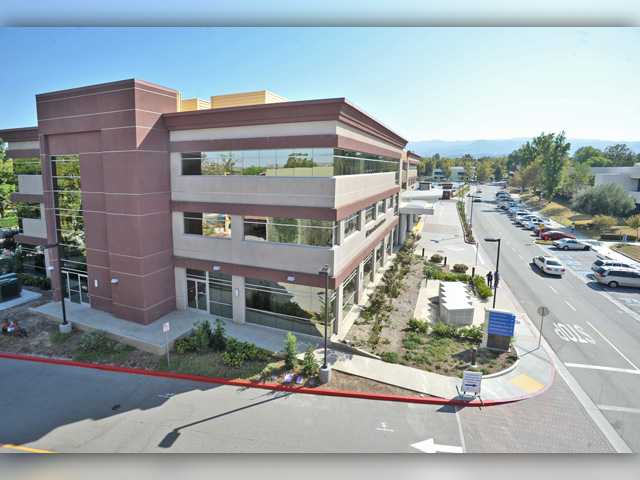
Since that vote nearly seven years ago, the Henry Mayo Newhall Hospital campus has changed markedly. New structures have gone up, including some built alongside McBean Parkway that block the formerly suburban feel of the campus.
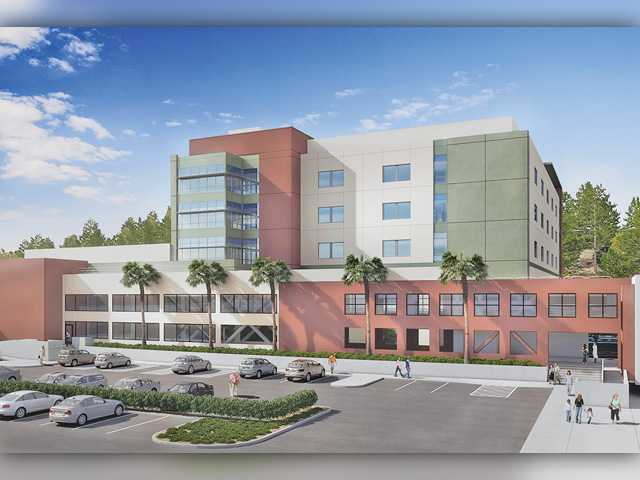
More growth is planned, including construction of a six-story tower to be built near two existing buildings and connected by corridors so that the primary hospital buildings on the campus will be connected as if one structure, said Chief Operating Officer John Schleif in an interview last December.
With 238 beds, the hospital is sometimes now at patient capacity, Schleif said.
“We need more capacity for future growth, and we need more capacity in an emergency situation,” he said. “This valley can be isolated if an earthquake or other emergency occurs. We need to make sure we have that emergency capacity.”
Signal Business Editor Jana Adkins, former Signal Publisher Tony Newhall, and four decades of Signal staff writers contributed to this report.
Copyright 2015 The Signal