When West Side residents complained vigorously last spring about plans to bury waste brine underground near their homes in a bid to meet state mandates to clean up the Santa Clara River, they sent Santa Clarita Valley Sanitation District officials back to the drawing board.
Without deep well injection, how could the Santa Clarita Valley dispose of the chloride — a component of common table salt — that’s been ordered extracted from water as it’s treated to be dumped into the river?
Facing a state-imposed deadline to come up with an operational system, Sanitation District officials considered building a pipeline to the ocean to ship the offending brine to the sea. But that was deemed too costly.
They thought about trucking the brine out of the Santa Clarita Valley. But that required as many as 90 tanker trucks a day moving in and out of the valley — not considered a good option, either.
The search led them to Burbank Water & Power, which uses another option to dispose of chloride.
City Councilwoman Laurene Weste — one of three Santa Clarita Valley Sanitation District board members — joined a fact-finding expedition of sanitation officials to the Burbank Water & Power building in May to see first-hand how brine could be reduced in volume so hauling it away wouldn’t require so many trucks.
What they found in Burbank was a state-of-the-art brine-minimization plant.
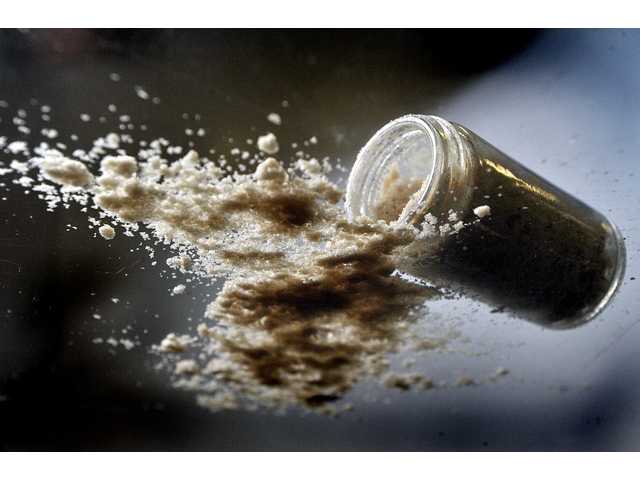
At its best, the brine-minimization process could turn a truckload of brine into an amount small enough to fit in a pickle jar. The prospect was exciting for those charged with solving the Santa Clarita Valley’s more than decade-long struggle to meet state mandates to reduce the amount of chloride in water discharged into the Santa Clara River by the Sanitation District’s two water reclamation plants.
The process
From scaffolding three stories above the ground at Burbank’s brine-reduction plant, water is fed into a vat the size of a water tower tank where metals such as magnesium and calcium are extracted.
The water is then fed into a smaller tank — the size of an RV — where water-softening on a grand scale takes place, with all remaining metals, sand and debris removed. The ultra-soft water is then fed through reverse-osmosis membranes.
Before it gets to reverse osmosis, however, the pH, or acidity and alkalinity of the solution, is balanced to protect the extremely sensitive membranes.
Water emerging from the reverse-osmosis equipment is then stored in a house-sized vat. It’s at this stage in the process that Santa Clarita Valley Sanitation District officials propose to transfer brine water from the tank to tanker trucks to haul to the Joint Water Pollution Control Plant in Carson.
The Carson facility would add the brine to the more than 270 million gallons of water it gets from the Los Angeles Basin, treat it and discharge it into the ocean.
It is estimated that brine transported at this point in processing would require six to 10 trucks a day to haul out of the Santa Clarita Valley — far better than the original estimated 90.
‘Cadillac’ crystallizers
The Burbank brine-minimization process goes a step further. To reduce a potential truckload of brine to a powdered substance taking up a pickle-sized jar, Burbank employs crystallizers described as the ‘Cadillac’ of brine-reduction machinery.
A crystallizer is a specialized kiln that requires two megawatts of power to remove all liquid from the brine, leaving just a powder.
In a report issued in May by sanitation officials, it was noted that crystallizers “may require higher capital investment, more energy and higher operating costs” than would be required if six to 10 trucks a day were acceptable for ridding the valley of brine.
The upside to crystallizer use, however, is that only one truck would be needed to haul the brine away — if that.
Sanitation officials believe it is unnecessary for SCV ratepayers to underwrite the purchase of the crystallizers.
They learned from their tour of the Burbank facility that they could cherry-pick the brine-reduction technologies they need to do the job.
Deadline
The battle over chloride in the Santa Clara River has been waged for decades, with Santa Clarita Valley Sanitation Districts at one point flat-out refusing to foot the bill for what some say is unnecessary. Many have challenged the science upon which the demand is based.
But state water quality regulators sided with downstream farmers who said the high salt content in irrigation water damages their crops, particularly strawberries and avocados.
In October 2013, after Sanitation District workers winnowed down the cost of chloride reduction, a plan was adopted by the Santa Clarita Valley Sanitation District during a public meeting. That meeting followed a series of public meetings on the issue lasting through the summer of 2013 and into that fall.
The plan included the now-abandoned deep well injection system to dispose of chloride once it’s removed from treated water.
The cost of chloride reduction will appear on property taxes of every Santa Clarita Valley resident who is hooked up to the sewer system. In November 2012 the district was fined for violating conditions of its permit to discharge wastewater — a cost also borne by district ratepayers.
661-287-5527
On Twitter @jamesarthurholt