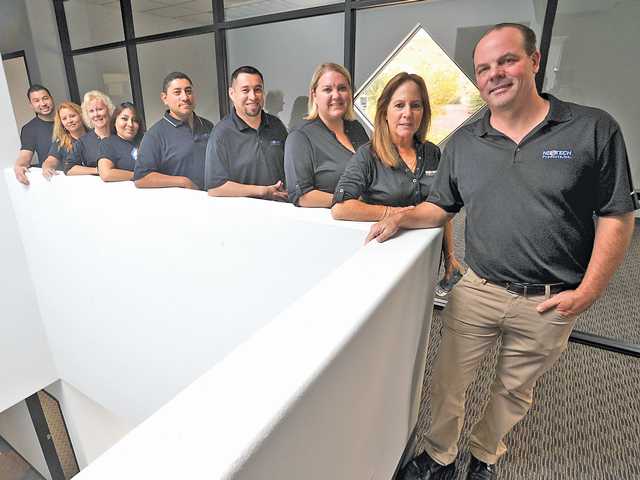
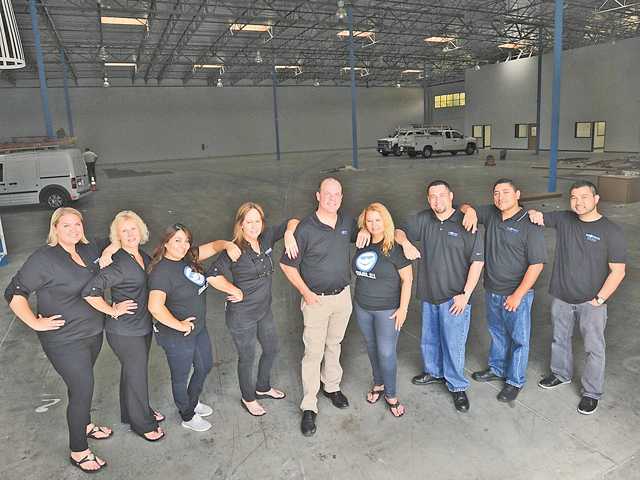
When the biomedical device firm Neotech Products finalized its business plan for 2015, the purchase of a new building to accommodate their growth was not mentioned anywhere in their plan.
But, by March the firm decided that rather than ask a tenant to move out of the space it leased in the back portion of the building it owned on Fremont Court in Valencia, the executives decided Neotech Products itself should move on.
As luck would have it for the company that employs a unique biomedical device development model, Neotech Products found a new building within two weeks. With a limited supply of warehouse spaces in the size range they were seeking, Neotech seized the opportunity and bought a nearly 37,000 square foot building on at 28430 Witherspoon Parkway in the Valencia Commerce Center for $4.8 million in a 1031 exchange.
The deal allowed Neotech to more than double the space they were formerly operating in, and afforded the buyer of their former building a ready-made tenant in a deal which netted nearly $2.8 million for their former space. Heger Industrial represented Neotech, and Colliers International represented the seller on Witherspoon.
“What we’re most excited about is being to add more positions,” said President Craig McCrary. “We need a full time human resources person, customer service help and additional warehouse people but literally had nowhere to put them.”
Having grown from 12 employees in 2005, Neotech moved to its new space with 36 people and plans to immediately add five to 10 new positions, McCrary said.
Also, the firm plans to increase the number of people it places from Pleasantview Industries Inc., a Saugus-based nonprofit that assists in securing jobs for people with developmental disabilities, giving them a chance to achieve a level of independence within the community.
And for the firm which pays attention to the needs of tenants and employees alike – some of whom have been with the company for up to 20 years, it has also built a lucrative business partnering with customers of its products.
Royalties
Neotech was founded by the former chief of staff of St. Joseph’s of Burbank hospital, Dr. Arnold Heyman, and Tom Thornbury, owner of a medical manufacturing company.
In the mid-’90s, Neotech Products ventured into the world of designing and manufacturing critical care products for newborns, and today is a leader in developing effective products for premature babies and neonatal patients worldwide.
According to World Health Organization in 2012, more than one in 10, or around 15 million – babies are born prematurely each year. And that number doesn’t include babies who end up in neonatal units in hospitals at birth for other reasons.
Owner of many U.S. and foreign patents, Neotech proudly proclaims that all of its products are U.S.-made with the motto “what we do is good for America, good for our local economy and good for our vendors.”
But the biomedical device maker works directly with doctors, nurses, clinicians and even sometimes parents to design and develop products their clients envisioned, using a royalty sharing arrangement.
“We develop the product with them and in return they’re paid a royalty when it goes to market,” McCrary said. “We think we’re one of the few in the business that works with inventors.”
That model also works for the people who come up with the ideas, he said, because as a small company they are very easy to contact with very little red tape.
“An inventor doesn’t need 57 approvals. We just have a quick meeting as a small group and we have a pretty good speed-to-market,” McCrary said.
Royalties range between 1- to 5 percent.
While some inventors earn more than others, another perk is that a person’s idea is validated, he said. It shows them there was indeed a demand in the market for their concept.
Neotech does all the heavy lifting by taking the products through the FDA for approval, and that process is not for the fainthearted or an individual trying to wend their way through the lengthy, and often burdensome, regulatory process.
But in the end, the ideas translate into sales.
Neotech’s growth
Neotech began with one product in 1986.
It now produces some 75 different products, and the firm sells millions of disposable neonatal and pediatric products per year, McCrary said.
“We’ve seen a lot of growth in the pediatric and home health care market segments,” he said. “Overall, business has grown on average 15 percent per year. It’s been really stable.”
In March, when the firm was installing new storage racks for inventory, the firm’s executives looked around their warehouse space and realized how crowded they were. Dr. Heyman suggested they consider moving.
Ramping up logistically, Neotech planned extensively for its move on the weekend of Sept. 26 so that it could be operational again by Monday morning.
As for McCrary, he was promoted on his 24-year anniversary with the company to position of President.
“I didn’t see it coming,” McCrary said earlier in September. “The plaque on my door still says Vice President on it and it will stay that way until we move into our new space.”