“I don’t have enough time. There aren’t enough hours in the day; I could use another day every week just to catch up. I don’t have time to create a plan, even though I know I need one. If I leave the office, productivity drops. My to do list is long and I am not sure if I will ever get caught up.” – Any business owner’s dilemma
Every business owner has the same 24 hours in a day and seven days a week to own and run a business and to attempt to have a personal life too. It is what the owner decides to do with their time that will make the difference between the constant struggles for survival or to move forward to something better: success. An owner that does not take time to work on their business will never change the outcome.
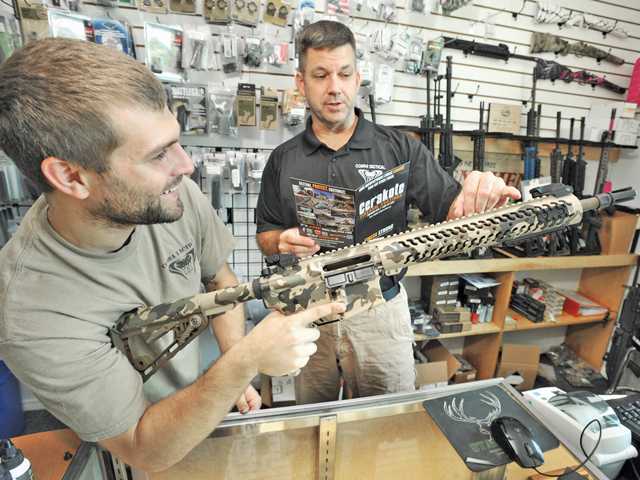
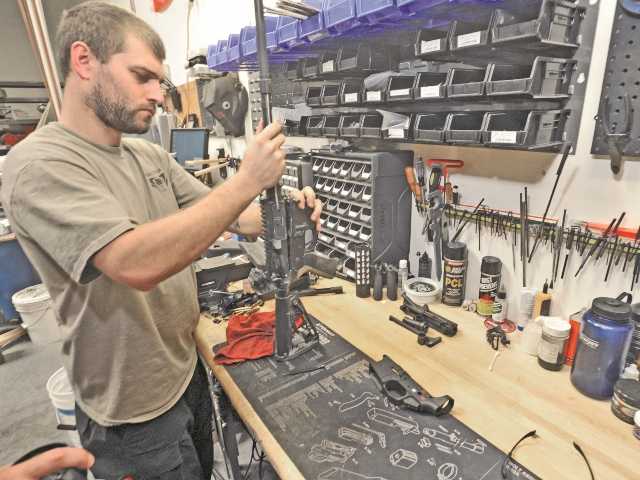
After having served in the U.S. Marine Corps and graduating from California State University, Northridge with a degree in Geology, Eric Larsen launched two businesses in 2003. Cobra Tactical survived and thrived, growing from a hobby in the garage to being awarded a Federal Firearm Manufacturers License in 2011. The company incorporated in 2007 and moved to its present location in the Commerce Center in July 2009.
Since day one Cobra Tactical (CobraTactical.com) was a business built on a passion for high end, custom firearms and ammunition for the avid sport hunter and to serve as a reliable resource for those in the law enforcement and military communities seeking weapons to supplement existing approved firearms.
Revenue grew slowly and steadily in the core products lines through the years but in the quest for additional revenue, Larsen greatly expanded the product offering, seeking out government contracts and investing $30,000 with Celerant, a software point of sale, to improve the ability of the company to manage inventory and to sell on-line.
The company had worked hard to build and maintain a stellar reputation, but the additional volume presented several challenges.
First and foremost, the company suffered with a lack of integrated supply chain systems. Second, inexperienced staff members, while well intentioned and passionate about firearms, were not consistent with paperwork, computer systems and follow through. Third, investments to improve systems were costly and did not provide the desired return on investment.
The results were predictable: ratings on Yelp suffered. Competition moved into the geographic and online marketplace, offering similar products and promoting better service. Revenue dropped, cash flow tightened, service levels declined and customers became less loyal.
After reviewing the current situation and the potential for both a turnaround and future growth, the following were recommended as action steps:
First, get the financials in order. Larsen was encouraged to hire a part-time CFO and to replace his current tax preparer to straighten out the books and improve financial reporting. The company had accumulated almost $100,000 of slow moving inventory that represented potential working capital that could be used for reduction of debt, advertising and growth.
Results: the additional set of eyes on the financial statements has resulted in the creation of profit and loss statements for each product line, providing a compelling focus for the company. Inventory levels have fallen, freeing up cash.
Second, the company was directed to proactively address human resource issues. The company’s history of hiring young, passionate firearms enthusiasts was notable but these individuals were often lacking a work ethic and had demonstrated little interest in executing the essentials of running a business because it was not fun to do so.
HR decisions were often made reactively and a long, drawn out process of multiple chances for underperforming employees to improve. Loyalty and friendship became a liability. Loyal employees sometimes were, or became, lazy employees. A single employee with a lack of productivity or poor work ethic could cause lasting damage living forever in the way of a damning review on Yelp or other websites.
Results: disengaged employees were counseled and then swift action was taken to have them move on to other job opportunities elsewhere. A more vigilant interviewing and performance management system is being explored to improve hiring.
Third, it was recommended that key processes be visually mapped. This is a quick way to improve quality control and improve efficiencies in the order-build-check-deliver-bill cycle.
While it does take time to create these maps, doing so will eliminate mistakes in customer orders, inventory management, customer service levels, cash flow and profitability.
Results: this is a work in progress and will require planning and time for execution.
Fourth, Larsen joined a strategic advisory board. The requirement for participation is the completion and monthly updating of a ‘strategic growth navigator’ (a tactically-focused forward looking operating plan for the next 18 months). This peer group serves as a sounding board to help Larsen make better decisions and reduce financial risk.
Results: For the first time, Cobra Tactical has formal goals and key performance metrics that point the company to a better future. Daily fire-fighting, which had become a way of life, is rapidly declining. The company is still falling short of daily revenue goals but the variance is decreasing.
Fifth, after reviewing all of the past and current issues facing the company, it is clear that the future of Cobra Tactical is in getting back to its core competencies: building high profit, custom firearms and associated products and by providing exclusive services for high end buyers.
Results: It’s still a work in progress, but by taking the time to reposition the company as a niche manufacturer and not a supermarket, allows the company to focus on those individuals who have the disposable income and mindset to pay premium prices for premium products.
Sixth, Larsen was advised to bring in-house those manufacturing capabilities that would provide higher quality, faster turnaround, improved cash flow and higher profitability. Among the items included in those plans include a CNC operation; the Cerakote ceramic process of coating weapons and automating ammunition manufacturing.
Results: the objective to bring the Cerakote process in-house has already been achieved with good results; the other objectives will require additional capital but remain as part of the 2016-17 plans.
In summary, some progress has been made in the last ten months and the company is starting to see the results of being more focused, having engaged employees and a clear path to winning. Much work remains but the company appears to have started on a path of becoming a financially strong and a well-respected firm with a solid future ahead of it.
Editor’s Note: The SCVBJ is introducing a new quarterly feature this year titled “Business Makeover.” We asked Ken Keller, owner of Strategic Advisory Boards, to conduct a business makeover for Eric Larsen, owner of Cobra Tactical. Also, Larsen first began participating in one of Keller’s Strategic Advisory Boards since January, 2015. In this month’s edition, Keller has set out specific steps for Larsen to change the financial fortunes of the company, with a secondary goal of having all employees be on the same page each day to be efficient and focused. While Larsen is still working on many of the areas, progress is already being made to build – and prosper from – a strong niche market. The SCVBJ would like to thank Keller for taking the time to conduct the “Business Makeover” for us, and Larsen for so graciously allowing his business to be examined so that other business owners might benefit from the lessons as well.
Ken Keller is the CEO of Strategic Advisory Boards. Strategic Advisory Boards guides leaders to their desired future through use of peer perspective, best business practices and leadership tools while reducing risk and unnecessary expense. For a complimentary leadership assessment, please visit www.strategicadvisoryboards.com.