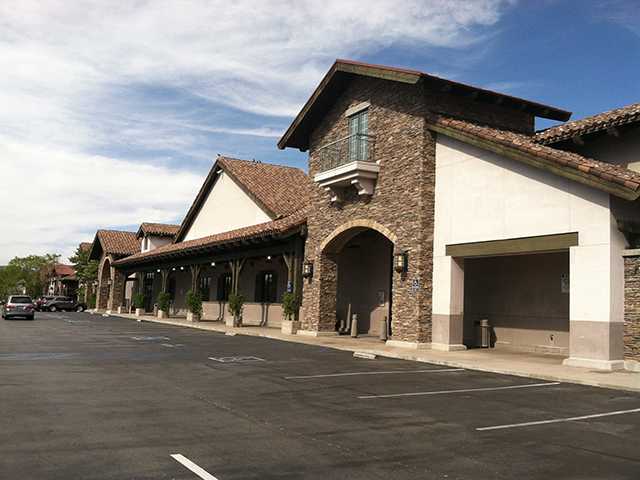
Supermarkets have experienced major consolidation through mergers, acquisitions and closures since the mid- to late 1990s, and the Great Recession drove even more changes throughout the nearly $600 billion industry as non-traditional big-box chain stores shouldered in to offer groceries to consumers, as well.
The consequences, in the Santa Clarita Valley and around the country, have included fewer traditional supermarkets for consumers to choose from and some serious negative effects for shopping centers.
During a wave of mergers in the past two years, major retailers began closing lesser-performing supermarkets, leaving thousands of square feet vacant in Santa Clarita Valley retail centers where grocers once served as the major anchor tenants.
The past two months saw Pacific Northwest grocer Haggen close two former Vons supermarkets soon after it opened them under its name. Haggen acquired the stores after the Federal Trade Commission required Albertsons to sell off some of the stores it picked up by buying Vons’ parent company Safeway.
The FTC had just signed off on the deal in February.
In that deal, Haggen took over the Vons Pavilions on McBean Parkway in Valencia and the Vons on Bouquet Canyon Road in Saugus, but threw in the towel and announced it was closing both stores within four months of opening them as Haggen.
All and all, the changes in the supermarket industry are having a major impact on shoppers, lease rates and foot traffic for the other retailers within those shopping centers once anchored by supermarkets.
Supermarket changes
Before the latest round of closures and mergers, Bristol Farms on Newhall Ranch Road opened — and closed — its high-end grocery market between November 2008 and February 2010. By November 2010, Valley Produce Market opened in its place.
Ralphs, owned by the nation’s largest traditional grocery retailer Kroger, closed its store in Castaic on Castaic Road in early 2014. By fall 2014 it closed its Newhall store on Orchard Village Road. Both remain shuttered today.
Albertsons announced in January 2014 that it was closing two of its Santa Clarita Valley stores — one on Soledad Canyon Road in Canyon Country and the other on The Old Road in Stevenson Ranch. Vallarta moved into the Canyon Country space early this year, but the Stevenson Ranch site remains vacant.
Albertsons itself went through a metamorphosis when it put itself up for sale in 2005 and was acquired by Supervalu stores in 2006. By 2012, it announced it would close 66 of its stores.
In 2013, Supervalu formed a new ownership group — Albertsons LLC — and with help from the private investment firm Cerebus, Albertsons was reacquired in 2013.
On March 6, 2014, Albertsons announced it would buy Safeway, the parent company of Vons, which included Pavilions.
By December 2014, it was announced that the Federal Trade Commission would require Albertsons to sell off 168 of its stores to avoid monopolizing the market in many of the cities the two mega-chain stores served.
Haggen purchase
Enter Haggen, the small 18-store Bellingham, Wash.-based chain that acquired 146 of those stores in the transition.
Required to take over the stores in five states within the lightning-quick time frame of only three months, Haggen converted the Vons Pavilions store on McBean Parkway in Valencia in late April. By mid-June, the small grocer converted the Vons on Bouquet Canyon in Saugus to Haggen.
With four months, Albertsons and Haggen were suing each other, and Haggen announced the closure of the mega-store on McBean, leaving the Santa Clarita Valley’s sixth major supermarket space standing empty.
By September, Haggen filed for bankruptcy and announced the closure of 101 stores, including the remaining outlet in Saugus.
“This whole mess in the first place is a result of the government overstepping — trying so hard to protect everyone,” said Michael Schiff, executive vice president of NAI Capital, a commercial real estate firm.
“These aren’t the days of ‘Ma Bell.’ You can order groceries online through Amazon — customers have enough choices in this area. The government didn’t have to get involved,” he said.
Excess retail space
With private membership stores like Sam’s Clubs and Costco, along with big-box retail chain stores like Walmart and Target entering the market by offering grocery items, and more smaller-store chains shopping the market like Aldi’s and Grocery Outlet Bargain Market, the mega-supermarket store shoppers have known for the last two decades is morphing.
In terms of vacant former supermarkets, “The situation is only going to get worse with Haggen closing the Pavilions store,” said Todd Nathanson, president of illi Commercial Real Estate. “They took on too much, too soon in an already very competitive market.”
The former Pavilions can’t be marketed while the grocer is in bankruptcy, according to John Cserkuti, senior vice president, NAI Capital. The landlord has to wait out the bankruptcy proceeding before it can regain control of the space.
“We’ve receive unsolicited offers of interest from replacement grocers, but we are not currently marketing the space until the bankruptcy hearing so the landlords can regain control of the space,” he said.
What actually becomes of all the spaces left vacant by former grocery retailers remains to be seen.
When asked if Albertsons/Vons would consider coming back to the stores given up under the FTC decree, a spokesperson for the chain said they “are severely restricted from coming back into the stores they were required to divest under the FTC.”
Store trends
The footprint, or store square footage, of the newest grocery retailers entering the market is shrinking, and the marketplace is gravitating toward more specialized retailers, Nathanson said.
While the Pavilions on McBean Parkway was about 54,000 square feet, smaller concept stores will occupy 25,000 to 35,000 square feet of space, and specialty retailers like Trader Joe’s, Aldi’s and Whole Foods will take 13,000 to 18,000 square feet of space.
As for those specialty grocers, two lined up last week to bid on buying 36 of the now-closing Haggen stores. Gelson’s Markets and Smart & Final selected locations they were interested in, but neither party opted for the two Santa Clarita Haggen stores.
“Gelson’s is probably aware of what happened to Bristol Farms, and that may have given them pause when it comes to the Santa Clarita market,” Cserkuti said. “But I’m sure one, if not both, (Haggen) stores will get replaced with another grocer.”
Combine the changing supermarket landscape and online players jumping into the market, and conditions will change the retail space shoppers once knew, Nathanson said.
The big mega super stores may become a relic of the past.
Morphing centers
“The impact is enormous,” Nathanson said. “It complicates matters because lease rates all gravitate around an anchor, especially like a supermarket. There are very few other tenants out there that bring the retail foot traffic that a regional supermarket chain does to a shopping center.”
Shopping center owners want a tenant that will bring repeat customers each week and draw interest to other tenants.
A property owner isn’t necessarily interested in a big-box retailer that customers might shop at only once a month, he said.
“It’s like repeat advertising. If you ran an ad in the paper one time it wouldn’t be very effective,” said NAI Capital’s Michael Schiff. “With a grocery store as an anchor tenant, it’s the same thing as running an ad over and over.
“Customers see the other stores in the (shopping) center over and over and that draws shoppers to the other stores. Grocery anchors are the most desired type of anchor tenants because they draw foot traffic to the center.”
But landlords may have no choice — accepting other types of anchor tenants is better than letting the space sit vacant, Schiff said.
Some landlords may just have to subdivide the spaces. That’s a negative because shopping centers that have a grocery store as an anchor tenant usually attract higher rent.
It also makes financing more problematic.
Lenders view grocery stores as very safe anchors for a center and as tenants because they draw customers over and over every week and rarely go out of business. Many insist on a center being anchored by a grocery store, he said.
The other big problem, however, is that as these former grocery store spaces go vacant, a lot of them also sit vacant intentionally while former grocers keep their leases current to avoid competition for their other stores, Nathanson said.
“It’s a common practice and has been for many years,” he said.
Nathanson expects the grocery retail space to change quite a bit in the future as a result of the developing trends.
“I think we’re going to see less of traditional supermarkets we all grew up with. Going forward, they’ll move toward more specialized retailers, with the exception of some of the ethnic markets,” Nathanson said. “There might be more Northgate Gonzalez, Vallarta, and Seafood City supermarkets. Those are brands that are expanding in the Southland and they’re occupying spaces of 30,000 to 50,000 square feet of space.”