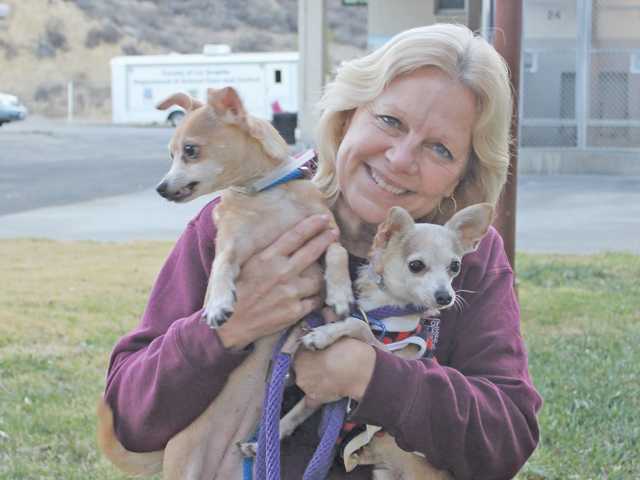
Princess and Tiger did not stand out in a busy Southern California shelter. The tan senior Chihuahuas were two of many such dogs competing for a home against younger, flashier contenders and their adoption prospects were slim.
In November of 2015, the pair caught a lifesaving break as part of the ASPCA Los Angeles Animal Relocation Program.
Princess and Tiger were transported to Emerald City Pet Rescue in Washington, where they were put up for adoption. Princess found a home around the Christmas holiday, while Tiger is still at the rescue.
“Tiger is happy and has many friends here. Hopefully his future family will find him soon, but until then, he is safe with us,” stated an email update from Emerald City Pet Rescue.
Since launching the program in April of 2014, the ASPCA Animal Relocation Program has successfully saved 5,106 dogs and cats (as well as rabbits, guinea pigs, and rats) by transporting them to several receiving agencies located primarily on the west coast.
“The ASPCA saw a need where highly adoptable animals were being euthanized in the greater Los Angeles area while shelters in other communities were seeing a high demand for these same types of animals,” said Lance Hunter, director of the program. “We wanted to help save lives and saw the connection where we could make this happen with transports.”
The program currently partners with 14 source shelters in the greater Los Angeles area where the animals could be considered at high risk for euthanasia. Each shelter works closely with ASPCA relocation managers to ensure the transports are safe, healthy and follow the USDA interstate transportation rules and guidelines, as well as National Federation of Humane Societies Companion Animal Transport Programs Best Practices.
Transports vary depending on what pets the destination shelter can receive and what shelter pets in Los Angeles are available to take the trip.
“The wonderful news is, if an animal has a medical problem, is injured or is a senior pet, all of which are at a higher risk, as long as they have been cleared by the medical team and approved by the destination shelter, they are happily on their way to a new life,” Hunter said.
Pit bull terriers and mixes, which are among the highest and most at-risk populations found at Southern California shelters, can also get a second chance through the relocation program.
Hennessy, a beautiful black and white pit bull terrier mix, was surrendered to Castaic Animal Care Center because her high energy didn’t mix well with the three older small dogs she shared a home with.
She was transported to a Humane Society in Washington in April 2015, quickly put on the adoption floor, and found a home within a week.
Those kinds of stories make all the hard work that goes into transports very rewarding, according to Kyle Harris, senior volunteer at Castaic Animal Care Center.
“Pit bulls that get an ‘A’ on their temperament test that no one is adopting here go out on transport and get adopted right away,” she said. “It’s exciting and very optimistic.”
Volunteers like Harris are crucial to the program’s success. Help is needed at the shelter with bathing, grooming, and socializing pets in preparation for transport. On the day of transport, volunteers assist with paperwork, arranging crates, and walking dogs, to name a few tasks.
“Every animal loaded into the vehicle has had some special time with staff or volunteers to make sure it was ready for transport. That animal had to see the medical team for clearance, get a health certificate, ensure all vaccinations were current, and obtain a micro-chip, while some had to have extra medical testing,” Hunter said. “Knowing all the things that happen by so many to save a life and knowing there is a new life awaiting these pets, well, the shivers up my spine never stop.”
Being part of the transport program is emotional for Harris, as well, especially upon seeing adoption updates from the receiving shelters.
“I cry, of course,” she said, choking up. “Seeing these animals get adopted within days or a week of getting there, it’s worth everything.”
For more information about volunteering with the ASPCA, including transport, special events, and fostering, please contact Tina Reddington at [email protected]. For more information on the ASPCA Los Angeles, visit www.aspca.org/animal-protection/los-angeles-initiative.