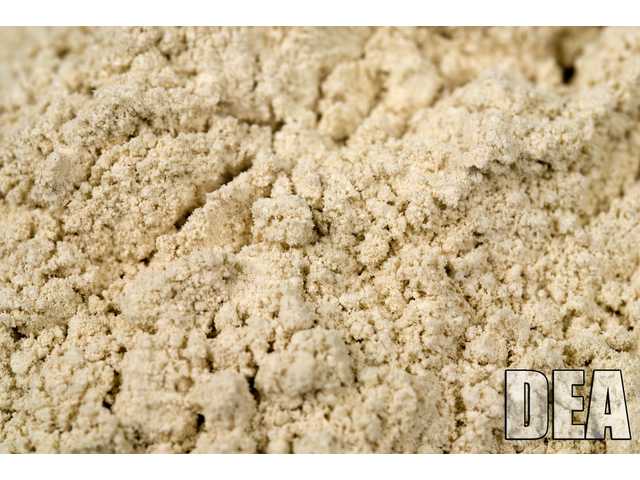
With four apparent drug overdoses in the Santa Clarita Valley during the first four months of this year, local narcotics detectives are bracing for another year of crimes and deaths related to heroin.
The drug killed 11 people in the valley last year — almost one a month, narcotics detectives with the Santa Clarita Valley Sheriff’s Station said in February.
And those were just the numbers known to the Sheriff’s Department. Some cases of drug overdoses go unreported to law enforcement.
A 29-year-old Saugus man died of an apparent drug overdose last Monday, the fourth such death this year, the Sheriff’s Department Juvenile Intervention Team said this week. That puts 2016 on track for about the same number of overdose deaths in the Santa Clarita Valley as seen last year.
“We have yet to determine for sure this is a drug overdose, but it appears it is,” J-Team Investigator Bob Wachsmuth said earlier this week.
Of the four suspected drug deaths this year, investigators won’t know definitively which drug or drugs are responsible for each until the results of toxicology tests are returned from the Los Angeles County Department of Coroner. Those tests can take months to be completed.
Among the more disturbing trends seen by the J-Team in local abuse of drugs is the number of times heroin, an opiate, is found mixed with other powerful illegal drugs, Wachsmuth said.
Mixing heroin with other drugs can make the concoction even more dangerous than heroin by itself, drug experts say.
In six of last year’s drug deaths, heroin was found to have been used in combination with other drugs including: two cases involving its use with marijuana; two cases involving its use with methamphetamine; one case of heroin used with cocaine; and one case involving heroin and multiple drugs.
“What we’re seeing is heroin used with Fentanyl and mixing it with Xanax,” Wachsmuth said this week.
The proliferation of Fentanyl is another alarming trend that deeply concerns members of the J-Team, the investigator said.
“This drug is 10 times more powerful than heroin,” Wachsmuth said. “It’s out there. But we haven’t seen a gigantic influx into our community — yet.”
The National Institute on Drug Abuse describes Fentanyl as a powerful synthetic opiate analgesic similar to, but more potent than, morphine. It is typically used to treat patients with severe pain or to manage pain after surgery.
It is also sometimes used to treat people with chronic pain who are physically tolerant to opiates.
661-287-5527
on Twitter @jamesarthurholt