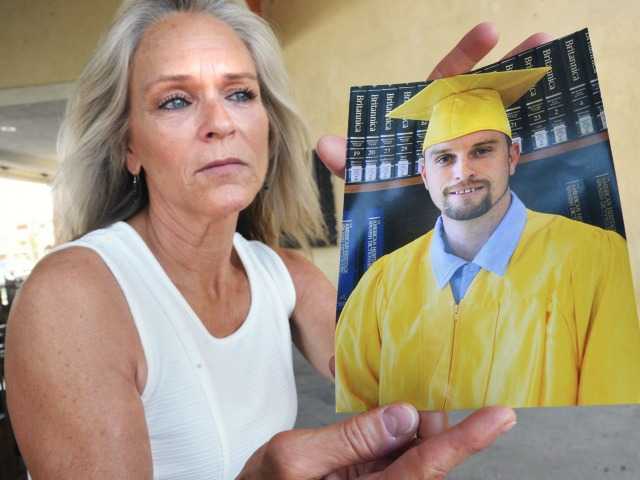
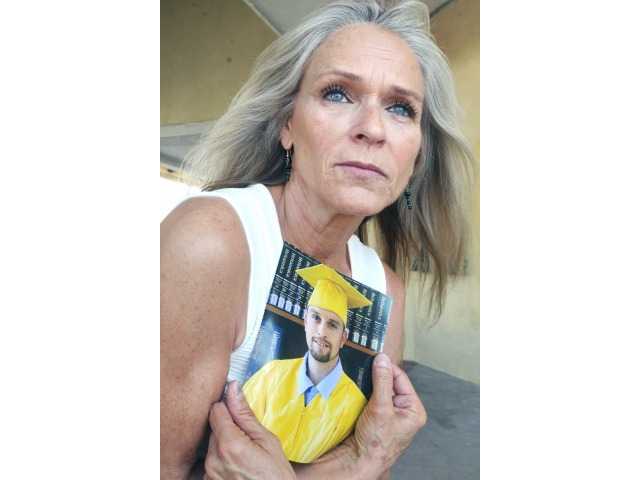
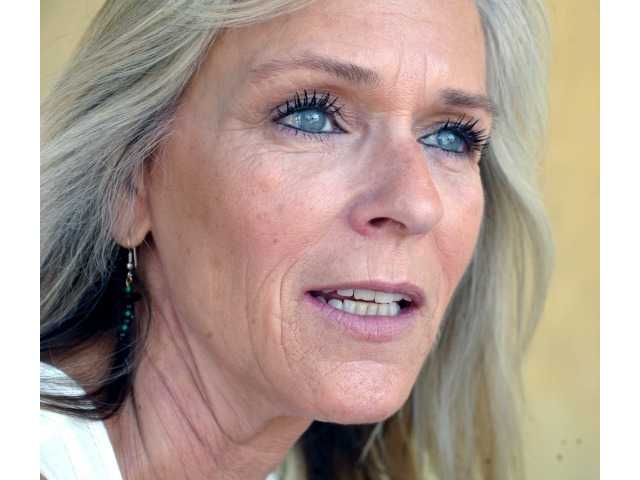
Every few minutes, as Jana Kieffer describes how heroin took her son, she lifts her sunglasses and wipes away tears.
“There used to be little boy there, whose mother rocked him to sleep every night,” Kieffer recalled of son Corey. “A little boy whose hand was held, who played T-ball and Little League and had hopes and dreams for the future.”
Corey Kieffer died alone in the backyard shed of strangers late one night in February following a seven-hour standoff with sheriff’s deputies seeking him on a no-bail warrant. The official report says he shot himself. He died the next day.
Jana Kieffer is quick to note that while there was a gun involved, her son didn’t fire it at deputies, as initially reported. Her claim was later confirmed by Sheriff’s Station officials.
But for her, the most important aspect of the tragedy that night had nothing to do with a gun. It was understanding how heroin had brought her son to his final moments of desperation.
Divorce and drugs
During a conversation with The Signal in a shaded Canyon Country cafe area Thursday, Jana Kieffer was asked if she could go back in time and intercede in her son’s life at a key moment, when would that moment be?
“I would go back to me divorcing his dad, to be honest with you. I think the divorce had a huge impact on Corey,” she said. “I really think that was a big turning point.”
Corey Kieffer was 12 years old when his parents divorced. Not long after that he started smoking marijuana, his mother said in an interview shortly after his death.
A little while after that he was “struggling with meth,” she said in February. Then it became heroin.
A back-and-forth struggle between periods of sobriety and rehab and periods of his return to heroin plagued their lives.
“I feel like I lost him and then, when he was clean and sober, I would feel like I got him back,” she said.
Corey Kieffer also ran afoul of the law during that period.
Advice
Jana Kieffer’s advice to parents who suspect heroin in their child’s life is this:
“If you suspect anything, any kind of attitude change, don’t chalk it up to ‘It’s adolescence, it’s puberty, that’s just what a pre-teen or a teenager does.’
“You should really look into it. You know your kid. You know your child. You know who they are inside. You know their soul and their heart. You know what kind of a child you have.
“And there are going to be things a pre-teen or a teenager may do that they may not have done before,” she said. “But if you know there’s something changing inside of their gut, their soul, the person you know them to be, don’t just shake it off.
“Do not shake it off,” she said, raising her voice. “And never turn your back on them.”
After a pause, Kieffer continued: “It doesn’t mean I condone everything he had done. I didn’t agree with the criminal activity, or the drugs, but I also knew who he was deep down inside and I would never turn my back on him.”
“I thought he was worth it every second of every day.”
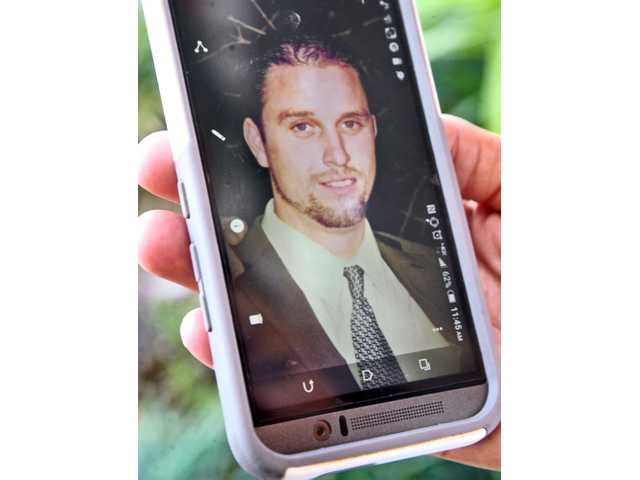
Kieffer keeps a series of photos of her son on her phone. This week, as the three-month mark since Corey’s death approaches, she posted a message to him on Instagram reading in part: “RIP my angel. ... He will no longer have to fight his demons as he lost his battle with addiction on Feb. 10.
“You had a heart of gold and I only wish that everyone in the world could have seen everything that I saw in you. Mostly, I wish you could have seen it.”
661-287-5527
on Twitter @jamesarthurholt