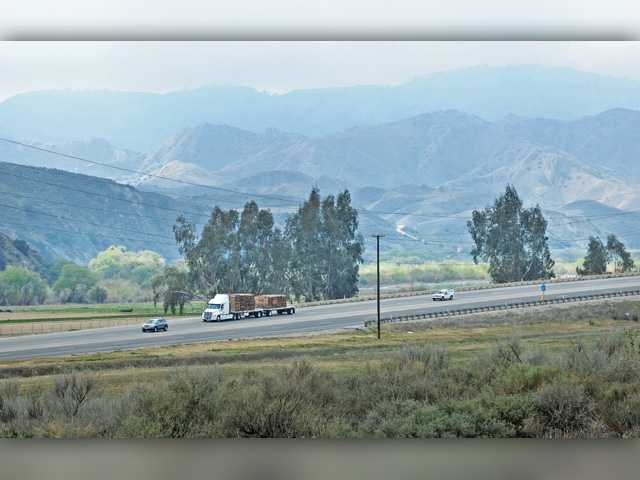
Shovels remain thrust into the earth and bulldozers sit idle on ground earmarked for 21,000 Newhall Ranch homes in the Santa Clarita Valley as lawyers wrangle over the latest court-contested environmental concerns that have sidelined the project for years.
Whether construction is delayed 18 months, two years or indefinitely, many Santa Clarita Valley residents are asking: Where’s the water for Newhall Ranch coming from?
The short answer is: four new groundwater wells that are expected to pump more than 7,000 acre feet of water every year to supply the new residents.
That’s according to the environment impact report approved in 2012 by Los Angeles County supervisors, who told Newhall Land it was OK to build 21,000 new homes in the Santa Clarita Valley between Interstate 5 and the Ventura County line.
The longer, more complicated and often controversial answer requires a look at the history of Santa Clarita Valley’s oldest ongoing business interest, once called the Newhall Land and Farming Company.
Last month, Newhall Land was folded into FivePoint Holdings.
FivePoint spokesman Steve Churm said about construction delays for Newhall Ranch: “It will take about a year to address the Supreme Court’s suggestion,” referring to a state high court finding that Newhall Ranch’s environmental impact report fails to compensate for greenhouse gases that would be generated by the new housing.
Newhall Land
Long ago, before Newhall Land got into the development business, it was a farming interest.
Its ranch spread across much of the Santa Clarita Valley to the Ventura County line, and what it used for watering crops is now the water earmarked for the Newhall Ranch development.
According to the specific plan for Newhall Ranch — the document reviewed by the Los Angeles County Board of Supervisors in approving the development — Newhall Land plans to pump more than 7,000 acre-feet of groundwater each year.
The plan states: “Newhall Ranch has historically used an average of 7,038 acre-feet per year for agricultural purposes. This water will be converted from agricultural use to urban use as Newhall Ranch develops.”
Assurances
Every housing development in California has to be approved by state officials seeking assurances that the environment is being protected.
Developers assure state officials of this by addressing a lengthy checklist of environmental concerns spelled out in the California Environmental Quality Act.
Increased noise levels, air pollution, negative effects on indigenous plants and animals — all count among the considerations assessed in moving ahead with construction.
It was on two of those points — greenhouse gas emissions and protection of the endangered unarmored threespine stickleback fish — that the California Supreme Court tossed out Newhall Land’s EIR in November.
Ensuring there’s enough potable water for residents of 21,000 new homes remains one of the cornerstone concerns on the CEQA checklist.
CEQA findings
Newhall Land assured county supervisors in October 2011 that there was sufficient potable water for Newhall Ranch. That water would be accessed, according to the CEQA report, through fresh wells sunk by the Valencia Water Company.
“Water demand would be met by drawing groundwater from the alluvial aquifer from newly constructed replacement wells located within the Valencia Commerce Center that have been approved and permitted by the California Department of Public Health,” the CEQA document reads.
The four wells are expected to feed three reservoirs, two of which can contain 4 million gallons of water each. The third holds 3.3 million gallons.
Transporting water
Newhall Land’s plans call for water to be transported for Newhall Ranch through a pipeline built by Castaic Lake Water Agency.
The new Magic Mountain Pipeline would connect existing pipes to a holding tank called the Magic Mountain Reservoir to be built in Newhall Land’s Mission Village, the first phase of construction for Newhall Ranch.
The first of three pipeline construction phases was to have started in March 2015 but was delayed until spring this year, according to Brian Folsom, the agency’s Engineering and Operations Manager, who oversees all agency capital projects.
In light of November’s ruling by the California Supreme Court, all pipeline construction has been put on hold for at least 18 months, Folsom said earlier this month.
Water banking
Dirk Marks, water resources manager for the Castaic Lake Water Agency, described the potable water available to Newhall Ranch this way:
“Nearly all of the water supply for Newhall Ranch will come from groundwater wells currently being used by Newhall Land for its agricultural uses,” he said.
“Newhall also purchased a small portion of Kern River water and also invested in the Semitropic Water Bank in Kern County to provide extra water during dry periods.”
661-287-5527
on Twitter @jamesarthurholt