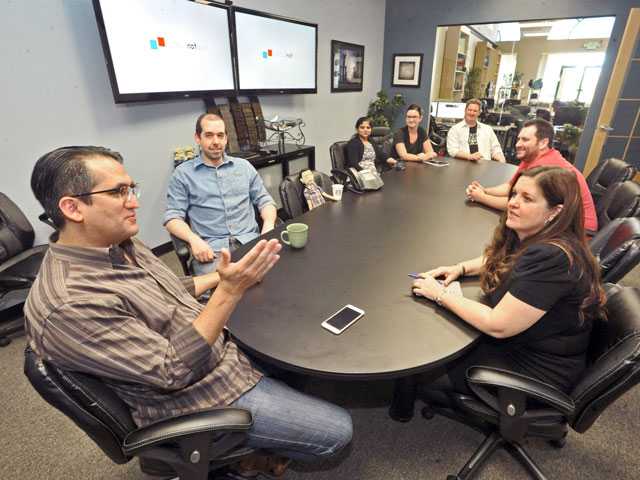
In 2008, when Scott Capistrano, his wife Pam and friend Ben Loveless founded Status Not Quo, they had a different kind of business in mind.
The company provides turnkey technology creation and production digital media services to diverse clients including Disney, RealD, Coca-Cola, Dignity Health and…The Beatles.
The objective was not to focus on the be-all-end-all of business and profitability, but rather to focus on the enjoyment of the journey and to create a special workplace that people would want to look forward to: spending time every day where clients and the community played special roles in the ongoing success of the company.
The core elements of that culture included having a drama-free environment, a company that was both employee- and family-focused, where personal and professional growth was prized, where respectful communication was expected, and success for all was the goal.
That success was designed to be shared not just with shareholders and associates, but also with the community where the business was based.
Status Not Quo offers each of its employees up to three days of paid time-off for volunteer projects of their choice.
Employees have used this time to volunteer in their children’s classrooms, volunteer time at the local food bank, or to spend their lunch hour making lunches for the homeless.
The company also helps local non-profits further their missions by contributing high-end consulting expertise providing the non-profits with tools to work more efficiently and to reach a larger population of donors and recipients of their services.
The company also contributes one percent of net income in direct financial support to local non-profits. And still, its revenue climbs.
Double-digit growth
Still less than ten years old, the company continues to enjoy double-digit growth, remains profitable, and continues to expand. Unlike many young companies, the company has a succession plan, is internally aligned, has maintained two unique physical places to work, and prides itself on having a high performing culture because of the intelligent way it recruits, on-boards, and leads its employees.
But it wasn’t always this way. To go from start-up to success required addressing several issues and making challenging decisions as the company climbed through what James Fisher wrote in his book, “Navigating the Growth Curve.”
Even before the company was formally launched, the partners had the mindset that they would create a business where they would do all of the work themselves. This meant an organization where each owner had a job.
This was the first strategic decision made and it was rationalized by deciding that if or when things got hectic, the overflow work would be outsourced to subcontractors. The company would remain free of employees, except for the owners.
The original base of clients came to the new team from previous relationships, so there was a backlog of work waiting in the queue when the doors opened. But doing good work brings the opportunity of more work. As their clients businesses grew, so did the length and depth of assignments given Status Not Quo.
At the same time, the owners were receiving referrals and had strategically started the process of prospecting for new business from new clients. So the first decision was soon negated and the green light given to address growth through the hiring of employees.
‘We, not me’
A second strategic decision made early on was that the founding partners would always sell the firm, not themselves.
They did this to prevent over promising and under delivering but also to promote the concept that the buyer purchased the services of the firm, not any individual working in the company.
This decision was critical because it was not always clear who would actually be doing the work for any specific client on any given day.
During this first stage of growth, what Fisher calls “Start-Up,” the challenge became finding the right people to bring into this new company.
Much was at stake; bringing in the wrong people could be a disaster, and bringing in the right people without giving them the authority and commiserate responsibility would only create anger and frustration – which would find its way back to the clients. The key was in hiring the right people.
Traits plus skills
Hiring has almost always been the bane of small companies. Most owners will say they were lucky to land good people to rely on and held onto some who should never have been hired for so long.
Status Not Quo went in a different direction and made a third strategic decision that remains in place after almost ten years. They sought out people who were mature, responsible and trustworthy. They wanted people who would see the quality vision of the client and could recognize and accept that there were different ways to achieve it.
To address the hit and miss luck that goes with small business hiring, the company addressed this third decision by hiring for fit first, instead of primarily focusing on technical expertise.
A candidate’s core skills and experience is certainly important, but the company sought out candidates who fit into the culture first and foremost, with emphasis on having strong potential to learn and grow.
Through the first stage of growth and now into the second, this decision has resulted in the creation of a team of high performing individuals working for their own long-term success as well as that of the company. All but a few live in the Santa Clarita Valley. But, then came the flood of business.
Flood zone
As the client base grew with a resulting increase in assignments, it faced what Fisher calls a “Flood Zone.” This is where the quantity of work begins to impact the entire organization. Client projects overwhelm, deadlines are missed, and people get burned out as a result of working long hours. The potential for mistakes increases.
This usually takes place at a time when a company has seven to nine employees.
Fisher states that when approaching, or when in, a flood zone, leadership needs to look at new ways to address the volume of work in the firm. The initial temptation is to hire more people to address the situation.
Instead, this should be avoided and the mandate should be established such that, instead of throwing more people at the problems, focus rather on using existing staff more wisely and allow those closest to the situation to address the challenges.
At this juncture, a fourth strategic decision was made. The founding partners understood that they needed to let go, to stand by and behind their carefully selected associates, and to coach them through the flood zone and beyond. In order to do this, some of the many hats being worn by ownership had to be passed to others to wear.
Building the team
Many business owners have trouble giving up responsibility, but even more of them fear letting someone else have authority.
At Status Not Quo, the decision was made from the first employee hired that if the company was going to grow, the owners would need to understand that if everyone was in agreement with the goal to be achieved, they had to rely on others to determine the best way to achieve it and to get out of the way to allow them to make it happen.
Having a strong hiring process made a difference as the owners let go. With this foundation in place, the company successfully addressed the flood zone issues and moved into the second stage of growth, “Ramp Up,” where it is now.
The challenge facing the company today is something all growing organizations face: how to improve operating margins.
Operating margins
The easy answer is, of course, to reduce expenses and to raise prices. But in a professional services firm, there is only so much to cut and clients are also scrutinizing invoices from business partners to improve their own margins.
The firm decided to focus on improving efficiencies, defined as measuring billable hours. In this manner, Status Not Quo is no different from either a law firm or a CPA practice. Attorneys and accountants measure time spent on clients, administration, and marketing. But what matters most are billable hours.
The preliminary results of this exercise indicate that there has been some improvement in billable hours and in improved efficiencies of administrative and marketing work. This in turn has improved focus on the importance of tracking time, and where it is spent impacts cash flow and profitability.
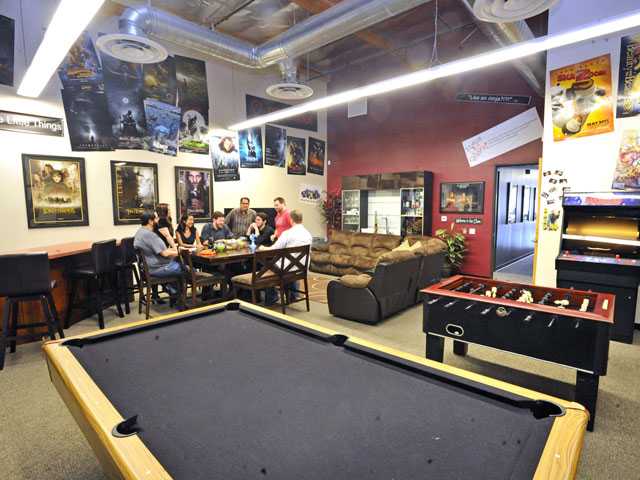
The company, like all growing organizations, is a work in progress. But the unique physical work environment is a strategic and sustainable competitive advantage in the hiring and retention of quality employees when top talent is being fiercely fought over.
Culture built on a vision
The culture is not for everyone. The owners have made it clear that they want people who will respond to the opportunity of not living to work; they want individuals who have interesting personal lives and want to do interesting work for interesting clients.
This comes down from the company vision, which was to create an exceptional work environment and to provide all employees with the best career they could ever have and a company that they would not want to leave.
Many owners may say these things; but at Status Not Quo, they took the thoughts and words and turned them into reality.
Ken Keller, owner of Strategic Advisory Boards, periodically conducts interviews with Santa Clarita Valley CEOs, business owners and entrepreneurs. The purpose of these discussions is to learn the factors underlying the growth and success of locally-based enterprises. In this edition, he interviewed the CEO of Status Not Quo for the Santa Clarita Valley Business Journal.