If you think Donald Trump has problems with Judge Gonzalo Curiel, you can bet that a lot of California employers may have equally strong sentiments about the California Supreme Court justices since a recent ruling was handed down.
In a rarely used process, judges in the Ninth Circuit Court of Appeals, which is a federal court panel, asked the California Supreme Court to answer three questions so that the Ninth Circuit could rule on two class action cases before it, both considering the labor law order in California that “[a]ll working employees shall be provided with suitable seats when the nature of the work reasonably permits the use of seats.”
One of the cases involved CVS Pharmacy. A woman who ran the cash register, among other duties, wanted a seat when she did some of the tasks assigned to her. The defendant in the other case was Chase Bank, who denied the four plaintiffs (all bank tellers) a chair to do their job.
Both cases were filed in federal court. In both cases, the district court ruled against the employees, who then appealed to the Ninth Circuit Court of Appeals. The justices on the Ninth Circuit took one look at this and said, “Let’s ask the California Supreme Court what it thinks.”
The Ninth Circuit asked the Supremes three questions: 1) how do you figure out what “nature of the work” means?; 2) When determining whether the nature of the work “reasonably permits” use of a seat, what factors should courts consider?; and 3) If an employer has not provided any seat, must a plaintiff prove a suitable seat is available in order to show the employer has violated the seating provision?
Since the Supreme Court was only giving an advisory opinion, it didn’t rule on what the lower courts did but the message to employers was clear. “The … wage orders were promulgated to provide a minimum level of protection for workers. The requirement’s history reflects a determination by … that “humane consideration for the welfare of employees requires that they be allowed to sit at their work or between operations when it is feasible for them to do so.”
The next question was how to determine what ”feasible” is. Unfortunately for employers, the Supreme Court did not specify bright, shiny standards against which different jobs could be measured.
Instead the Court provided a basis for examination that will certainly be fodder for many future lawsuits: “When evaluating whether the “nature of the work reasonably permits the use of seats,” courts must examine subsets of an employee’s total tasks and duties by location, such as those performed at a cash register or a teller window, and consider whether it is feasible for an employee to perform each set of location specific tasks while seated. Courts should look to the actual tasks performed, or reasonably expected to be performed, not to abstract characterizations, job titles, or descriptions that may or may not reflect the actual work performed. Tasks performed with more frequency or for a longer duration would be more germane to the seating inquiry than tasks performed briefly or infrequently.”
And a word to the wise – this is not an issue employers should ignore until someone complains. That creates an environment ripe for exploitation by plaintiff lawyers. After all, the Supreme Court ruled, “An employer seeking to be excused from the requirement bears the burden of showing compliance is infeasible because no suitable seating exists.”
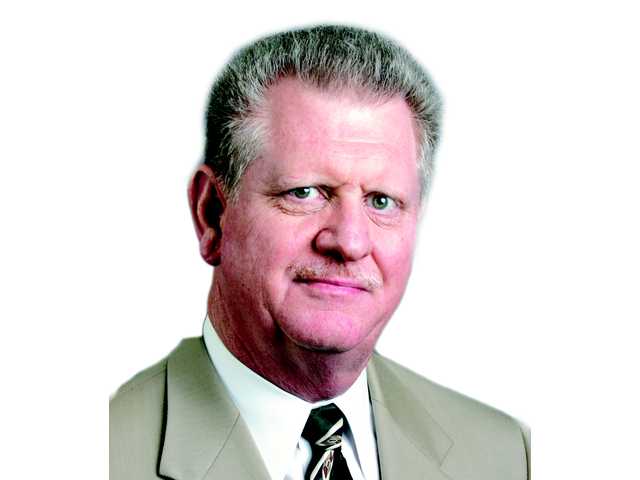
Carl Kanowsky of Kanowsky & Associates is an attorney in the Santa Clarita Valley. He may be reached by email at [email protected]. Mr. Kanowsky’s column represents his own views, and not necessarily those of The Signal. Nothing contained herein shall be or is intended to be construed as providing legal advice.