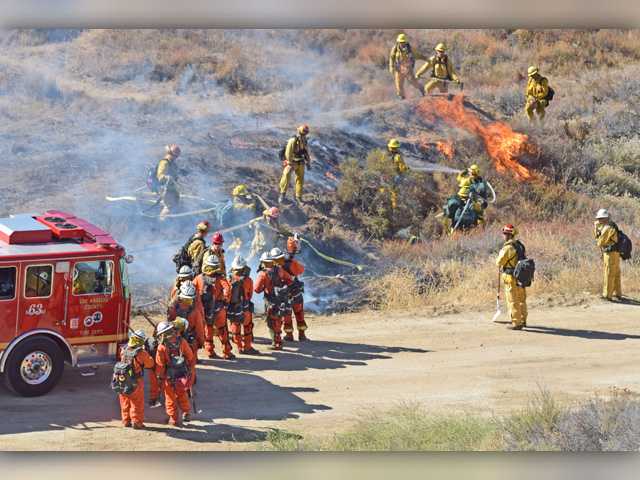
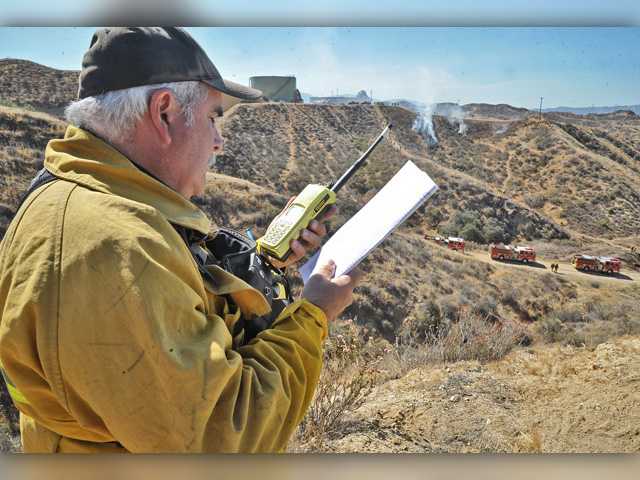
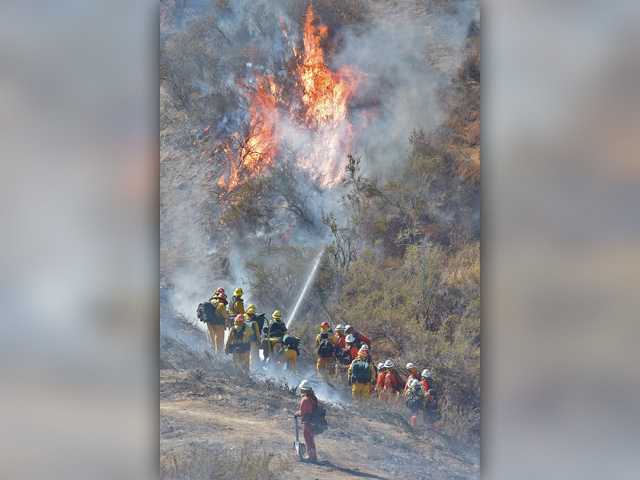
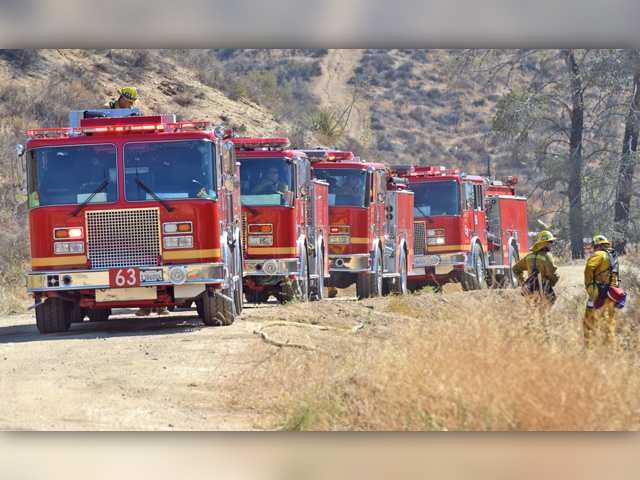
Flames that charred dry hillsides around Pitchess Detention Center in Castaic on Thursday weren’t the real thing — yet.
But with temperatures due to spike some 30 degrees this weekend, the wildfires charging up hills and threatening homes could be very real very soon, fire officials said.
Four inmate hand crews from the California Department of Corrections and Rehabilitation joined Fire Department crews from Los Angeles and Ventura counties and Los Angeles city to conduct prescribed burns through hillsides above the detention center.
The situation provides an element of realism particularly needed by inmate hand crews, said Assistant Fire Chief Anthony Williams said.
“(Crews are) able to take all the things that they’ve learned and apply them with the extra element of fire,” Williams said of training sessions like the one Thursday. “Even though it’s a training fire, it hurts just as much if it burns you. They have to be very cognizant.”
Smoke could be seen billowing into the air by 8:30 a.m. as crews set several small spot fires to mimic the erratic wildfire conditions that often plague the Santa Clarita Valley in the fall.
The flames rapidly tore through hillsides above the county jail compound as firefighting crews worked together to tackle different scenarios.
Thursday’s training came days before temperatures across the area are forecast to hit 103 degrees on Sunday and 108 on Monday.
The National Weather Service issued an excessive heat watch for Monday and Tuesday.
Fire danger posted by excessive heat is compounded by the fifth year of a drought that may have broken in Northern California but remains in effect in Southern California.
The parched vegetation and forecast low humidity levels combine for a recipe for heightened fire threat, Williams said.
Fire officials warn against any weekend activities involving fire, cautioning of potential dangers stemming from misplaced barbecue embers. Williams also urged the public to aid in the department’s fire response by calling and reporting all blazes immediately.
“The quicker we can get to a fire, the more readily we can knock it down in the small stages,” Williams said.