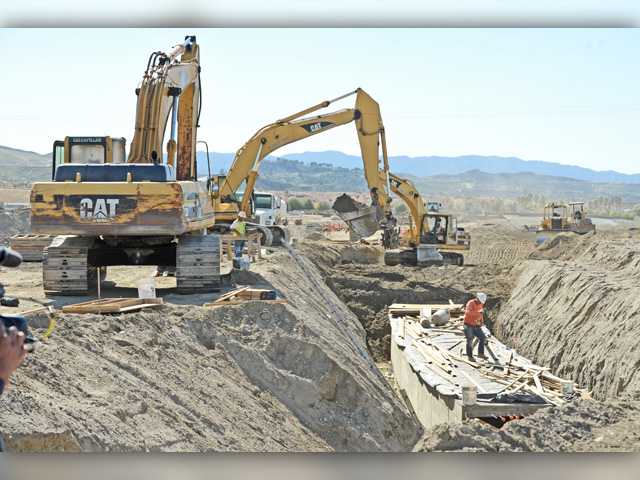
Shovels are expected to go in the ground by late summer as monitoring wells are dug for Vista Canyon’s so-called “water factory,” planned to become Santa Clarita’s first large-scale water recycling project.
Once the eastside development’s recycling plant is built, the city will own and operate the plant and use recycled water to irrigate landscaping in in the area.
And, if all goes according to plan, the project could become the template for other water-recycling plants across the Santa Clarita Valley as the city seeks to conserve water by recycled it to irrigate public areas such as parks and street medians.
“This is all part of the city’s collective effort to save water,” said Robert Newman, Public Works director for Santa Clarita. “It has the potential to become the template for similar projects.”
Vista Canyon, proposed by Valencia-based JSB Development Inc., is a mixed-use housing project that calls for more than 1,000 homes to be built and almost a million square feet of commercial space on 185 acres across the Santa Clara River from Canyon Country Park. It would be located between Sand Canyon and Lost Canyon roads.
The builders refer to the recycling plant as the “water factory.” It would receive about 80 percent of the water leaving homes in Vista Canyon – from toilets to bathtub and kitchen sink drains. The other 20 percent – solid wastes from the same sources – would go to the Saugus Water Reclamation Plant for treatment.
The 80 percent would be treated at the “water factory” for the sole purpose of irrigating public areas such as parks. Planners emphasized the recycled water would not be for human consumption.
Principal players in the project are the developer, which builds the plant, Santa Clarita, which takes ownership and operates it, and the Castaic Lake Water Agency and its water-retailing division, the Santa Clarita Water Division, which will install the infrastructure needed to use “water factory” water on parks and medians near Vista Canyon.
Permits approved
State water regulators gave JSB Development the green light early last month to proceed with the water-recycling plans, approving the necessary permits to do the job.
“Like any permit, it’s going to include certain conditions,” said Glen Adamick, spokesman for JSB.
“There will be monitoring wells, and with the (Los Angeles County Regional Water Quality Control) Board’s approval, we will be able to start construction and get those wells in place.
“The wells will likely go in by late summer with operations ready to go by October or November 2017,” Adamick said.
Vista Canyon’s water reclamation plant was approved by the Santa Clarita City Council in May 2011. JSB has been working with the Regional Water Quality Control Board since 2009, “making sure we’re working within the guidelines,” Adamick said.
Monitoring
The water quality board and the state Department of Health, Division of Drinking Water, will review the project to ensure the recycled water generated by the “water factory” meets all state requirements. The drinking water division is involved despite the fact the water won’t be used for drinking.
Eric Wu, supervisor of the Groundwater Permitting Unit of the Los Angeles Regional Water Quality Control Board, said he considered many factors in approving the recycling plant, including what areas would be irrigated with recycled water.
“We issued the permit with the understanding that they meet all the requirements of our monitoring program,” he said, adding regional staffers will be watching closely the city’s operation of the recycling plant every step of the way.
As Santa Clarita staffers gear up to man the helm of the “water factory,” they can look to a West Side golf course for the effects of irrigating with recycled water.
About 85 percent of the water used at the Tournament Players Club Valencia to keep the “greens” green is reclaimed water, Michael Vandergoes, general manager of the Tournament Players Club Valencia, told The Signal in a 2014 interview.
“The negative side of using recycled water is that it’s high in carbonates,” Vandergoes said in the interview. “The recycled water has a lot of sodium so it evaporates sooner.”
661-287-5527
On Twitter @jamesarthurholt