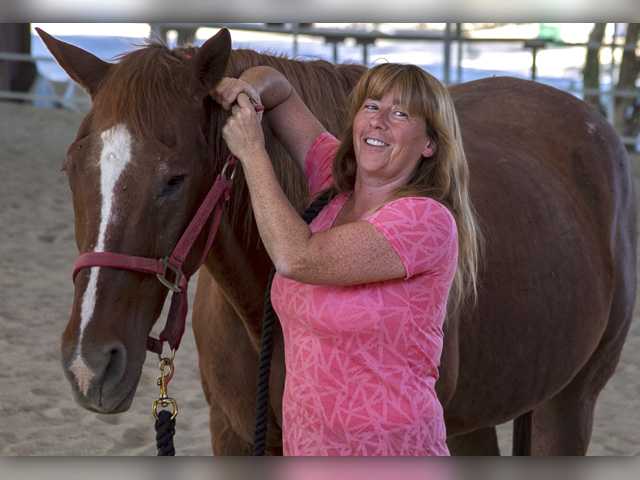
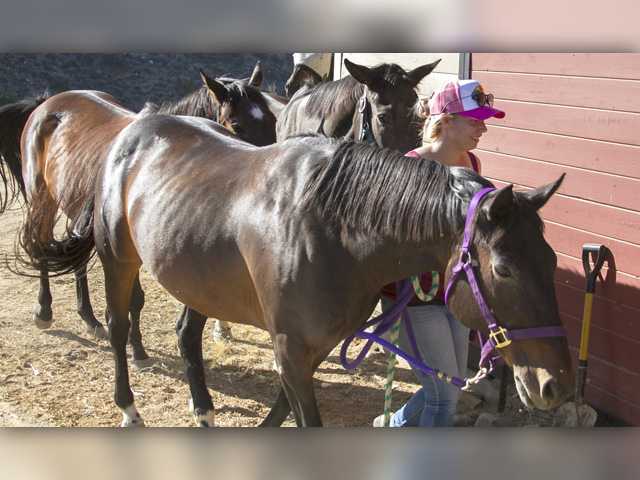
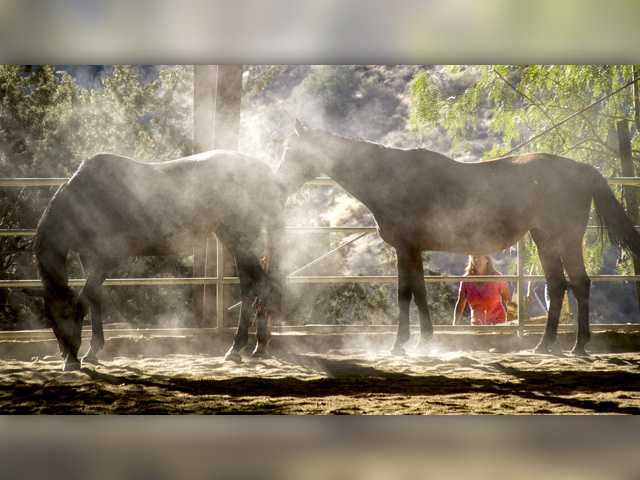
As the morning sun rose on a 107-degree summer day, Cathleen Trope walked to the dull red wooden stables where 20 horses awaited her.
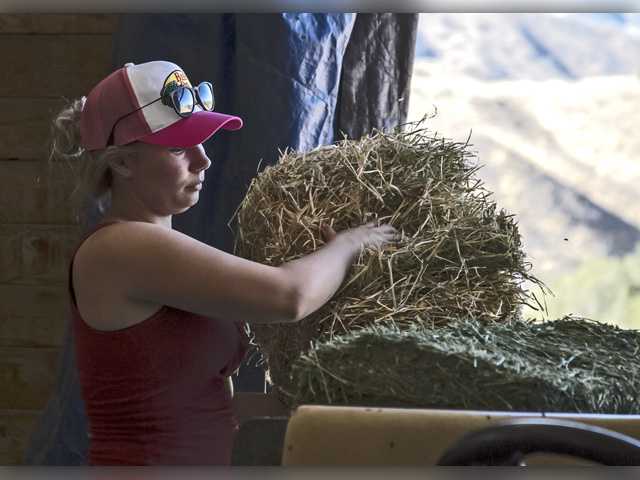
Volunteers greeted Trope with smiles as they prepared bales of hay. She consulted a large whiteboard where the daily needs of each horse were laid out and minded a lengthy column of numbers adding up to the remaining funds budgeted for the Agua Dulce ranch.
It was a routine morning, except for the heat, but the feeling among the crew of the Polo Pony Rescue ranch was different – it was one of the last days of full operation in Southern California before Trope’s organization saddled up and moved most of its work out of the state.
“We’re moving to just west of Minneapolis,” Trope said.
The plans to move were fueled by a need for a stable financial climate as the price of feed and land in the Golden State skyrockets.
“We were able to purchase land for less than a third of the cost of what we’re paying here,” said Trope. “One of these bales of hay costs $16.95 plus tax, but in Minnesota it’s only $3.50.”
Retired ponies
For about four years, Trope’s rescue operation took possession of malnourished and abused horses from previous owners. Dozens of horses too old for a successful career in the game of polo were eased into a life of retirement at the Agua Dulce ranch.
“A lot of these horses come from their polo owners who realize that their horses have reached a stage where they need an easier life,” said Trope. “But sometimes we pull them out of animal shelters, livestock auctions or homes where they didn’t receive proper horse care.”
The Santa Clarita Valley woman noted a few cases where horses were diverted from overseas slaughterhouses, where she said former owners commonly dumped them for a quick few hundred dollars.
“We had this stallion from a trainer who previously had a good reputation, but she developed an addiction and practically starved all her horses to death,” Trope said.
“The stallion was almost 300 pounds underweight and walking sideways. We weren’t sure we were going to save him but sure enough, he bounced back.”
Rescue
The horses are photographed after the rescue takes ownership. For Trope, each photo was a glimpse into a lengthy battle for the animals and their trainers and a journey from death’s doorstep to sustainable health and ultimately a new home.
The organization is able to place about 10 horses a year in long-term homes that are right for their needs.
Volunteers make the operation possible, Trope said. One of them is Erika Artman, who adopted a former polo pony, now named Pop-Tart.
“She came to us with some issues and I was put in charge of retraining her and I just fell in love,” Artman said.
Running the ranch isn’t just about physical labor; Trope is also a stringent financial planner.
Through the many addition and subtraction tallies on various notebooks and whiteboards laid out on tables was a clear path to the organization’s goals.
The plan encompasses finding potential suitors with the proper finances to provide for the horse. Trope said money plays a big factor in the rescue’s effectiveness and was the driving incentive to move elsewhere.
Relocating
Despite the temporary burden of relocating, Trope hopes her rescue will continue on past the move to provide a better home for the polo ponies.
“Our new property will allow the horses to have more natural open space as well as make it cheaper for us to work toward our cause,” Trope said of the new Minnesota location.
Luckily, she said, the Polo Pony Rescue will still partially operate out of Santa Clarita and have some of its older, retired and newly rescued horses available for adoption.
The need for both funding and volunteers will persist, she said.
For more info on the Polo Pony Rescue, its horses and how to donate, visit poloponyrescue.com .