Amid the chaos of the Sand fire, statistics and information about evacuations were disseminated through multiple social media platforms, each serving as an avenue for communication to reach the public.
The information was channeled to the public mostly through tweets and Facebook posts, but before it reached social media, it was gathered directly from firefighters on the ground.
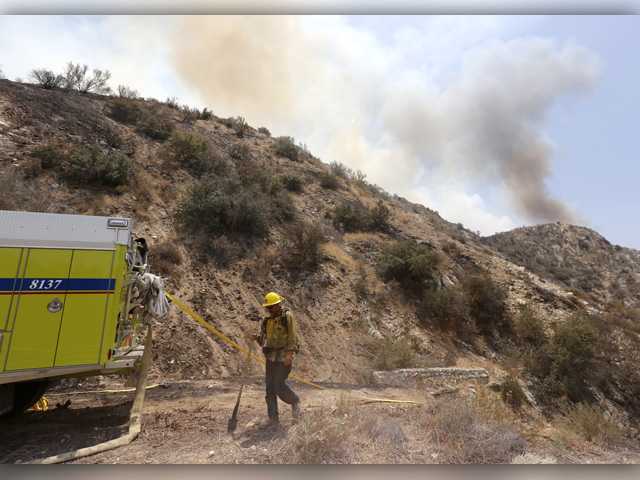
Angeles National Forest spokesman Nathan Judy said the process of sending information regarding fires and safety to the public at large begins with communication to the front lines.
“I go out to the line and I talk directly to the incident commander,” Judy said. “I talk to his operation section chief to find out what’s going on with the fire, what numbers we can give out because they’re the ones that are in direct contact with the firefighters on the ground.”
The incident commander or operation section chief, are the first source as they keep track of the ongoing firefight, Judy said.
“They’re finding out where they’re at, what kind of work they’ve done, what work still needs to be done,” Judy said.
To get an estimation of the size of the fire, information officers initially rely on aircrafts flying over the fire until firefighters can physically walk the fire’s perimeter with a GPS unit for a more precise measurement, Judy said.
The numbers given during the initial firefight changed as the number of acres burned and homes in the path of destruction increased. This information quickly trickled onto social media via the Los Angeles County Fire Department and Angeles National Forest Twitter, Facebook and Nixle accounts.
At 5:55 p.m. Friday, several tweets were sent out announcing the fire had crossed the 2,000 acre mark with no containment. Minutes later, orders to evacuate came for 100 people living near Capra Road and Soledad Canyon Road – information sent out via Nixle notification.
Throughout the five-day fight, several hundred tweets, social media posts and alerts were sent out to more than 10 million people.
But the numbers mentioned in those postings were occasionally revised.
“When we first get out there, you’re estimating and even those flights can be deceptive,” Judy said. “We’ll say the fire is so big, then we’ll bump it down a couple hundred acres because we get better mapping.”
Judy said social media is a good way to receive the latest information from a credible source, whether it’s Facebook or Twitter.
“Social media is a very fast-moving beast,” he said. “Information is going to generate so quickly sometimes it outpaces us. It’s instantaneous right now and it’s hard to keep up when the fire is so active.”