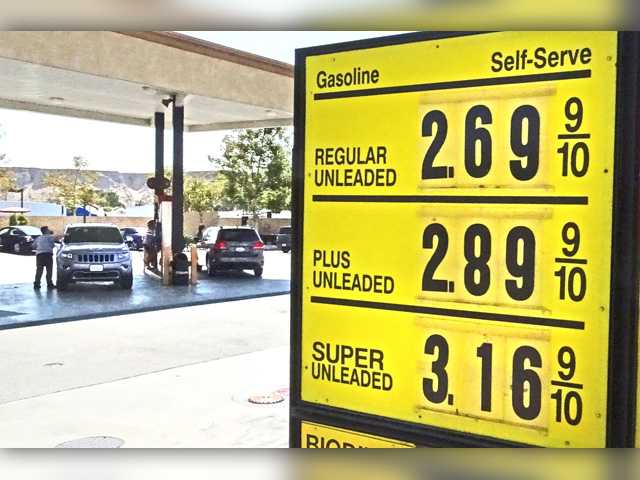
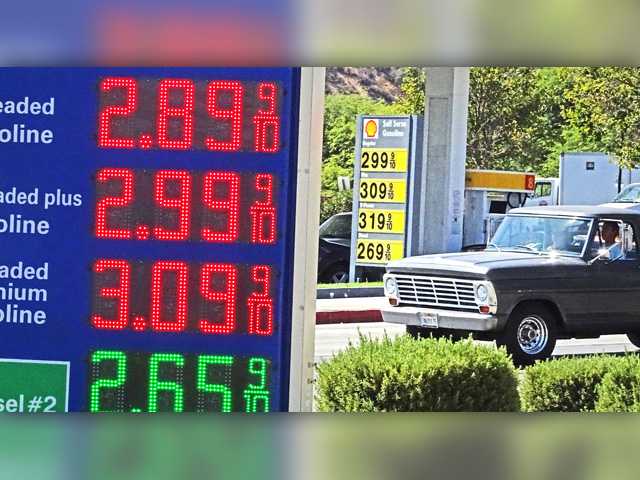
California gasoline prices remain well above the national average, but motorists have seen some relief at the pump this week with prices falling faster in the Golden State than anywhere else in the country.
As of Tuesday afternoon, the average cost of unleaded gasoline in California had decreased 8.5 cents compared to the previous Tuesday. The current price – $2.70 per gallon – is $1.04 lower than this time last year, which represents a bigger drop in price than seen in any other state in the country, according to GasBuddy.com.
The cheapest unleaded gas reported Tuesday in Santa Clarita was $2.23 – only slightly above the national average of $2.11.
GasBuddy, which tracks fuel prices across the country, expects national and state averages will continue to decline for at least the next week. The decrease is because a “multi-year glut of crude oil has led to a glut in gasoline inventories,” according to the website.
“The decline is likely to be again led by California and perhaps Great Lakes states, so motorists there are advised to hold off on filling up for the time being,” the website says.
A small tax decrease has also helped with gas prices. Starting July 1, the state reduced the amount of excise tax it collects from 30 cents to 27.8 cents per gallon of gasoline.
Micah Grant, spokesman for state Board of Equalization member George Runner, said the board voted to decrease the tax rate in February after determining it over-collected taxes last year.
“We’re just adjusting for what should have been taken,” he said.
Each year, the board is required to adjust the excise tax rates to ensure the state taxes that consumers pay for a gallon of fuel remain the same as they would have paid under a different tax structure that was in place through 2010.
“Even with this tax decrease, California still has one of the highest gas prices in the nation, just below Hawaii,” Grant said.
Last year under the “cap-and-trade” program, California became the first state to require diesel and gasoline suppliers to purchase emission credits. Proceeds are used for investment in clean technologies.
An April report from the state Legislative Analyst’s Office estimated the pollution tax has raised gas prices by 11 cents per gallon as the cost is passed through to consumers.
Critics, including Runner, argue the program needs more oversight since no one knows in advance how much of the cost will be forwarded to consumers.
“Mr. Runner would like to see more transparency there,” Grant said. “We can do better with reform.”