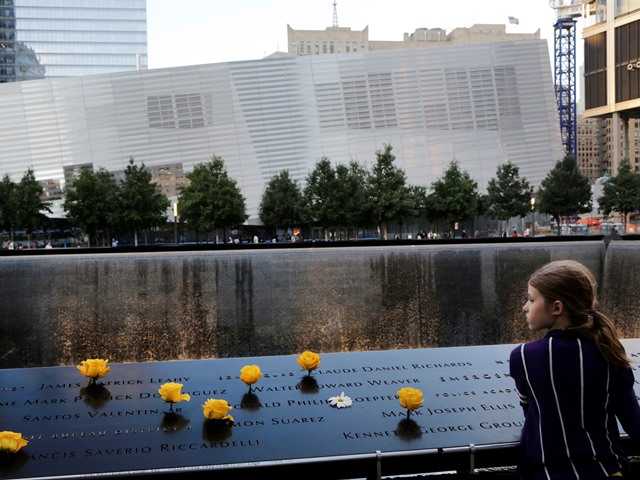
Sept. 11, 2001 is ingrained into my memory.
I remember waking up and waddling into my parent’s room to witness United Airlines Flight 175 crash into the World Trade Center’s South Tower.
As a second grade student, I was in a state of complete confusion.
“Mommy why are you crying?” I asked.
I thought my parents were watching an action film.
Even though my California home was on the opposite coast of New York, my school was one of the few to continue classes “as usual.”
The only outward acknowledgement of the terror that occurred that Tuesday was a brief Q&A with our elementary school principal. She somberly walked into our classroom in the hopes of explaining what happened and normalizing the day.
“Does anyone know what happened this morning before school?” she asked in a solemn sing-song tone.
Every hand in the classroom shot up in the hopes of being the star student who correctly answered the principal’s singular question; we were too young to fully grasp the impact this day would have on all of our lives.
Some sociologists refer to my generation as the “9/11 Generation.”
It is the generation that grew up in a post-9/11 America, whose attitudes and beliefs were shaped by the deadliest foreign attack on U.S. soil.
The nation was shocked into stillness, before it unified under a single attitude of unrelenting patriotism. The California freeways became a sea of red, white and blue as small flags were lodged into car windows. In this act, children saw the strength and resiliency of America restored.
The 9/11 Generation was raised on more than just fire drills and earthquake drills; we also had bomb drills, active shooter drills and lockdown drills. Safety was essential and domestic security was crucial.
Growing up, school discussions included what it meant to be an American, the dichotomies between international religions, the importance of intelligence agencies, the connection of the global economy and the change in day-to-day security and privacy.
These discussions always included a contrast between before and after of Sept. 11, even if we didn’t fully remember the world before then.
There was a major shift in attitudes, security and policies that occurred while I was in school. As we reach the 15th anniversary of Sept. 11, I hope my generation can reflect on the time, not as a distant memory, but as a time that shaped the world.
And I hope we can remember and honor the past, but not live blinded by our fears.
661-287-5575
On Twitter as @_ChristinaCox_