September is Suicide Prevention Month, a time for Santa Clarita Valley residents to educate people about the signs and symptoms of suicide, study the national statistics and encourage people to reach out to help those who might be in need.
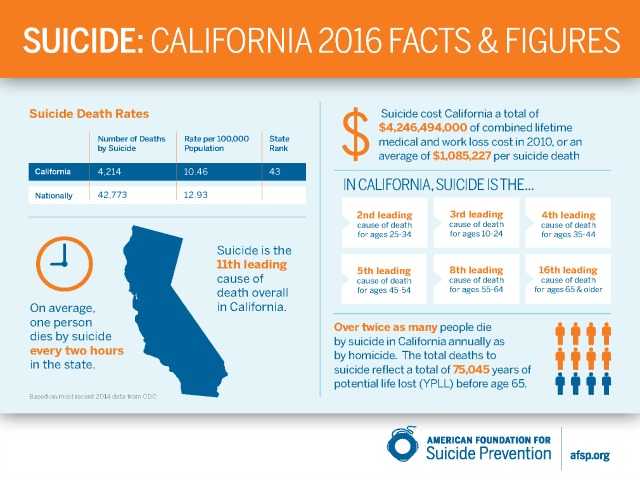
According to newly-published data from the Los Angeles County Department of Public Health, more Los Angeles County residents die by suicide than from homicides, car crashes or unintentional drug overdoses.
Suicide is a prevalent concern amongst teens.
More teenagers and young adults die from suicide than cancer, heart disease, AIDS, birth defects, stroke, pneumonia, influenza and chronic lung disease combined, according to data from the Centers for Disease Control and Prevention.
Organizations and schools in the Santa Clarita Valley are trying to reduce this statistic and save young people’s lives by offering services and working with the community’s struggling youth.
Warning signs and depression
The Santa Clarita Child and Family Center’s nonprofit mental health clinic will do an assessment regarding an individual’s risk of suicide if they appear to show warning signs, said Kelly Morehouse-Smith, vice president of clinical services.
Warning signs could be a change in behavior, feelings of hopelessness and helplessness, a change in eating or sleeping patterns and talking about wanting to commit suicide, Morehouse-Smith said.
“We see approximately 600 clients a month. I’d say about 50 percent have some level of thinking about suicide to having a suicide plan,” she said.
Morehouse-Smith said she has seen this with children who suffer from anxiety or depression, encounter trauma, identify with the LGBTQ community, experience bullying or just feel different from their peers.
“I think we kind of idealize popularity not really realizing that everyone struggles with wanting to be accepted,” she said.
The SCV Youth Project sees depression playing a large influence in suicidal thoughts, according to Lauren Richardson, program coordinator for the nonprofit organization.
“I think depression is a big topic we see working with all of our students and unfortunately suicide comes into play,” Richardson said.
According to the American Association of Suicidology, two out of three people who commit suicide are depressed at their time of deaths.
However, Richardson said she is noticing a change among young people who are more willing to talk about struggling with depression.
“I actually think kids are speaking out a lot more and seeking help a lot more,” she said. “We’re seeing that we’re able to catch it much sooner because we give the coping and communication skills they need before they reach the point of suicide.”
School Programs
Dave Caldwell, public relations officer for the William S. Hart Union High School District, said the district has counseling departments at each of its schools who can quickly respond to students in need at each campus.
“There are approximately 40 therapists that can attend to all the students and at all the schools,” he said. “School-based counseling is not required by the state, but Hart, being a progressive school district, has that in place.”
The Hart district also has Educationally Related Intensive Counseling Services (ERICS) primarily for special education students who make up approximately 10 percent of the district’s enrollment.
Students can also anonymously text in tips to school administration through its Text-A-Tip program. Phone numbers are unique to each school and administrators who receive the texts are on alert 24 hours a day, seven days a week.
According to an August story in The Signal, the “see something, say something” program already saved one student’s life at Sierra Vista Junior High School.
Sierra Vista Junior High School Principal Carolyn Hoffman cited one example of Text-a-Tip saving someone’s life when a student alerted officials to an Instagram post late one evening in which someone mentioned taking a bunch of pills.
The student reported it later that night, providing screen shots of the post.
Administrators called 911 and paramedics arrived to treat the student right away, Hoffman said in August.
“He would not have made it through the night,” Hoffman said.
“Sending that quick text could save someone’s life,” Caldwell said. “It could save someone from getting hurt.”
Hart’s Parent and Student Empowerment (PASE) organization plans on tackling the topics of teen depression and suicide prevention head-on at one of its annual events. Caldwell said the date for the event has not been finalized.
College of the Canyons is also raising awareness for its students.
COC is hosting a “Send Silence Packing” event Sept. 22 to shed light on the topic of suicide and create a forum for open discussions. The national, traveling exhibition will place 1,100 backpacks on COC’s Honor Grove to represent the number of college students lost to suicide each year.
Awareness and help
Richardson said one of the best things students can do is talk openly about their struggles and seek help from professionals if they need it.
“We always say the best thing to do is find a support system,” she said. “And we really encourage them to learn coping skills to help deal with their depression and emotions.”
Morehouse-Smith said it is important for everyone, from parents to teachers to people on the street, to know about suicide and be aware of those who might need help. She recommends that “if you see something, say something.”
“It’s incumbent upon all of us to have an awareness of suicidality and have an idea of what we can do to help people who are at risk for suicide,” she said.
If you or someone you know needs help, take action now by calling the National Suicide Hotline at 1-800-273-TALK (8255), The Los Angeles county Department of Mental Health’s Access Center Helpline at 800-854-7771, The Trevor Project Hotline at 1-866-488-7386 or 911. All services are available 24 hours a day, seven days a week.
661-287-5575
On Twitter as
@_ChristinaCox_