Part 1 of 2
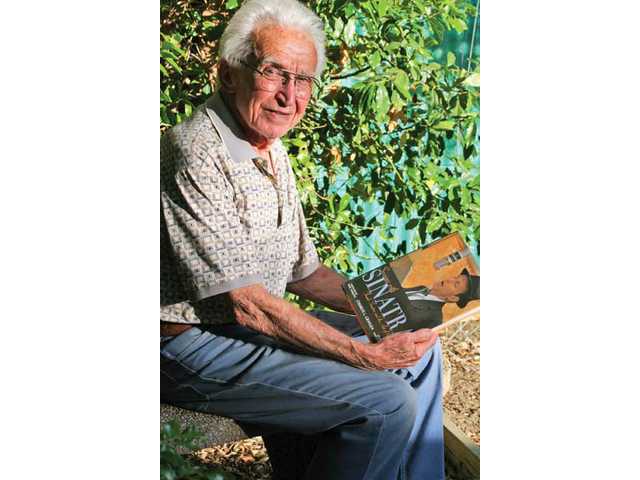
Friendly Valley residents know 90-year-old John Palladino as one of the community’s founding fathers and board members who’s lived there since 1970, even before its conversion to a retirement haven for Santa Clarita Valley seniors.
And parishioners at St. Clare’s Catholic Church in nearby Canyon Country know Palladino as the bright-eyed, spry guy who volunteers with other seniors at Mass and afterward shoots pool with the guys for grins.
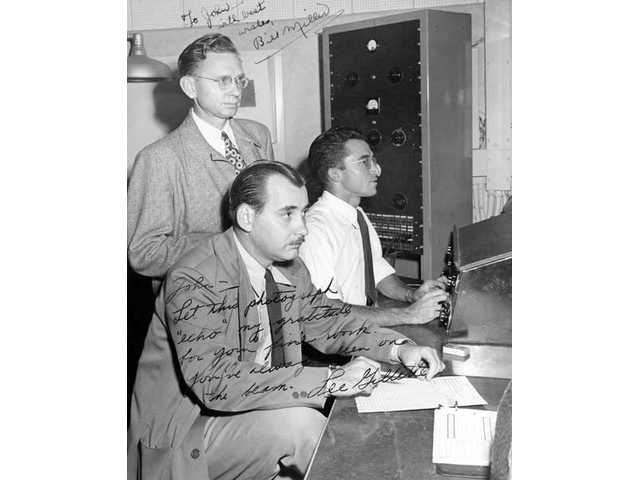
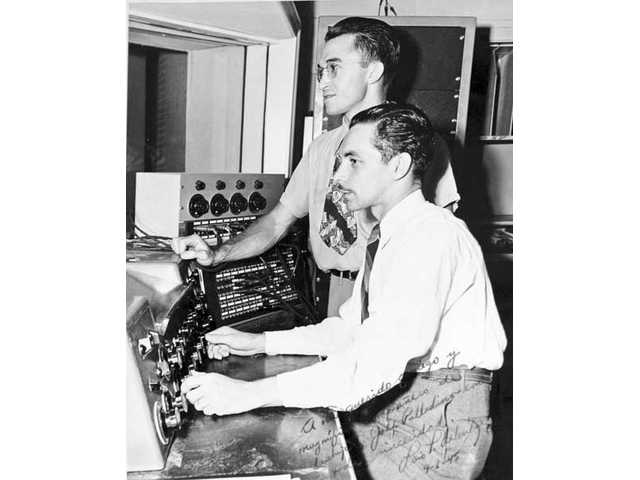
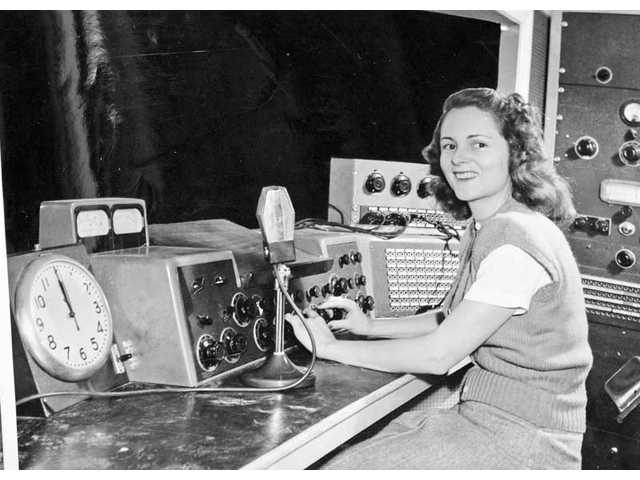
But not everyone knows the role Palladino played as a top sound recording engineer in Hollywood for more than four decades, from the early 1940s to the early 1980s.
He spent many of those years at Capitol Records’ studios in Hollywood, as he and his contemporaries developed a crisp, well-rounded sound that was the envy of, and emulated by, other labels and studios.
Palladino’s career spanned the eras of wax and acetate monophonic recordings all the way through multitracking and 12" 33 1/3 rpm vinyl LPs to the dawn of stereo and digital recording.
He and his colleagues made more than a few significant contributions to developing the art and craft of modern recording, including small-studio recording, use of echo chambers, equalization, sound-on-sound multi-tracking, use of multiple microphones, and close-miking instruments to get the best high-, midrange- and low-end sound in mono, stereo or both.
Along the way, Palladino worked with a startling array of superstars as well as now-obscure artists representing just about every genre from classical to rock, from jazz and country to spoken-word and even sound effects.
Just for starters, Palladino engineered sessions with Frank Sinatra, Nat King Cole, Dean Martin, Peggy Lee, Kay Starr, Stan Kenton, Johnny Mercer, Jackie DeShannon, Joy of Cooking, Bloodrock, Quicksilver Messenger Service, Juice Newton, Caldera, Helen Reddy and Steve Miller.
Among his accolades is an award from the National Academy of Recording Arts & Sciences for his work on Sinatra’s classic 1955 album “In the Wee Small Hours.”
Palladino's name isn't as well-known to record fans as those of later studio aces, mainly because liner notes rarely listed technical personnel until the late 1960s and '70s.
But to generations of recording engineers at Capitol and at other studios where he worked, people who have learned techniques he pioneered more than half a century ago, John Palladino is an icon -- though he is modest, and would never consider himself such.
"Our engineers today revere him," said Greg Parkin, who handles special events for Capitol Studios.
Music has been a lifetime love for Palladino, who was 3 years old when his parents (his father was a carpenter, mother a full-time mom) and two younger siblings moved to Los Angeles from Ashley, Pennsylvania. Another brother and sister later joined the family.
“We were always music-oriented,” Palladino said, spreading out books and historic photos on his dining room table for a visiting reporter who coincidentally was a co-worker at Capitol three decades ago.
“In those days you had to entertain yourself, and usually it was by sitting down to a piano or picking up a guitar,” he said.
“So I was always next to music and always liked it, but I never thought I was a student of music. As an Italian, I was just supposed to be able to appreciate music naturally.”
The first instrument Palladino picked up was an accordion, when he was in high school studying architecture; the latter pursuit soon fell by the wayside.
“The accordion formed a good background for what I got into later as an arranger in a band at Los Angeles City College,” he said.
“At City College, we were lucky enough to have a radio studio, which was a rarity,” Palladino said. “For any kind of school to have a recording facility was unheard of. So we could draw talent in there and make the arrangements and record them and listen back to them. That’s how I learned — just by practical hands-on stuff.”
After City College, Palladino served a hitch in the Army Air Corps as an arranger for the Army band stationed in Taft, Calif., but later trained as a radio operator in Chicago. Rheumatic fever prompted a medical discharge in 1942, and he returned to Hollywood.
“One of my friends from City College was working at Radio Recorders, a local recording studio,” he said. “All I had to do was walk in and there were open arms. They were delighted to have somebody with a little experience, so I fit right in.”
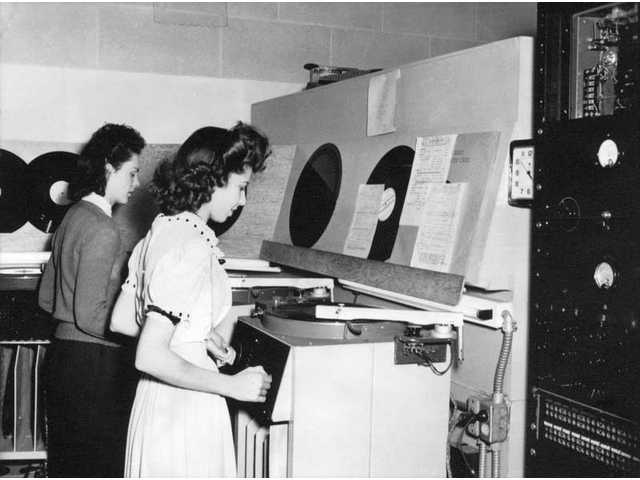
Palladino brought his sister Rose to also work at the studio, where he soon met Evelyn Blanchard, also a Radio Recorders engineer, who in 1951 would become his wife for the next 48 years.
”Rose and Evelyn would be doing what was called armed forces deletion work — taking (acetates of) radio shows and dubbing the shows to another disc but omitting the commercials, and then sending the shows to members of the armed forces overseas,” he said.
In April 1942, with World War II exploding overseas and the studio scene in Hollywood blowing up, hit songwriter Johnny Mercer, record retailer Glenn Wallichs and Paramount Pictures exec Buddy DeSylva founded Capitol Records.
Ella Mae Morse, Tennessee Ernie Ford, Stan Kenton, Jo Stafford, Les Paul & Mary Ford, Louis Jordan, Tex Williams, Nat King Cole, Miles Davis and even Bozo the Clown were among the artists who helped establish Capitol as one of the major labels — and the top West Coast-based label — during World War II and the postwar era.
Based on the quality of his work, Capitol hired Palladino away from Radio Recorders in 1949, the same year Capitol took over the old KHJ radio studios on Melrose Avenue near the Paramount Pictures studios.
“My wife actually mixed a couple of Capitol’s early big hits, ‘Smoke! Smoke! Smoke! (That Cigarette)’ by Tex Williams and ‘12th Street Rag’ by Pee Wee Hunt,” Palladino said.
By that time, recording to wax or acetate discs was giving way to magnetic tape, and Palladino was quick to embrace the new technology.
“With tape, you could actually cut it and edit it,” he said. “It was a fascinating idea, Now, we could edit portions of various takes and create a master that contained the performances that we wanted. Tape revolutionized the recording and editing process and the whole recording business.”
Overdubbing was another new trick, and Capitol artist Les Paul was a pioneer, not only going from acetate disc-to-disc early on, but later from tape-to-tape. A prime early example was Paul and wife Mary Ford’s 1951 chart-topping multi-tracked hit “The World is Waiting for the Sunrise,” which they taped and overdubbed at their home studio in New Jersey.
“(Les) made some beautiful recordings that were just fantastic,” Palladino said. “I always admired the sound — it was just unique.”
Capitol had become a major label competing with New York-based Columbia, RCA and Decca by 1953, when Capitol signed singer/actor Frank Sinatra, who'd formerly recorded for Columbia and usually with arranger Axel Stordahl, and began to resurrect his troubled recording career by teaming him up with new (to him) arranger Nelson Riddle, and a few years later, Gordon Jenkins and Billy May.
Sinatra recorded 19 albums for Capitol from 1953-62, from “Songs for Young Lovers” to “Point of No Return,” most of them under the aegis of staff producers Voyle Gilmore or Dave Cavanaugh, according to Charles L. Granata’s excellent 1999 book “Sessions with Sinatra: Frank Sinatra and the Art of Recording” (A Cappella Books/Chicago Review Press).
Palladino served as the mixing engineer on most of the Sinatra sessions on Melrose, and then engineered and mixed the first of the mono sessions in Studio B at the new Capitol Studios, after the facility opened in spring 1956 in the round tower on Vine Street in Hollywood.
Sinatra’s Capitol sessions recast the former Columbia saloon singer as ring-a-ding-ding party-time swinger, boosting his career to new heights and establishing a high standard for recording quality that’s still appreciated by music fans and studio geeks worldwide.
“A session with Frank was quite a thing,” Palladino said. “He loved having people around and would come in with an entourage. You never knew how many. But when they came into Studio A at Melrose, they’d sit in the (theater) seats like a studio audience, so it was perfect for them there.”
For more on Sinatra’s Capitol sessions and Palladino’s later sessions, see Part 2 of this story .
Peeples, Editorial Director in the Press & Artist Relatoins Department on the Ninth Floor of the Capitol Records Tower in Hollywood from 1977-1980, spent as much time hanging around downstairs in Studio A as senior engineer/producer John Palladino and senior engineer/studio manager John Kraus would allow.