In pristine perfection, the J. Paul Getty Museum lords over the Sepulveda Pass like a castle guarding the gates of the city.
However, an extraordinary new book by Los Angeles Times investigative reporters Jason Felch and Ralph Frammolino exposes the Getty and its culture of curatorial avarice and deceit as the true "barbarian at the gates."
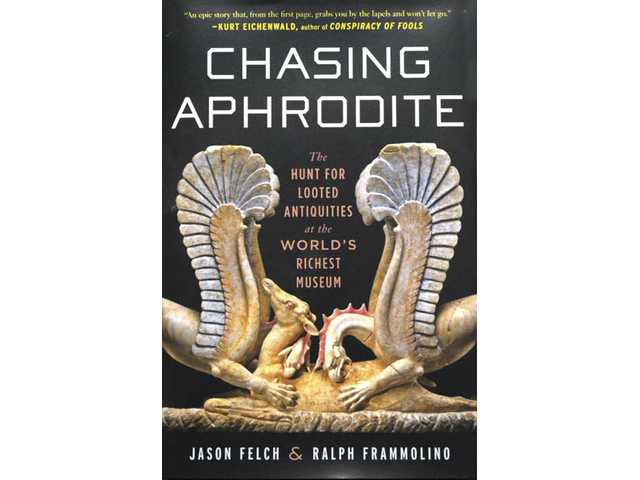
"Chasing Aphrodite: The Hunt for Looted Antiquities at the World's Richest Museum" is a must-read for anyone who enjoys a page-turning detective story.
Felch and Frammolino have crafted a fascinating look at one of the world's richest - and it seems - most troubled museums.
As the tale of looted antiquities unfolds - revealing the depths to which The Getty plunged in pursuit of such objects - the reader is enveloped in the exotic and clandestine inner workings of museum acquisitions.
The story of The Getty's looted antiquities and other internal problems were exposed in a series of front page stories in the Los Angeles Times.
One work in particular, the seven-and-a-half-foot Aphrodite, the Greek goddess of love, became the focus - and the catalyst of the hunt - a hunt that ended with the indictment of The Getty's antiquities curator in 2005.
The scandal that followed forced American museums to return more than 100 antiquities, worth half a billion dollars, to Italy and Greece.
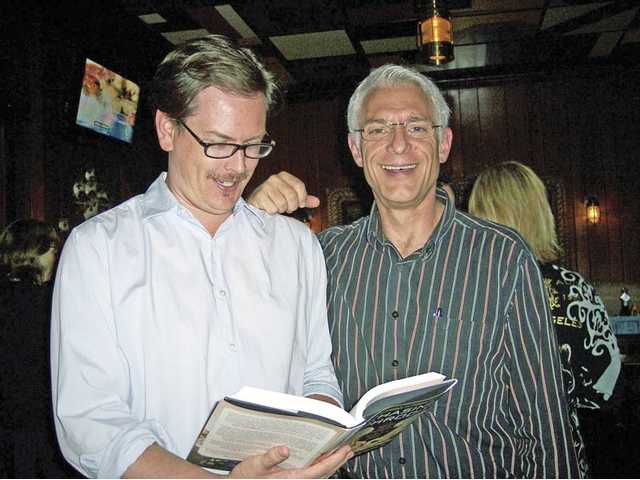
Frammolino is a former Santa Clarita Valley resident who now works overseas as a media consultant for various aid projects in Bangladesh, Nepal and Sri Lanka, where he trains working journalists on investigative reporting techniques and right to information laws.
He was part of the staff-wide effort at the Los Angeles Times that won the 1995 Pulitzer Prize for Spot News for coverage of the Northridge Earthquake.
Felch and Frammolino were finalists for the 2006 Pulitzer Prize for Investigative Reporting for their articles about the J. Paul Getty Museum and looted antiquities.
For those unfamiliar with The Getty's travails "Chasing Aphrodite" walks the reader carefully through the cast of characters in the shady world of antiquities collecting and sales.
A product of five years of investigative reporting and benefiting from inside confidential sources at The Getty, "Chasing Aphrodite" is extremely readable and a true education in museum ethics.
As an outsider looking in, one is stunned at the lengths The Getty went to protect its ownership of antiquities that clearly were of suspicious provenance.
Even more fascinating was the inside look at a revered institution that was perhaps even more dysfunctional than functional. It's a look that makes everyone working for a dysfunctional company some comfort. You are not alone.
It is easy to fall into cynicism as the keepers of our historical treasures, the essence of who and what we are, are now revealed to be as human - and as fallible - as mere mortals are prone to be.
The light at the end of the tunnel is the truth that good investigative journalism prevailed. It is more proof of the need for solid, pure, hard-hitting professional journalism in today's society.
The cliche "power corrupts and absolute power corrupts absolutely" is a truism kept in check only by the power of a free press to shine a light into dark places and lift up rocks and look underneath.
Buy this book - support the cause of investigate journalism and enjoy a fabulously good read.
"Chasing Aphrodite" is published by Houghton Mifflin Harcourt. $28. Available at Barnes & Noble Booksellers in Valencia and elsewhere online.