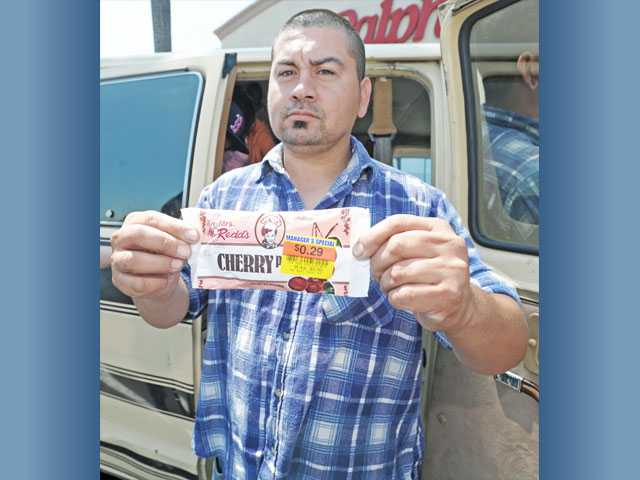
As the costs of grain and transportation increase, grocery-store prices are continuing a steady rise locally and across the country as shoppers try to find ways to save money at the checkout line, economists and consumers said.
A Signal survey of local supermarket prices on specific products compared to 2007 found most national trends were borne out locally, but some products actually declined in price over the past four years.
Those products included prepackaged oatmeal, eggs and milk. Corn and bananas have seen very slight increases over four years’ time.
Nationally, most food prices have been rising since late 2009, and the increase has been steep enough in recent months for shoppers to truly notice, said Nancy D. Sidhu, chief economist for the Los Angeles County Economic Development Corp.
The price of food is expected to increase between 3.5 percent and 4.5 percent during 2011 alone, according to the United States Department of Agriculture’s Economic Research Service.
Overall, meat, poultry and fish have gone up by 11.2 percent in the last six months, Sidhu said. The Signal’s survey found ground beef up $1.15 a pound over four years ago.
“There’s less steak coming home, plain and simple,” Sidhu said.
Dairy products have seen a 10.4 percent increase in the last six months, affecting the cost of milk, eggs and butter nationwide, Sidhu said.
Coffee way up
Nonalcoholic beverages, most notably coffee, have seen an 8.3 percent increase in six months, and cereal and bakery products are also up, she said.
“These are huge numbers,” she said.
Locally, the average cost for Yuban coffee is $6.58, a $2.42 increase over four years, The Signal survey found.
Absent from the higher prices are fruits and vegetables, which have seen lower prices in recent months, Sidhu said.
“It pays to be a vegetarian these days,” she said.
Within the Santa Clarita Valley, the price for fresh corn and bananas has gone up by less than 10 cents in the last four years, according to Signal figures.
Economists say the increase in meat, dairy, bakery and bread items is because the costs of grain and feed are on the rise, Sidhu said.
The higher price tags are expected to linger or increase as the cycle of higher feed and transportation costs remains steady, she said.
Smart shopping a must
Santa Clarita Valley shoppers surveyed on Thursday have noticed the higher food prices on their grocery bills.
“I don’t know how people survive with families,” said Valencia resident Nancy Restuccia after a recent shopping trip to Ralphs on The Old Road. “You have to be a smart shopper in 2011.”
One thing she noticed was a change in the price of tissue, which she says has gone up by nearly a quarter within a week.
“Everything I bought today was on sale,” she said.
Donna Jacson, of Los Angeles, said her staple items, like canned foods, have been on the increase.
“Canned goods, corn, creamed corn, basic things we used to buy have like doubled,” she said outside Ralphs on The Old Road. “Fresh vegetables, even though the season is here, (the prices) don’t drop like they used to.”
But higher grocery prices haven’t affected how she shops, she said. “The little, extra, fun things I don’t buy anymore.”
‘You have to eat’
Increases in grocery prices affect the less financially advantaged more than they do the wealthier shoppers, economists say.
“Food represents a higher proportion of the budget for lower- and middle-class income people,” Sidhu said.
Much like gasoline for the car, families must pay for food.
“If the prices go up, you have to pay them because you have to eat,” Sidhu said.
To deal with higher costs, families end up switching products or downsizing the food they buy, she said.
When that happens, families buy less steak and more ground beef to cook with, or they shift from eating fresh fish to buying canned tuna, she said.
Hunting for best deals
Shoppers like 32-year-old Susi Martinez shop around for the best deals. Questioned during a recent shopping trip to the local Vallarta, Martinez said she goes to several stores and checks out advertisements to see which items on her grocery lists are cheapest.
“If an item is too expensive, I’ll try to wait until it goes on sale,” she said.
Yet she usually ends up buying produce at Vallarta because it’s cheaper, she said.
Others rely on coupons and rewards programs for grocery shopping.
“Everything has gone up,” local resident Cindy Tiekenski said about grocery prices. “I use coupons. I like Ralphs because they have their own coupons they send you. I’ve been more diligent in trying to save (money).”
Signal staff writers Natalie Everett and Jim Holt and interns Hillary Smith and Cory Minderhout contributed to this report.