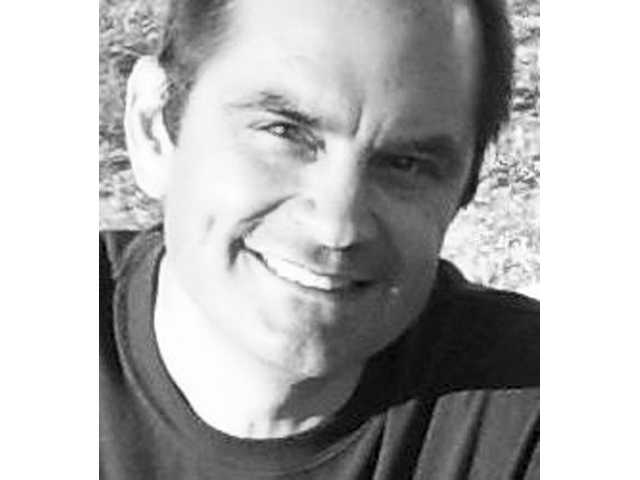
Grief Counselor Jeff Zhorne said people have been conditioned to deal with grief in a certain way. “Laugh and the world laughs with you, cry and you cry, fill in the blank. If you’re like most people, you’re conditioned to automatically respond ‘alone,’” Zhorne said.
“If you’ve suffered a devastating loss, such as the death of a loved one, divorce, breakup or other grief experiences, you may be trying to cope with these and other unspoken rules,” he said.
Zhorne, a grief counselor and director of The Grief Program, will offer a free community presentation on the grief completion process and how to learn to risk in relationships, on Feb. 9 in Valencia.
Zhorne offered up another common panacea: “The way to get through grief is to just keep busy.”
“These types of phrases are almost automatic responses. They are bits of information stored in our belief systems from childhood,” Zhorne said. “When we encounter life’s inevitable losses, such as moving, menopause, retirement, empty nest, loss of a pet or other life transitions, many tend to draw upon these and other bits of misinformation. Much of the information we received on coping with loss was not helpful.”
“Be grateful,” “Be strong” or “Get your mind off yourself” are statements that may be true, but do not help in matters of the heart, said Zhorne.
“When we were children, the adult authority figures in our lives — parents, teachers, ministers and others — gave us this misinformation in a sincere desire to be helpful,” he said. “Trouble was, it wasn’t. A lot of unfinished business and unmet needs were created, causing pain, isolation and loneliness.”
Zhorne said some of that unfinished business gets dragged into new relationships. Those relationships can end up damaged as a result of the unresolved grief issues.
“Most parents do the very best they can with what they’ve been given,” said Zhorne. “From our earliest ages, unresolved fear and distrust may have driven our lives unconsciously. Little wonder that unfinished business from unresolved loss issues shows up in areas of our lives.”
Zhorne said psychologist Jeffrey Auerbach has discovered that if we look at our closest relationships, the issues we fight about with our partners are the very ones that were never overcome with our parents, and those feelings run strong and deep. So we fight with our spouses, boyfriends and girlfriends because they’re the ones available.
“The truth is that most of us were not taught or trained in how to process loss or pain, so it builds up into a snowball of hurt rolling downhill,” Zhorne said. “This energy has to go somewhere and that’s when you hear about someone who has a breakdown or has to go to anger management or is seeing someone for depression or illness.”
Zhorne likens the pressure of such unresolved issues to a steam kettle with a cork in the top.
“People blow their tops or have blowups and blowouts,” he said. “Someone cuts us off on the freeway and we overreact. Anger, sadness and depression can interfere with our thinking process. Circuits overload and thought processes become distorted. Eventually, people shut themselves off from others.”
Zhorne said many experts, including therapists, are seeing the need for deep grief work.
“It’s about getting to root issues to cool this steam kettle or clear out emotionally clogged arteries,” Zhorne said.
Healing and recovery start by becoming aware that your reactions and feelings are OK but may signal you have unfinished grief work to do. Zhorne offers a step-by-step plan to grieve and complete incomplete relationships to get back to living from pure choice in the present moment, not from childhood wounds.
“There is a way out,” he said, “We don’t have to carry around unresolved pain.”
A free community presentation on the completion process and learning to risk in relationships again will take place at 7 p.m., Feb. 9, in the Education Center at Christ Lutheran Church, 25816 N. Tournament Road, Valencia. For more information call (661) 733-0692.