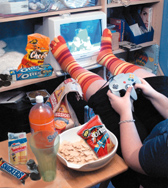
Eating too much and exercising too little: These are the two chief causes behind our nation’s current obesity epidemic.
Take a look around at our schools and neighborhoods and it becomes apparent that youngsters are among those who are getting heavier. The number of seriously overweight children, ages 6-17, is now at 15 percent — more than double what it was during the past three decades. This equates to a staggering 8.8 million children and adolescents. The increase is a reflection of American society as a whole, for approximately 30 percent of this country’s adults are now considered obese.
Experts warn this represents a severe public health crisis with potentially devastating effects. Obesity carries myriad of physical, psychological and financial problems, even for young children. Being overweight puts kids in line for serious health problems including heart disease, high blood pressure and type-2 diabetes. It can also limit a child’s athletic abilities and impair their self-esteem.
“It’s a horrifying, mind boggling, multi-factorial problem,” said Dr. Rochelle Feldman, a pediatrician who sees many overweight children in her Canyon Country practice.
According to the physician, children today are getting far less mandatory physical exercise in school and after. “They are one-tenth as active as they were 20 years ago,” she said. “Physical education is no longer a requirement in many schools; it has been cut. This is very unfortunate.”
Indeed, the Centers for Disease Control and Prevention cites reduction of school physical education time as a major contributor to the obesity dilemma. Daily participation of high school students in a P.E. class dropped from 42 percent in 1991 to just 29 percent in 1999. Nearly 50 percent of all young people ages 12 to 21 do not even take part in vigorous physical activity on a regular basis.
In addition, as cities grow, and crime and traffic escalate, there are less safe open areas that foster physical activity. All too often parents work long hours and are not at home to supervise their kids after school, so the youngsters stay inside, Feldman said.
“We live in a dangerous world ... parents tell their kids they cannot go out and play until they get home,” she said.
Even when parents are at home, many of today’s children are couch potatoes, glued to television sets and video games as opposed to having regular, aerobic fun.
“And what do they do when they are sitting there?” Feldman asks. “They sit and eat all the wrong stuff!”
Severe Health Risks
Of course, young people can make bad food choices when they are not at home, too. Junior members of a fast food society, modern-day kids consume meals made largely of fat and nutrition-poor calories. While it’s easier to obtain drive-thru food than home-prepared, such dining exacts a hefty price tag, even on young bodies.
Fatty food consumption can lead to atherosclerosis (hardening of the arteries), a condition that can pave the way to cardiovascular disaster and other grave health problems. Overweight young people are more than twice as likely as normal-weight children to have elevated cholesterol and more than 12 times as likely to have elevated fasting insulin levels. This can be an ominous path to early onset illness, even death.
“We all know what obesity does to the arteries,” Feldman said. “I have loads of kids in my practice with really high cholesterols (ranging 250-300) and their triglycerides are out of sight. It’s unbelievable, everyone of the kids who are obese, with a rare exception have very high cholesterol and triglycerides.”
Poor diets and obesity are contributing to a surge in the number of youngsters getting type 2 diabetes (a disease in which the body does not produce or properly use insulin, a hormone that is needed to convert sugar, starches and other food into energy needed for daily life.) Type 1 diabetes, previously known as insulin dependent diabetes, occurs when the body does not produce any insulin because of a destructive process in the cells of the pancreas that produce insulin. Type 2 is usually associated with obesity and is caused by resistance to insulin as well as the inability of the pancreas to keep up with the increased demand for insulin.
The sixth leading cause of death in the United States, diabetes afflicts more than one out of 12 adults. It’s legion of health consequences include heart, blood vessel and kidney disease, hypertension, severe infections, limb amputations and other serious health problems. Children who are sedentary, overeat, and have a family history of diabetes or are of certain minority populations are most at risk for contracting type 2 diabetes. According to the American Academy of Pediatrics, an organization of 55,000 primary care pediatricians, pediatric medical subspecialists and pediatric surgical specialists, fewer than 4 percent of childhood diabetes cases in 1990 were type 2. That number has risen to approximately 20 percent (varying from 8 percent to 45 percent, depending on the age of the group studied.)
Per the AAP, type 2 diabetes is the most frequently seen form of diabetes in the 10 to 19 age group. Of children diagnosed with type 2 diabetes, 85 percent are obese. Most children are diagnosed with type 2 diabetes during middle-to-late puberty.
“It’s an amazing problem ... I have seen at least a quadrupling of the number of 9- 20-year-olds who are pre-diabetic,” Feldman said. “Their insulin levels are sky high and they have all the markers for early onset (adult) type 2 diabetes.”
Physicians also worry as the childhood population becomes increasingly overweight and less active, more type 2 diabetes may occur in younger pre-pubescent children. Even daytime TV is addressing the growing problem of obesity in “small” children. One recent Maury Povich segment showcased such youngsters including a 240-pound preschooler.
Stress can play a major role in making children overweight, the pediatrician stated. “Kids today are over-scheduled, have a zillion activities and are burdened with four times the amount of homework,” Feldman said. “This can have a terrible emotional, psychological and social effect on them and lead to obesity.”
In September of 2002 the American Academy of Pediatrics announced a national study showing a link between adolescent depression and obesity. “A Prospective Study of the Role of Depression in the Development and Persistence of Adolescent Obesity” looked at more than 9,300 adolescents in grades 7 though 12. Among those adolescents not yet obese at the beginning of the study, the odds of becoming obese in the following year were doubled if they were depressed.
Parents contribute to their children’s obesity by not providing wholesome meals that are low in fat and high in nutrition, Feldman said.
“What parents eat is what kids eat and everyone eats fast food, very few cook at home anymore,” Feldman said, adding, “Portion sizes are way out of proportion, people believe more is better.”
Fast food is the curse of our health these days, said Dr. Loraine Stern a Valencia pediatrician and author of numerous pediatric health-related magazine articles.
“With all the wholesome fresh prepared food available in the markets there is no reason why a family has to go to drive-thru several times a week for super-sized, fat-laden meals,” Stern said.
Stern noted less than 20 percent of high school students eat the recommended five daily servings of fruits and vegetables; such foods offer nutrition, fiber to aid digestion and elimination, vitamins and other components that help with resisting illness.
Feldman noted that among her patient population are numerous parents who should know better when it comes to healthy eating but do not behave that way.
“They are college educated parents who don’t know first thing about nutrition,” she said. “They use butter instead of margarine, they use cream and they say they did not know there is a problem with that.”
To help youngsters get control of their eating habits and improve their health, Feldman offers them advice.
“I tell these kids, many of 9, 10 years of age, ‘If you watch what you eat and increase your exercise right now and start eating healthy foods then you will have nice long life ... but if you don’t you will not be able to get up the stairs at age 20 and you will die before your children are the age that you are now. As a teen you won’t be able to perform, to do anything, you will barely able to make it to your class you will be so out breath,’” she said. “When the warning is put in this conceivable and alarming context, not some nebulous prediction that’s decades away, they can relate to it better.”
Youngsters need to hear this as it applies to now — not when they are grown ups, she added.
While genetics can play a role in obesity, external factors are the greatest influence over whether a child will stay a normal weight or become obese. “Genes predispose you to obesity to a certain extent but without the environmental stimulus you will not have the disease,” Feldman said.
Stern believes the way parents relate to mealtime has a large impact on how their children will eat — starting in early childhood.
“The first mistake I see parents make in this society is to try to encourage their toddlers and even older children to eat when they are not hungry,” she said. “American parents seem to feel that if children miss a meal they will die before the next one. The healthiest families treat mealtime as a time to enjoy food and talk to one another without focusing on what and how much each person eats.”
Studies show that the more mothers try to influence how much of what goes in their children’s mouth, the less appropriately children eat, Stern said. “Putting out or making available healthful food and presenting it to children to choose how much and what of those foods they will eat is the healthiest attitude,” the physician said.
Meals should be centered around wholesome foods and family members sharing quality time and traditional meals, Stern advised.
“A recent study showed that families who kept the television on, for example, during meals, had more fat and less fruit and vegetables than those who turned it off,” the doctor said. “Also (with) fast food solutions for working parents, the focus on fat content has taken the focus off healthful selections and made low fat the key, while more fruits and vegetables and whole grains would help.”
Stern warned of the tendency for teen girls to develop problems with self-image and eating disorders. She referred to a study showing that girls as young as 5 are sensitive to comments about their weight and to their mother’s behavior about food.
“It seems that teenage girls universally think they are fat even if they are not,” Stern said, noting that the “thin-girls-are-in-and-they-get- everything-they-want-from-life” message comes largely from the media.
“I think we need to defocus on the ideal body image from the media and refocus on health and good diet,” Stern said.
Consulting a nutritionist, someone who can tailor a diet to a girl’s lifestyle, or any youngster for that fact, may be the best way to go, Stern recommends.
“Focusing on what is bad rather than what is good, pandering to children’s food fads rather than letting them go hungry if they don’t want to eat what is offered, and reduced physical activity are the major issues here,” she said.
Well-being and quality of life are not the only factors at stake here — obese children carry a hefty price tag for the nation. The AAP announced last year that hospital costs for diseases related to childhood obesity have increased threefold over the past 20 years. In the study “Economic Burden of Obesity in Youths Aged 6 to 17 Years: 1979-1999,” obesity-associated hospital costs were shown to have increased from $35 million in 1979 to $127 million in 1999. The study also found that hospital discharges from diseases related to obesity increased dramatically — diabetes nearly doubled, gallbladder disease tripled, and sleep apnea increased five-fold.
Unless youngsters start eating better, get more exercise and shed excess weight they are truly going to suffer the consequences,” Feldman said. “If they do not make these changes, they are going to be the bane of their internist’s existence.”
Dr. George Charnock, a Valencia endocrinologist who specializes in treating patients with diabetes, said he sees many children with obesity and diabetes come through his doors.
“It’s a nightmare, some of these kids are out of control,” he said.
Charnock expressed outrage over fast food being served on public school campuses.
“There is profit between fast food places and schools and nobody is dealing with it ... this is the tip of the iceberg,” he said.
Most often thought to be an American epidemic, obesity is now considered a worldwide affliction, Charnock said.
“This has become a global problem, even in Europe now, even in places where people were usually lean,” he said.
It’s bad enough that adults inherit medical troubles as a result of eating poorly and being overweight, but now children are taking on these ills. And it’s not just health ails that affect lives, it’s also problems with knees and hip joints giving out earlier in life from all the weight, Charnock said.
The rise in obese children represents a quandary for doctors as far as medical treatment goes, he added.
“We really don’t know what to do with them,” the endocrinologist said. “They are still growing and we have to be careful with medications.”
Charnock implores parents to take a good look at their overweight children and help them eat right, lose weight and get the proper medical help needed to treat obesity and its related health problems. Most of all, he wishes parents and youngsters would become informed, proactive and stop this deleterious cycle. He recommends a balanced diet and warns against high-fat foods.
“There is a lot of misinformation about high fat diets being good for weight loss,” Charnock said. “They are actually bad for heart disease and they make it worse, not better.”
In addition to his busy Valencia practice, Charnock serves as vice president of medical affairs for the Center for Healthy Lifestyles, an integrative wellness facility currently under development and slated to open in Valencia late this year or early in 2004. The 40,000-square-foot center will blend allopathic medicine (“normal, Western medical care”) with alternative therapies including complementary medicine, diet modification, smoking cessation, weight control, exercise counseling, stress reduction, mind/body medicine, healthy aging and meditation. Treating adults as well as children, the center’s focus will be on promoting health and preventing disease.
Healthy Suggestions
To help reduce the incidence of childhood obesity and resultant health problems, consider implementing the following:
n Regular physical exercise: Help children get fit by encouraging/participating in physical activity such as family outings, neighborhood walks, riding bicycles, swimming and hiking. Support lifelong physical exercise; school and community programs that foster physical activity. Be there for your children when they play sports (or choose other active ways of spending their leisure time). Make exercise part of an enjoyable, healthy lifestyle, not viewed as mandatory drudgery.
n Educate children about the health benefits of making sound food choices. Be role models for such eating. Cut back on foods that promote obesity and offer high fat, sugar and salt content. (These include: fried foods, red meat, hot dogs, cheese, mayonnaise, butter, soda, etc.) Plan nutritious, balanced family meals and make sure healthy snacks are available (such as fresh fruits and vegetables, whole wheat crackers, low-fat cheese and yogurt). Pack your children’s school lunches; teach them how to plan their own away-from-home meals. Just about anything from home is healthier than much of the high fat-high sodium “cuisine” kids consume at schools today.
According to experts at Weight Watchers International, sack lunches are an important way to help children establish healthy eating habits.
“A healthy brown bag lunch is a great way to influence what your children eat, but more importantly you may actually get them to eat if you include them in its content selection,” said Karen Miller-Kovach, chief scientist at Weight Watchers. “This means asking for their input and being attuned to what they enjoy.”
Weight Watchers’ tips for packing appealing and wholesome lunches include: involve the kids in preparation; be creative, vary the foods, flavors; pack ahead of time to keep things cool and tasty; include little notes telling your child you are thinking of them; add variety, maybe a hot Thermos of soup to go with a cold sandwich; satisfy their sweet tooth: give them animal crackers, graham crackers or flavored popcorn cakes (these provide sweetness without fat or many calories); read labels before you buy any pre-packaged lunch items; dress up a brown bag with stickers, purchase colorful lunch bags at market; cater to individual tastes: while younger children may be happy with simple sandwiches and snacks, older ones may have more sophisticated likes. Also try packing healthy snacks and meals for motor trips, away games, etc. That way you are less inclined to answer hunger pangs at a drive-thru.
n Be health advocates for your children. Talk to them about their feelings, self-image and any psychological difficulties that may contribute to their overeating. Seek professional guidance as needed. Get children on a weight loss and exercise program, one that is medically approved and supervised. Educate children on the necessity of making proper nutrition a lifestyle, that fad diets are basically useless (and unwise). While such diets are short-lived, fitness is a lifelong goal. Help children understand it’s not all about how one looks to others but most importantly how healthy a person is inside, both physically and emotionally.
Following these steps can enhance a child’s chances for living a healthy, active and full life. Avoiding them is a recipe for medical problems and much anguish.
Unless everyone becomes more aggressive about the obesity epidemic (that includes parents, schools, children, the medical establishment, the media), it’s all going to continue along its detrimental path, Charnock said.
“The bottom line is (as physicians) we are interested in wellness and preventing illness before it happens, not just treating it when it happens,” Charnock said. “The way we are going, though, we are up against a wall. You don’t have to be a rocket scientist to figure this out or to know the things it takes to keep you healthy.”