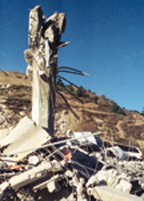
A better-prepared citizenry, better buildings and better contacts are among the benefits Santa Clarita has realized due to the Jan. 17, 1994 earthquake, city officials said.
?We teach you how to organize chaos,? Emergency Services Coordinator Donna Nuzzi said of an emergency response course put together at residents? request by the city and Los Angeles County Fire Department. The class teaches volunteers to recognize hazardous situations, organize resources ? including people ? and triage at a scene.
The Community Emergency Response Training course meets evenings for seven weeks and requires a real commitment from students, Nuzzi said. Since 1997, the course has graduated about 600 Santa Clarita residents, about 30 percent from education and 30 percent from the senior population, Nuzzi said.
The earthquake also changed the way buildings are constructed in Santa Clarita and throughout the state, said Ruben Barrera of the city?s Building and Safety Department.
Steel-frame buildings, including most new construction over four stories high, are now designed to resist force where the beams meet the columns, Barrera said.
?The designer has to analyze and calculate the concentration of forces so that the welds are sufficiently strong to support the concentration of loads,? he said.
Wood-frame structures, including most houses, must have sheer walls made of wood or plywood, not stucco or drywall as was previously allowed, Barrera said. Sheer walls, which may be the same walls as those bearing vertical loads, support the load laterally and help reduce the chance of home collapse in the event of an earthquake.
Finally, tilt-up construction must meet more stringent standards for anchoring the walls and the roof ?to prevent (the walls) from tilting away from the building,? Barrera said.
City officials had firsthand experience with earthquake-damaged construction on Jan. 17, 1994 ? City Hall was ?orange-tagged? as unsafe, Barrera said. Since then, the building has been retrofitted to be 50 percent stronger, as it doubles as an emergency operation center.
?Unfortunately, the disaster puts you in it,? Nuzzi said of the need for good emergency contacts. ?So now (that) you?ve got these relationships, you make sure you maintain your communication.?
Among the contacts the city keeps as high priorities are state and federal emergency management agencies, local schools, hospitals, and other health services, and various county departments including fire, sheriff?s, public works, and public health services, Nuzzi said.