Oh, rats!
ThatÕs what local environmentalists are saying about the recent spate of hawk deaths in the Santa Clarita Valley.
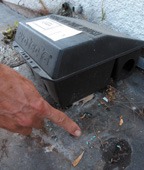
According to Kris Ohlenkamp of the San Fernando Valley Audubon Society chapter, poisons in rat- and mice-bait stations placed behind homes and businesses along the Santa Clara River could be responsible for the deaths of at least 14 red-tailed hawks, possibly more.
Birds like hawks, gulls and magpies that call the Santa Clarita River home may be the victims of secondary poisoning, which occurs after the birds eat the rodents after they have consumed the poison, usually anticoagulants, Ohlenkamp said.
ÒThe number of predators dying is unknown,Ó Ohlenkamp said. ÒNon-specific poisons are killing more than the targeted rodents. This has the potential to become a serious problem.Ó
And itÕs going to get worse before it gets better, he said.
ÒWe really donÕt know what to do,Ó Ohlenkamp said.
But the hawks arenÕt the only animals in danger. Ohlenkamp said owls, coyotes and house pets can also be impacted from the poison.
The hawks, owls and other raptors are natural predators and help squelch the rodent river population. Recent wildfires, low water levels and construction have caused the rodents to look for food outside the river, he said.
Ohlenkamp said if the poisoning keeps up the river ecosystem could be severely impacted.
ÒThe entire river is a vital wildlife corridor,Ó he said. ÒIf we do anything to change (habitat) capacity, the entire river system is endangered.Ó
Officials from state and county environmental agencies are baffled with the situation, but arenÕt sure if the poisons are the cause of the hawk deaths.
ÒThere are a lot of diseases that can in death mimic the use of pesticides,Ó said Bob Josea, an environmental sciences specialist with the California Department of Fish and Game.
Josea said the actual cause of death canÕt be determined until a necropsy Ñ an animal autopsy Ñ can be conducted. But finding carcasses has proven problematic for Fish and Game and the county.
Richard Sokulsky, Los Angeles County deputy agriculture commissioner, said until the county can get its hands on the dead birds, no conclusions can be drawn.
ÒWe donÕt know what happened to those birds,Ó Sokulsky said. ÒThereÕs no way to tie the two together as of yet.Ó
The county agriculture department is in charge of monitoring and enforcing state pesticide and rodenticides.
Josea and Sokulsky both said the odds of the birds dying from secondary poisoning is low, but a possibility.
But Josea said the poisoning wasnÕt his only concern.
ÒWe also need to make sure we are cooperating in the West Nile virus program,Ó he said. ÒThat is a major concern.Ó
Josea said there is only a slim possibility the birds could have been exposed to the virus.
ÒUntil we get the birds, we donÕt know,Ó he said. ÒWe need to get some fresh birds up here for evaluation.Ó
He said the birds also could have suffered trauma from flying into a pole or building, or could have been shot.
What worried Sokulsky was the improper use of bait stations. He said state law requires all stations on commercial properties to be properly labeled and away from structures.
Improperly labeled stations, he said, could increase pet deaths because a veterinarian wouldnÕt know what poison the pet consumed to save it.
Homeowners who purchase pesticides and rodenticides usually donÕt need it, Sokulsky said.
ÒThe idea is control through management,Ó he said. ÒDonÕt invite (the rodents).Ó
Keeping trash away from the house and in tight containers, while clearing articles like wood is a good start.
But, if pesticides are a must, Sokulsky had one message: ÒThe most important thing about using pesticides is reading the label.Ó
Dixie Milberg, property manager for the Bridgeport community, which abuts the Santa Clara River, said the homeowners association neither has a rodent abatement plan nor uses rodenticides.
ÒWe are aware that rodents are always an issue,Ó Milberg said. ÒThe (HOA) board is looking into the possibility of how to handle it.Ó
Rick Winsman, president of the Santa Clarita Valley Chamber of Commerce, was shocked to hear about hawk deaths, and said the valleyÕs leading business organization should embark on educating its members.
ÒWe need to present options (to the business owners),Ó Winsman said. ÒPoisoning is the wrong approach to take. There are other ways to deal with the control of rodents.Ó
Winsman said the chamber will work with the city to spread the word about rodenticides and the possible impacts it could have on the SCV wildlife.
Meanwhile, Ohlenkamp said he will continue to monitor the situation.
ÒUntil we find out more information, weÕre not pushing toward any more regulation or deregulation,Ó Ohlenkamp said. ÒWe want to emphasize the awareness and alternative means of controlling the problem.Ó