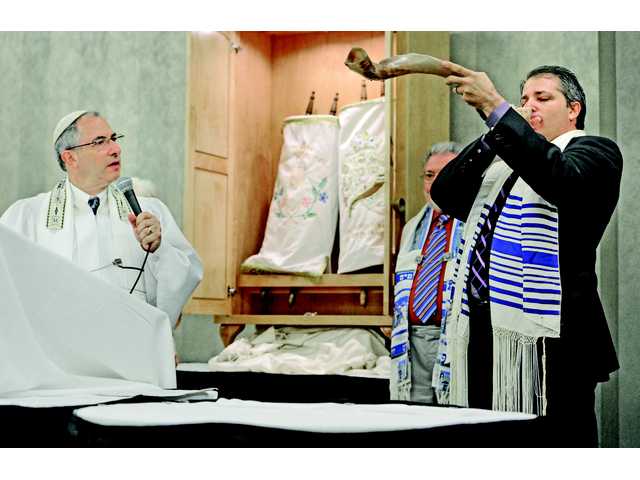
On Thursday Jews across Santa Clarita gathered at the Hyatt Valencia to celebrate the Jewish New Year, Rosh Hashanah.
Mitch Sodikoff, 48, a veteran shofar player, attended the event and exchanged well wishes for the new year “L’ shanah tova” with other attendees.
The special service marks a two-day celebration of the Jewish High Holidays. Rosh Hashanah celebrates the Jewish New
Year which is followed eight days later with Yom Kippur, or the Day of Atonement.
Considered the most important holidays in Jewish tradition, Jews will often celebrate the High Holidays by attending synagogue.
Sodikoff has sounded the shofar, or rams horn, for more than 35 years. He has sounded the horn for Temple Beth Ami for more than 15 years.
“This is one of the ways that keeps me connected to Judaism on an annual basis,” said Sodikoff. “It is an honor and a blessing to blow the shofar and to connect with the community every year.”
Sodikoff began playing the shofar because he was a trumpet player and had the capacity for the long blasts. More importantly, he was following in his father’s footsteps; his father also sounded the shofar for their synagogue.
Despite his practicing, he wasn’t allowed to play the shofar until after his bar mitzvah. Then Sodikoff and his father played the shofar together every year for 15 years. It became a contest, of sorts, to see who could sound the horn for the longest time.
When his old synagogue received a new and much bigger shofar, Sodikoff recalls being especially excited because his dad was unable to play it. Playing the shofar takes a certain amount of skill and technique to be able to sustain the long blasts of notes required during the services.
Tradition
The shofar is an integral and time honored part of the Jewish tradition for both Rosh Hashanah and Yom Kippur.
During Rosh Hashanah, the shofar is sounded to mark the beginning of the new year. It signifies a spiritual awakening.
“For Rosh Hashanah, the horn calls on Jews to recharge for the spiritual battle for the upcoming year,” said Sodikoff.
During Yom Kippur, one long blast is sounded at the end of the service to signify the close of the High Holidays.
Rabbi Mark Blazer of Temple Beth Ami explained that the High Holidays give people 10 days to wrap up the year, complete unfinished business, and offer unsaid apologies. He also emphasized the importance of not waiting until the end of the year to complete those things.
“Really every day is an opportunity; it doesn’t have to be Rosh Hashanah or January 1,” said Blazer. “We just need to say, I don’t have to carry this over to the next day.”