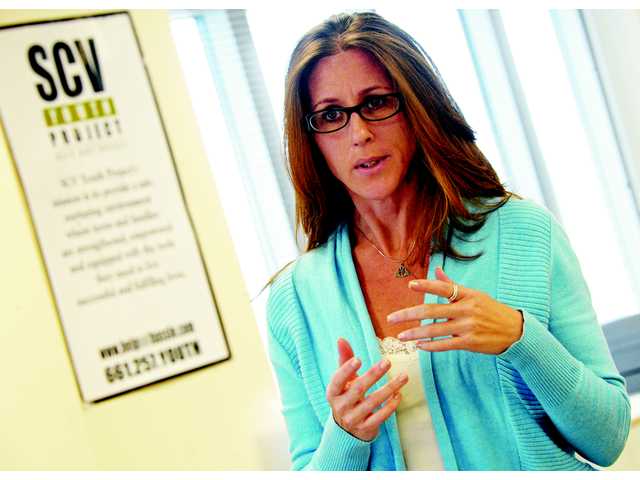
Kim Goldman was utterly devastated 20 years ago when her brother Ron Goldman was brutally murdered alongside Nicole Brown Simpson. What followed is often described as the “trial of the century,” as ex-football player O.J. Simpson was tried for both murders.
Simpson was eventually acquitted of the two murders, much to the shock of the public and the dismay of the Goldman and Brown families who believe Simpson is to blame.
Now, 20 years after the brutal murder of her brother, Kim Goldman published a book titled “Can’t Forgive: My 20-Year Battle with O.J. Simpson.” The book focuses on the events surrounding the trial and Goldman’s viewpoint of the murders.
Yom Kippur begins next Friday night, Oct. 3, and marks the final commemoration of the High Holidays for Jews. It is celebrated eight days after Rosh Hashanah and is also known as the Day of Atonement.
On Sunday, Temple Beth Ami is hosting a question and answer event with Kim Goldman, a longtime attendee of the synagogue. The event will focus on Goldman’s journey over the past 20 years and the ideas of closure and forgiveness, a key concept for many Jews during the High Holidays.
Yom Kippur
The High Holidays are the biggest celebrations of the Jewish calendar and hold great significance for Jews around the world. Yom Kippur is often commemorated by fasting, honoring loved ones who have passed and focusing on the topic of forgiveness.
Themes of repentance and forgiveness are often discussed during this time as many Jews seek to right any wrongs from the previous year before starting their new year fresh.
With Yom Kippur and other Jewish teachings in mind, Goldman is often asked if she has been able to forgive O.J. Simpson for his alleged role in the murders of her brother and his ex-wife.
“No, that is an unforgivable act,” she said in an interview last week. “There is nothing that would ever make me be able to forgive a murderer. The concept of forgveness does not apply to this.”
Jewish law teaches there are certain acts which are deemed “unforgiveable.” Murder is one of those acts. Jewish law also teaches forgiveness must be asked for first, often three sincere times, before a person is required to forgive the transgressor.
Goldman says Simpson would never seek forgiveness for those acts. Without him requesting forgiveness, she and other family members are not required to offer him forgiveness, she says.
Rabbi Mark Blazer of Temple Beth Ami says many Jews often focus on the ideas of forgiveness during this time, hoping for a fresh start in the new year and for a wasy to break old habits and break cycles of destruction.
“Forgiveness is a big part of it,” said Blazer. “This is an extreme case, but the principles are the same, how do you move on without forgiving and still be a healthy person.”
Extremem situations force us all to ask ourselves, are there limits to forgiveness?
“His actions have changed my life foreer,” Goldman said of Simpson. “I don’t need to give him forgiveness. Other people are worried about me as if I am in someway living a lesser life; but this is a choice. I am choosing not to forgive him.”
Goldman explained she finds a balance between her Jewish religious beleifs and what works for her within her life.
“I think some people that are devout Jews don’t understand how someone could have a life without forgiveness,” she said. “I’m not living a hate filled life, it doesn’t prohibit me from being a positive member of society. I am totally okay with this forgiveness thing.”
Goldman says the events surrounding her brothers murder still affect her deeply today as the anniversary of the murder is covered in the news.
“At any given moment it finds its way into my living room,” she said. “There is never a full escape. I suffered the loss of my brother; we were the best of friends. There is no escaping those moments.”
Goldman says it has been a difficult journey.