One of the longest airplane crash investigations in the history of the National Transportation Safety Board was put on the road to being solved, thanks to the prowess of a small hydraulics engineering company in Santa Clarita in August 1996.
When the NTSB concluded in 1999, it said the investigation of the crash of a Boeing 737 near Pittsburgh was the longest aviation accident investigation in its 32-year history.
On Sept. 8, 1994, USAir (now US Airways) flight 427, a Boeing 737-300, crashed while maneuvering to land at Pittsburgh International Airport, reported the NTSB in a 370-page study. The flight was arriving from Chicago. It took only 28 seconds for USAir Flight 427 to plummet from the sky. All 132 persons aboard - 127 passengers and five crew members - perished in the crash.
After a lengthy process of elimination, the panel of experts gradually came to suspect an event referred to as “rudder reversal” in which the rudder might have jammed, causing the plane to go in the opposite direction the pilots were intending it to go. Meaning, when the pilot pressed on the right rudder pedal, the rudder most likely reversed to a full left position, leading to the loss of control of the aircraft.
Crash examinations
The NTSB also examined two other events involving 737s, the 1991 crash of United Airlines flight 585 in Colorado Springs, Colorado. While carrying 20 passengers and five crew members on board, the plane experienced a rudder problem while on final approach to runway 35 at Colorado Springs Municipal Airport, causing the plane to roll over and enter an uncontrolled dive. There were no survivors.
In the second incident, the pilot of Eastwind Airlines flight 517 near Richmond, Virginia lost rudder control in 1996, but was able to land successfully. Only one flight attendant suffered minor injuries. No damage occurred to the aircraft as a result of the incident.
The NTSB board concluded that the same type of rudder reversal most likely occurred in those two cases, as well. But, this time there were survivors – and a crew who perhaps might be able to provide vital insights.
A special panel was formed to review the studies of the experts who suspected a rudder valve was at fault, but they hadn’t been able to prove it. The thinking behind the special panel was that perhaps a fresh pair of eyes would help validate the experts’ work. It was thought that extreme temperature swings between hot and cold might have caused rudder valves to stick.
A four-part news story titled “28 Seconds – The Mystery of USAir Flight 427,” by reporter Bill Adair of the St. Petersburg Times also chronicled the mystery-solving expedition of the NTSB in which a frozen rudder valve was suspect to be the culprit behind the crash.
Canyon Engineering, Valencia
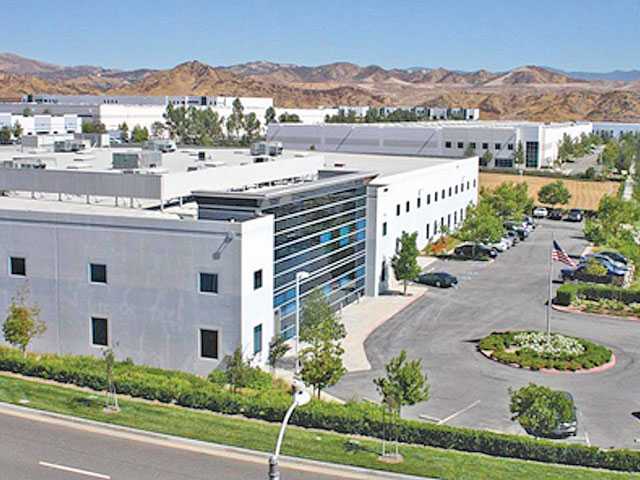
Adair succinctly described the testing conducted, and reported by the NTSB, at a little known engineering firm in Valencia – Canyon Engineering. The firm was later acquired by St. Louis-based Esco Technologies Inc. Esco then moved its Palmdale firm, Crissair Inc., down to the Canyon Engineering facility where the two merged in December 2014. No one from the original investigation could be located.
But, originally founded in 1978, Canyon Engineering designed and manufactured precision fluid control devices primarily for the aerospace industry. It understood hydraulics. But, back in 1996, it appeared to be a tiny little company to the NTSB investigators who described it as “more like a garage than one of the modern test facilities” they were accustomed to working in.
Canyon Engineering tested two rudder valves in the blazing hot days of a Santa Clarita summer in August 1996. One was new and straight from the factory, while the other was from USAir crash. Power Control Units containing the valves were placed in Coleman coolers and frozen with nitrogen gas and then tested for operation capabilities.
The valves were passing every test. But then, after reaching the most extreme temperature condition, clicking, hissing sounds began to reach investigator’s ears. And then – the valve jammed. While valves straight from the factory were not jamming, Canyon Engineering tests proved that the valve on Flight 427 was more prone to jamming. But then, the positive test had to be proven with an actual airplane.
Boeing aircraft test
That’s when a young Boeing engineer, according to the St. Petersburg Times’ story, discovered odd dips in the hydraulic flow that shouldn’t have been there after poring over charts and test results. If he was reading the data right, the rudder would not have gone into a neutral position as designed, it would have reversed. In other words, a pilot could push on the right pedal, but the rudder would go left and that finding could spell disaster for the plane.
Boeing needed a 737 to check their theory. So worried were the investigators, they took one right off the assembly line, before it was delivered to an airline. Landing at Boeing Field in Seattle on Oct. 29, 1996 on a typically cold, rainy day, a Boeing test pilot climbed into the cockpit while the young engineer stood outside watching the rudder on the tail of the plane. At first the tests went smoothly, but then came a more aggressive test. The pilot stomped on the rudder pedal as fast as he could – and the rudder swung the wrong direction.
The NTSB first issued 20 recommendations to the FAA, and then 10 more in March of 1999. Since the crash of flight 427, Boeing redesigned the PCU’s servo valve and retrofitted it onto all 737s.
To read the ccokcpit audio transcription, click here :
This story was compiled by Jana Adkins, SCVBJ Editor, based on information contained in a 370-page NTSB report, an NTSB press release, a Smithsonian channel docudrama titled “Hidden Dangers” on the TV series “Air Disasters” and various media reports.