There is a perpetual battle going on in the mind of teenage athletes everywhere.
During a transitional time in their lives, where image can be everything, does their perception of "cool" outweigh safety?
Many people think it used to, but perhaps not anymore.
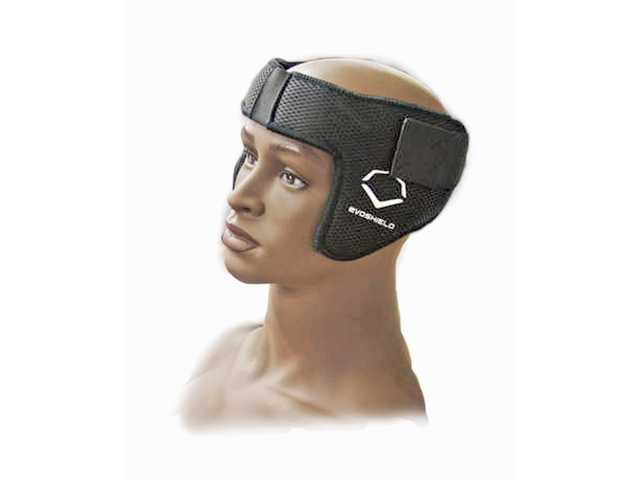
"Kids are no longer looking at protective equipment as something that is wussy, if you will, or weaker if you wear it," says Justin Niefer, the director of research and development for EvoShield, a company working to develop headgear for pitchers. "Kids want to wear concealable equipment and obviously something is very comfortable that will not hinder their performance."
Locally speaking, the conflict does surface from time to time.
"Obviously, with the information out there and the steps the CIF and schools are taking, there is a lot more information and regulation of safety requirements in sports today," says Golden Valley co-athletic director Robert Fisher. "However, athletes still see professional athletes compete with limited safety equipment. I think this is starting to change as professional sports are beginning to mandate stricter safety requirements, which will in return be seen by younger athletes."
Ultimately, opinions differ.
"Being on a high school campus, you look at just what the kids are wearing and there are certain brands that they wear, certain styles that they wear and they don't want to deviate from that," says Saugus athletic director Kevin Miner. "That's what they want."
To prevent image from being an issue, coaches and administrators have taken matters into their own hands.
"The coaches that I'm around definitely require it to be something that is second nature," says Valencia athletic director Brian Stiman. "It's just part of the game at that point. I would say it's kind of second nature, but also unacceptable to say that we are going to sacrifice image for safety."
***
Still, there are many situations where anxiety over what is socially acceptable does have an impact.
Look no further than soccer and the use of headgear.
In fact, many people don't even know that type of equipment is widely available even though it protects against concussions.
Centurions head girls soccer coach Natalie Helgeson was the Big West Conference Player of the Year in 1998 while playing for the University of the Pacific and also coaches club soccer locally.
The news that the headgear was so accessible came as a surprise to her.
Why?
Players don't wear it, and rarely did during her playing days in college.
"You always knock what's different unless your hero is wearing it," Helgeson says. "You kind of look at those things as wimpy."
That even goes for the size of shin guards, and the athletes that don't want to wear them.
The National Federation of State High School Associations now mandates the size of guard required to participate in order to ensure that players have the proper equipment.
Hart High boys athletic director and head football coach Mike Herrington has also seen the benefits of stricter safety policies.
Therefore, Herrington says image isn't as much of a deterrent to safety.
"No, not at the high school level because rules dictate the safety issues that are necessary at the high school level," he says. "The rules are probably more stringent than at any level."
In some cases, protective equipment is a given.
Take football, for example.
No one questions the obvious necessity of shoulder pads and helmets.
But helmets today have come a long way since the leather caps of the 1930s and 1940s.
In 2002, Riddell introduced its Revolution line of helmets, designed to be even more protective against concussions.
It not only boasted improved safety, but sleek features, something that Riddell vice president of research and product development Thad Ide says was a key factor in its design.
However, there is a limit to the amount a company can appease the fashion police, especially when it comes to an athlete's well-being.
"I think both things are important to the design, but for Riddell with the development of football helmets, the first design and development goal for any help product out there is protection," Ide says. "It's first by a long ways. Below that are cosmetics, fit and creature comforts."
The response to the release was highly favorable.
Canyon athletic director Rich Gutierrez says the Revolutions are now the first helmets picked by the players.
"I think that safety is at the front of their minds. It's huge," he says. "I think it has become so much bigger than say when I was young. I also think it's because of the fact there have been so many injuries."
That doesn't mean that athletes are immune to image pitfalls.
"It's everything to athletes," Fisher says. "Athletes today are sometimes more concerned with what socks they are wearing than their individual responsibilities in their sport. With professional athletes and all of the commercials, athletes have to have the wrist bands, towels, tape, eye black, etc., that they see their favorite professional athlete wearing."
Riddell has planned for that.
"That's why we offer a couple different shell styles and face guard styles all within the line because what appeals to one player may not to another player," Ide says. "And players have more choices the farther they progress in their career."
***
When it comes to headgear, it is impossible to avoid the current state of baseball, especially with the debate over metal bats.
One side of the argument says wood bats should be used to reduce the ball's speed coming off the bat and shrink the sweet spot, making the game theoretically safer for pitchers.
The other side feels that switching to wood is a kneejerk reaction.
The middle ground?
Pitching safety equipment, and EvoShield has been working on a response.
To ensure that the company's product provides protection as well as aesthetic appeal, the company went to University of San Francisco pitcher Matt Hiserman, who has been struck in the head twice by comeback hits.
Hiserman formed the EvoShield padding into a more subtle head wrap that protects the temples and can fit underneath the pitcher's hat.
"He would tell you today that it would feel more like a slap than punch, which is a very big difference," says EvoShield vice president David Hudson, who has worked closely with Hiserman on the product. "He's put some more thought into it and is set to come out and visit with us about the topic because more athletes like the headgear for baseball. ... No one on the mound would wear a helmet."
The company expects a functional prototype to be finished for formal testing by the end of the year.
When released, it could potentially land in the Santa Clarita Valley.
But will the kids wear it?
Ultimately, that depends on the final design.
Local coaches and athletic directors say they would be interested in the headgear.
However, it isn't the coaches that athletes are worried about.
"It's their peers," says Valencia head baseball coach Jared Snyder. "If you are the only pitcher wearing one, what are people going to say? You know how it works. It's a stigma. I don't believe in that, but I do believe there is something to be said for a pitcher to be wearing a face harness."
Ultimately, every athlete knows the potential dangers of playing his or her respective sport, but if it makes the player more comfortable, a second look is necessary, Snyder says.
"I think if you don't feel safe on the mound and that makes you feel safe, you are going to pitch better," he says. "If you fear getting hit by a ball and you wear that (headgear), you might actually become a better pitcher because you don't have that fear anymore."
But for those athletes whose perception of "cool" would prevent them from taking all the necessary precautions, it might take something more drastic to get their attention.
"Until the injury occurs, until it hits home, that's when they will realize ‘OK, maybe this is something I should take seriously,'" Helgeson says.
When it comes down to it, each generation builds on what was acceptable for the last.
"Over time, when it is something they've grown up with, and have been accustomed to it, then you are gong to see it more at the high school level," Stiman says. "That's all it is. It's not an image thing. ... It's just something they've never done."
For those remaining holdouts, all it will take is time.
"I think it has come to the point where I don't think kids are opposed to wearing that protective gear and they realize that in the long run it is better for them," says West Ranch athletic director Dody Garcia. "And with high-profile athletes accepting it, they want to be like their heroes and they will (wear it)."